
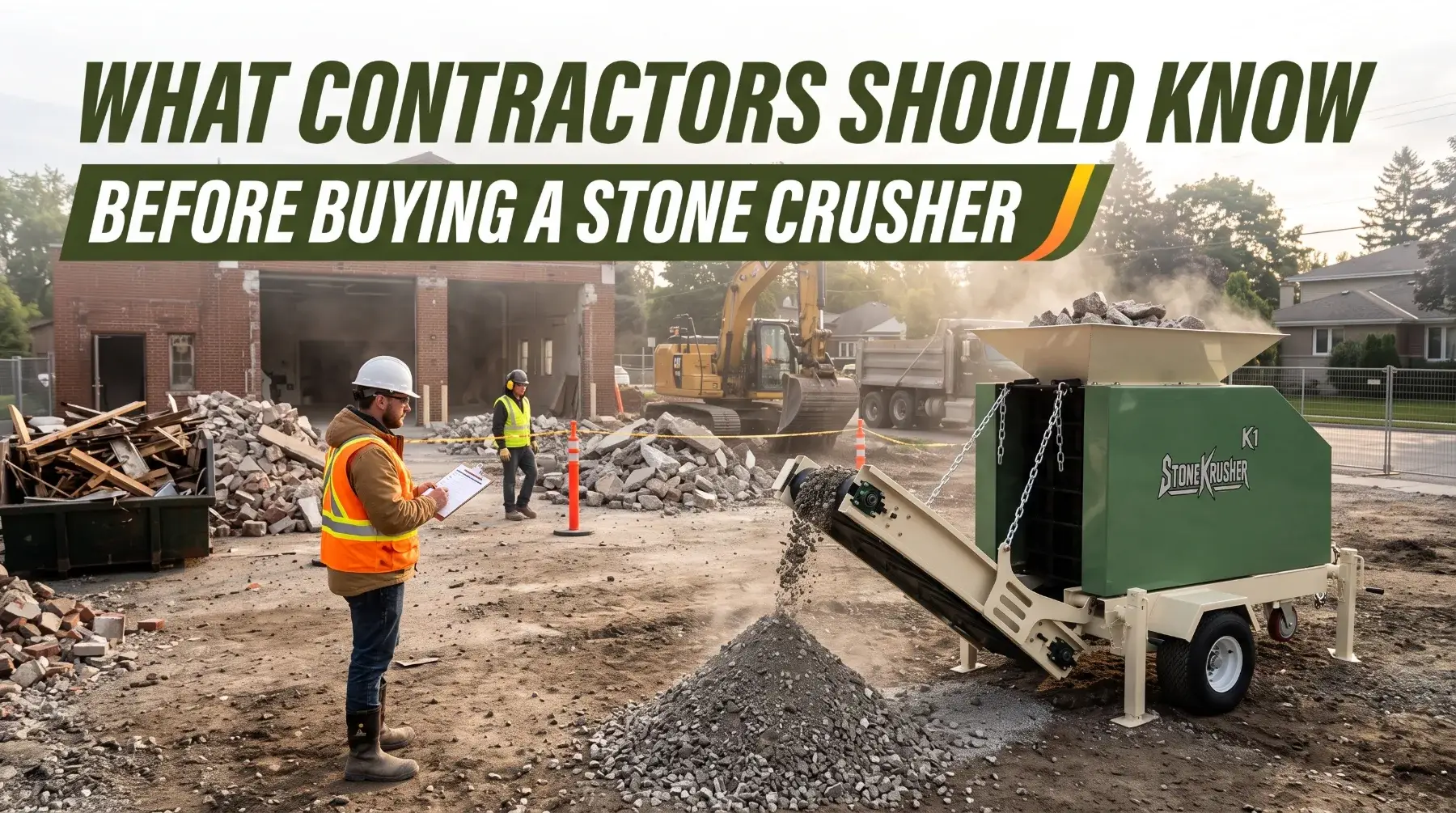
What Contractors Should Know Before Buying a Stone Crusher
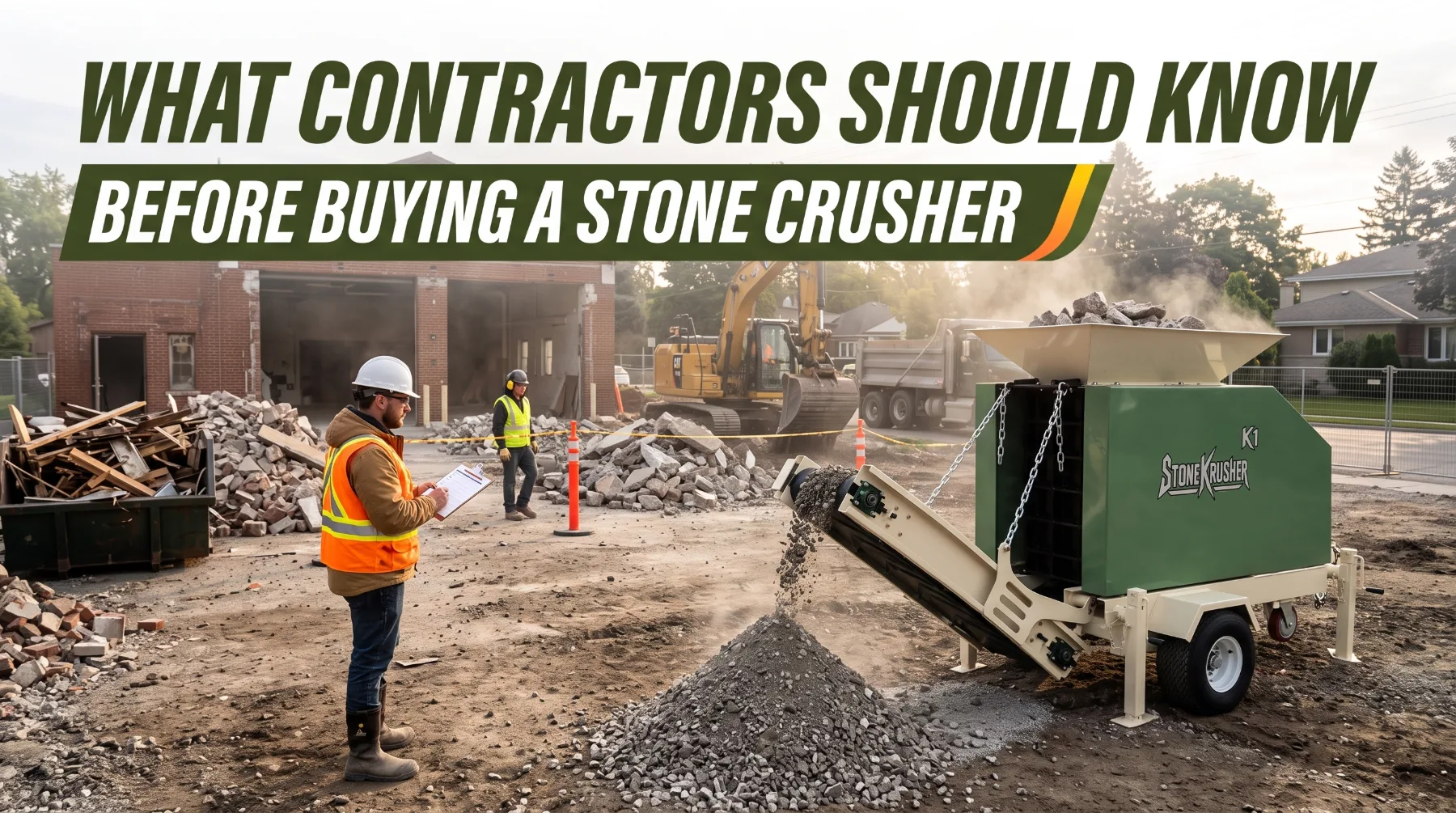
Stone crushers can help contractors process concrete, brick, and natural stone into reusable aggregate, reducing hauling needs and supporting on-site recycling. However, unsuitable feed material, limited crushing capacity, and inefficient discharge arrangements can create bottlenecks that undermine project schedules. Selecting equipment requires a clear understanding of the materials to be processed, the required finished product, and the conditions at each jobsite.
Feed opening dimensions, material hardness, maximum input size, and expected throughput all influence crusher suitability. Contractors should also evaluate discharge conveyor length and height, stockpile access, and whether finished aggregate can be loaded efficiently into trucks or moved directly to the next stage of work. Transport weight, towing ratings, access restrictions, and available setup space matter as well, particularly for crews moving equipment between residential, demolition, and construction sites. Maintenance access, fuel consumption, power requirements, and the availability of replacement parts should also be considered, since these factors affect operating costs and machine availability over time. A crusher that fits the site's physical limitations and daily production targets can help reduce unnecessary handling, equipment downtime, and delays between processing stages.
A practical equipment assessment starts with estimating total tonnage, identifying oversized or contaminated material, and confirming the required output gradation. Removing soil, wood, and other unsuitable debris before crushing can reduce blockages, while protruding rebar and oversized pieces must be handled using appropriate procedures. Contractors should also consider how material will move from the loading area through the crusher and into the finished stockpile, ensuring that loaders, trucks, and other equipment can operate without creating congestion. Comparing realistic production needs with machine specifications, planning safe material flow, and following the manufacturer's operating and lockout instructions helps contractors choose a crusher that supports efficient recycling and dependable project delivery. Regular inspections, proper operator training, and routine maintenance further help maintain consistent performance throughout the project.
Consider the Type of Material
The material you crush most often should guide your equipment choice from the beginning. Contractor projects may involve natural rock, concrete, brick, concrete block, asphalt, or mixed demolition debris. Each material behaves differently inside the crushing chamber and places different demands on the machine.
Granite, basalt, and quartz-rich fieldstone are hard and abrasive, requiring greater crushing force and causing faster wear on jaw dies and liners than many recycled materials. If natural rock accounts for a large share of your workload, select a crusher designed and rated for those conditions, and plan for more frequent wear part replacement.
Demolition concrete varies in strength and thickness. Sidewalks and patios usually break more easily than thick floor slabs and foundation walls. Concrete also frequently contains reinforcing steel, wire mesh, or dowels. Although many crushers can process reinforced concrete, protruding rebar can snag feeders, damage conveyor belts, or wrap around components. Trim long rebar tails before feeding material and follow the manufacturer's guidance on acceptable steel content. A magnetic separator on the discharge conveyor can help remove loose steel from the finished product.
Contamination also creates potential health and environmental hazards. Older buildings may contain asbestos, lead-based paint, or other hazardous substances. Applicable regulations may require inspections and proper abatement before demolition begins. Never crush material until it has been assessed and cleared for processing.
The type of material also influences its intended use after crushing. Recycled concrete and natural stone may become fill, base material, or drainage aggregate, with each application carrying its own particle size and cleanliness requirements. Understanding the incoming material helps you determine whether the crusher can produce an acceptable finished product.
Review several recent projects to identify the materials your crew handles most frequently. Actual jobsite debris provides a more reliable basis for equipment selection than an occasional unusual project.
Key Takeaway: Natural rock, concrete, brick, and mixed demolition debris differ in hardness, size, steel content, and contamination. Choose a crusher suited to your regular materials and sort unsuitable debris before feeding it into the hopper.
Check the Feed Opening
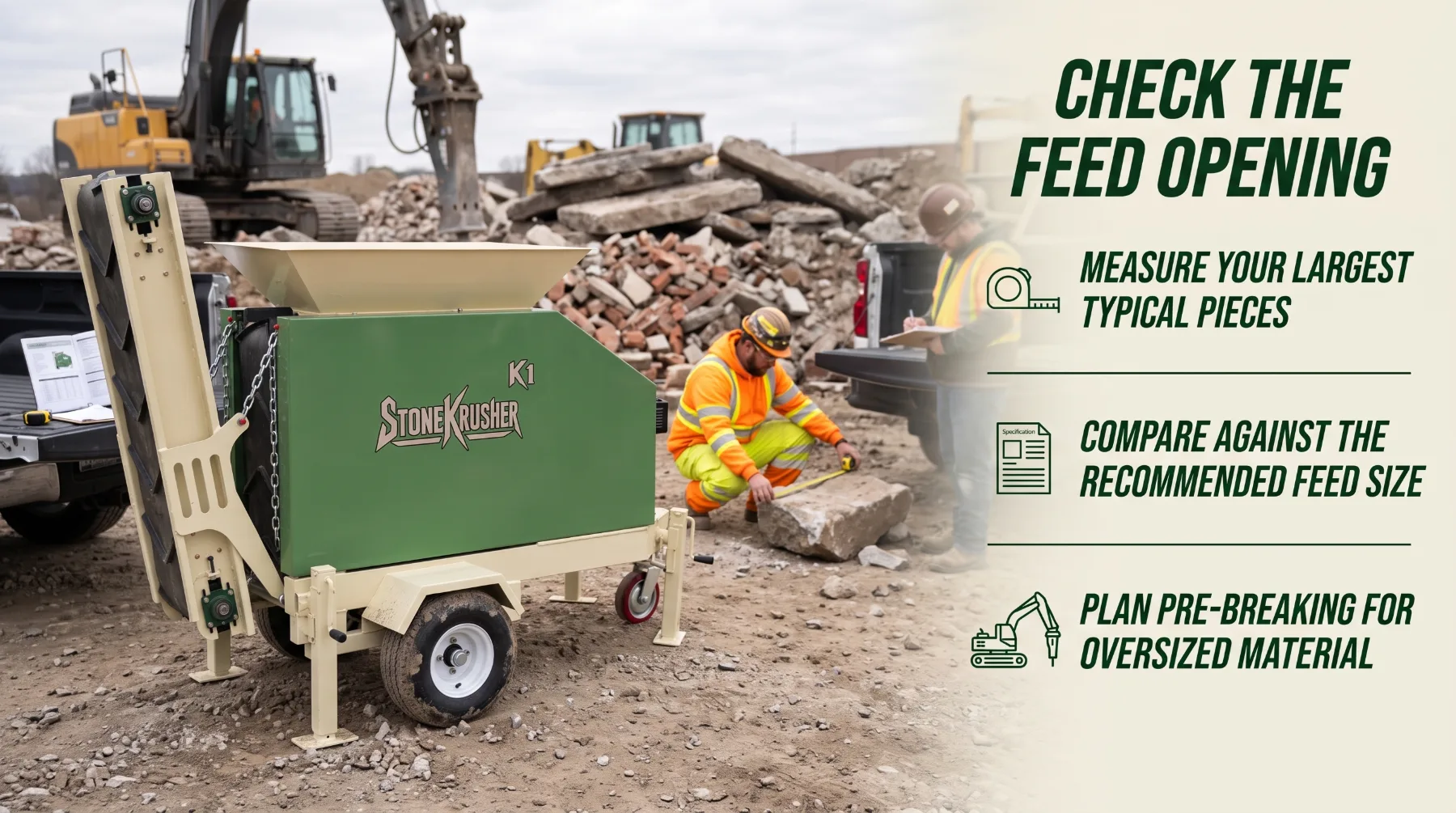
The feed opening is the entrance to the crushing chamber, and its dimensions determine the size of material the crusher can accept. Choosing an appropriate opening reduces the amount of preparation required before crushing begins.
When rocks and concrete chunks fit within the recommended feed size, a loader or excavator can often place them directly into the hopper. Oversized pieces must be broken down first, usually with a hydraulic breaker, or separated for other handling. This extra work increases labor, fuel consumption, and processing time across the job.
Read the manufacturer's specifications carefully. The maximum recommended feed size is often smaller than the full width of the opening because material must enter cleanly and engage properly with the crushing surfaces. For example, a crusher with a 24-inch opening might have a recommended maximum feed size of approximately 19 inches. Actual limits vary by machine, so follow the manufacturer's guidance rather than judging material size by eye.
Focus on the dimensions of debris produced by your regular projects instead of relying on the crusher's overall size. A machine may appear substantial but still have an opening that is too small for typical jobsite material. Thickness matters as well as width because flat, slab-shaped pieces can rotate and bridge across the opening.
Oversized material can bridge the hopper or become wedged between the crushing surfaces, interrupting production and creating a serious safety hazard. If material blocks the chamber, stop the feeder and crusher using the designated controls or emergency stop. Follow the manufacturer's blockage-clearing procedure, including complete shutdown and lockout where required. Never use your hands, feet, or a bar to clear material while the crusher is running. Do not climb onto the hopper or stand in areas where displaced or ejected material could strike you.
To compare machines objectively, measure the largest pieces from typical debris piles across several recent jobs. Compare those dimensions with each crusher's recommended maximum feed size. This helps estimate how much pre-breaking your crew will need and whether a larger opening would justify the additional equipment cost.
Key Takeaway: Feed opening size determines which material can enter the crushing chamber. Compare typical debris dimensions with the manufacturer's recommended maximum feed size to reduce pre-breaking work and prevent bridging and blockages.
Review the Discharge System
Crushing is only one part of the material processing cycle. Once material leaves the crushing chamber, it must be moved away efficiently. A discharge system that cannot keep pace allows material to accumulate, interrupts production, and adds handling work that reduces the savings of on-site crushing.
Many crushers use conveyors to transfer processed material to stockpiles, trucks, or containers. Conveyor length, discharge height, and material flow are important factors when evaluating the system. A longer conveyor places the stockpile farther from the crusher, giving the loader more working room and reducing congestion around the discharge area.
Discharge height determines how tall a stockpile can grow before it reaches the end of the belt. Because stockpiles typically form a cone, even a modest increase in discharge height can provide considerably more storage volume. Height also determines whether the conveyor can load material directly into a dump truck or container. Check the available clearance against the side height of the vehicles or containers you intend to use.
Material flow depends on factors such as belt width, belt speed, and how material transfers from the crushing chamber onto the conveyor. Poor flow can cause spillage, buildup, or backup around the discharge point. Spilled material creates additional cleanup work and may introduce slip and trip hazards.
Choose the discharge arrangement according to how you plan to handle the finished material. Immediate on-site use may require only a modest stockpile, while storing aggregate for a later construction phase may benefit from greater conveyor length and height. If material will be transported elsewhere, sufficient discharge height can allow direct loading into a truck and reduce double handling.
Additional equipment can improve product quality and processing efficiency. A magnetic separator removes loose steel from crushed concrete, while a screening system can separate different particle sizes and return oversized material for another pass. Water spray bars near the discharge point can help control dust.
Safe operation remains essential around the discharge system. Keep workers away from moving conveyors and falling material. Never reach into or underneath a moving belt, and shut down and lock out the equipment before clearing spillage or buildup. Check for overhead power lines and maintain the required clearance before raising a conveyor into its working position. If the stockpile reaches the conveyor's discharge point, reduce or stop feeding before material backs up into the machine.
Determine where the crushed material will go before selecting a crusher. The intended destination, whether a ground stockpile, truck, or container, helps define the discharge arrangement required for efficient handling.
Key Takeaway: Match conveyor length, discharge height, and material flow to your stockpiling, collection, and reuse plans. An undersized discharge system can create bottlenecks, increase handling, and slow production.
Think About Jobsite Mobility
Contractors who work across multiple projects need equipment that can move efficiently between locations. A crusher that is easy to transport and position spends less time waiting for a hauler and more time processing material.
A towable stone crusher mounted on a road-legal trailer frame can simplify transportation, provided its size and weight are compatible with the available towing setup. Before purchasing, check the tow vehicle's rated towing capacity against the crusher's transport weight, including installed options. Confirm that the hitch and coupler type and ratings suit the trailer frame and load. The combined weight of the vehicle and crusher may also affect licensing requirements.
Inspect the trailer's brakes, breakaway system, lights, and safety chains to ensure they are operational and meet applicable requirements. Check local and state transportation rules for width, height, weight, and any necessary permits. These requirements vary by jurisdiction and should be confirmed before moving the machine on public roads.
Prepare the crusher for every move according to the manufacturer's instructions. Fold and secure the conveyor in its transport position, raise and secure the support legs, and confirm that the hopper is empty and loose material has been removed.
Compact dimensions are particularly valuable on residential properties, small demolition sites, and confined construction areas. Limited space for crushing, stockpiling, and loading can make a machine that positions easily near the debris pile more productive. Measure gates, driveways, and access routes before mobilization, and check overhead clearance around trees, wires, and building overhangs.
Site preparation matters just as much as access. Position the crusher on firm, level ground, lower the support legs onto suitable footing according to the manufacturer's instructions, and leave enough space for the loader, stockpile, and designated exclusion zone. On residential and urban projects, account for neighboring properties by planning dust control, noise management, and working hours that comply with local requirements.
Compare the machine's transport weight and dimensions with your existing towing equipment before purchasing. A crusher that cannot be moved safely with the available setup may add hauling costs and scheduling delays to every project.
Key Takeaway: A towable crusher can simplify transportation between jobsites when its weight, dimensions, hitch, and towing requirements match your equipment and local regulations. Compact dimensions also make positioning easier on restricted sites.
Match the Crusher to Daily Work
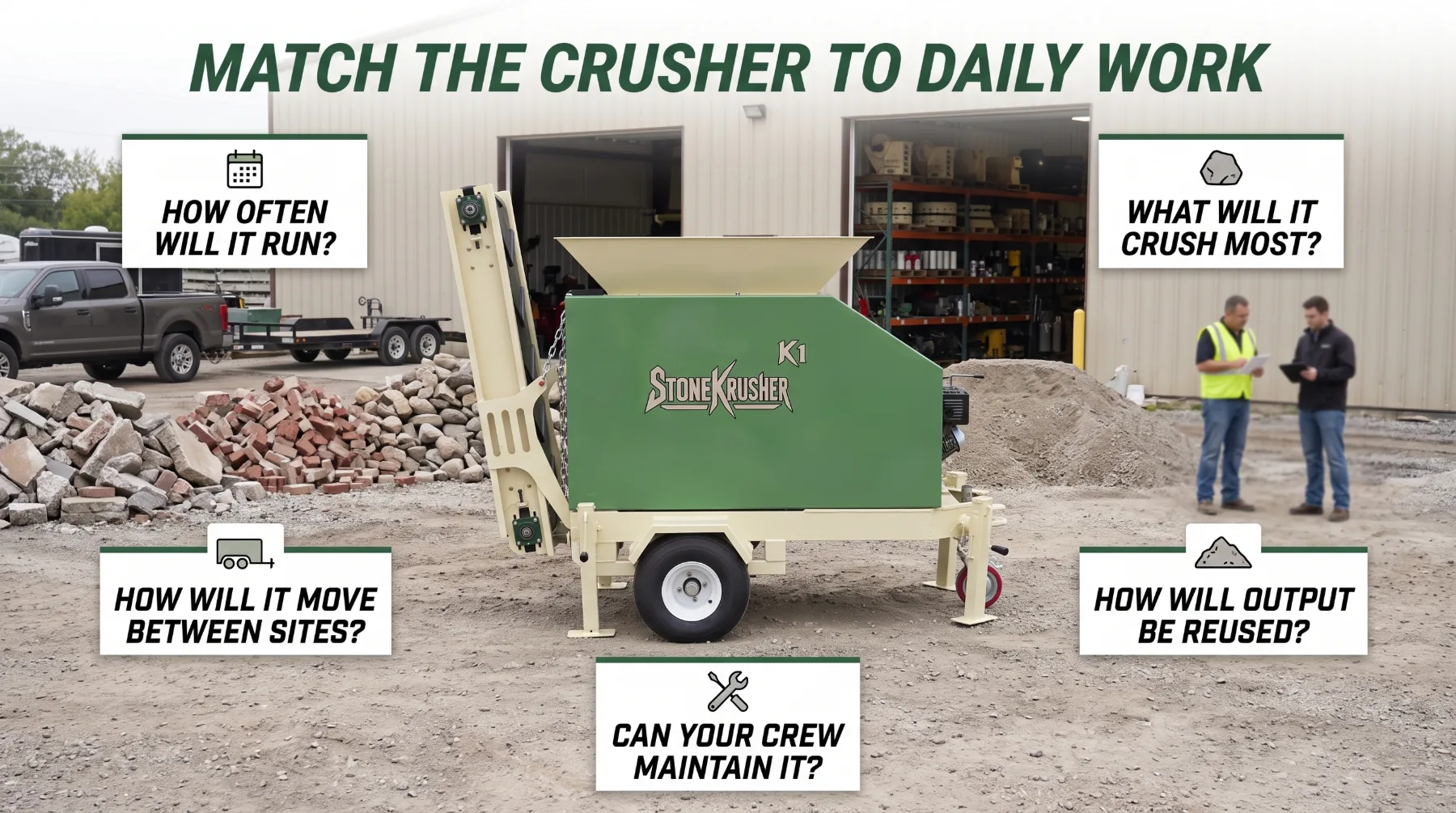
Selecting the right crusher requires more than comparing specifications and purchase prices. The best machine should match your materials, production needs, site conditions, and transport requirements. Evaluating these factors helps improve efficiency, control operating costs, and avoid purchasing equipment that does not suit your workload.
• Workload and Materials: Consider how frequently the crusher will operate and which materials you process most often. Choose a machine with suitable capacity for your regular workload and material hardness to avoid slow production or unnecessary investment in oversized equipment.
• Transport and Site Access: Evaluate how often the crusher must move between jobsites and whether your towing setup can handle it. Check machine dimensions, mobility, access restrictions, and available working space before deciding which model fits your operation.
• Output Requirements: Determine how the crushed material will be reused, such as for fill, road base, or drainage aggregate. Match the crusher's settings and discharge configuration to the required product size, and consider screening equipment if you need more consistent material.
• Operating and Maintenance Costs: Look beyond the initial purchase price and account for fuel, routine servicing, replacement wear parts, and possible downtime. Check parts availability, dealer support, and whether your crew has the tools and skills to maintain the machine properly.
• Training and Performance Testing: Ensure operators understand safe feeding, shutdown, lockout, and blockage-clearing procedures before work begins. If you are unsure which model to choose, consider a rental or demonstration using material from an actual project to evaluate performance under real working conditions.
Key Takeaway: Base your decision on how often the crusher will run, what it will process, how it will be transported, and how crushed material will be reused, and confirm the machine's maintenance needs fit your crew's resources.
Conclusion
A stone crusher can be a valuable investment for construction, demolition, landscaping, and site preparation by turning suitable waste material into reusable aggregate and reducing hauling and disposal costs. The right machine depends on the materials being processed, including their hardness, size, steel content, and contamination, because these factors affect crusher selection, wear, and operating efficiency. The feed opening should accommodate typical material dimensions to reduce pre-breaking work and minimize blockages, while production capacity should match the actual workload rather than relying solely on maximum rated output. Conveyor length, discharge height, and material flow should also suit the planned stockpiling, loading, and aggregate reuse process. For towable models, transport weight must remain within the towing vehicle and hitch ratings, while site access, setup space, and local transport requirements should be confirmed before purchase. Contractors should also evaluate how frequently the crusher will be used, the availability of wear parts, routine maintenance requirements, and dealer support. Reviewing material types, feed size, expected production, discharge needs, transport limitations, and maintenance resources helps identify a crusher that fits current projects and provides practical long-term value.
Frequently Asked Questions
What materials can a stone crusher process?Depending on its design, a stone crusher can process natural rock, concrete, brick, block, and other suitable construction debris. Contractors can reuse the crushed material for fill, road bases, or drainage when it meets project requirements. Dense rock may require more crushing force than softer brick, and reinforced concrete may contain steel that needs to be handled according to the manufacturer's guidance. Removing wood, excess soil, and other contaminants before crushing helps protect the equipment and maintain output quality.
Why is feed opening size important?Feed opening size determines the largest material pieces that can enter the crushing chamber. When rocks and concrete chunks fit within the recommended limits, operators can feed them with less preparation. Oversized pieces must be broken down or removed, which adds labor and time, and material that exceeds the machine's limits can cause bridging and blockages. Measuring the largest pieces commonly found at your jobsites and comparing them with the feed size specification helps you select a suitable crusher and estimate preparation needs.
Does crusher capacity stay the same on every job?No. Actual output depends on material hardness, feed size, moisture, loading consistency, product size, and operating conditions. Dense natural stone may process more slowly than softer brick or some concrete, and oversized material and uneven feeding can reduce production. Maintaining a steady supply of suitably sized material helps the crusher operate more consistently. When comparing models, consider realistic output for your typical materials rather than relying only on maximum advertised capacity.
Is a towable crusher useful for contractors?A towable crusher is useful for contractors who move equipment between multiple jobsites. It can simplify transport planning and reduce the need to arrange separate hauling for every move. Before choosing a model, check its transport weight and dimensions against the rated capacities of your tow vehicle and hitch, and confirm applicable towing regulations. Compact models can be easier to position on residential lots, small demolition zones, and confined construction sites when access and working space are suitable.