
How Mini Excavator Engine Size Affects Digging and Lifting Performance
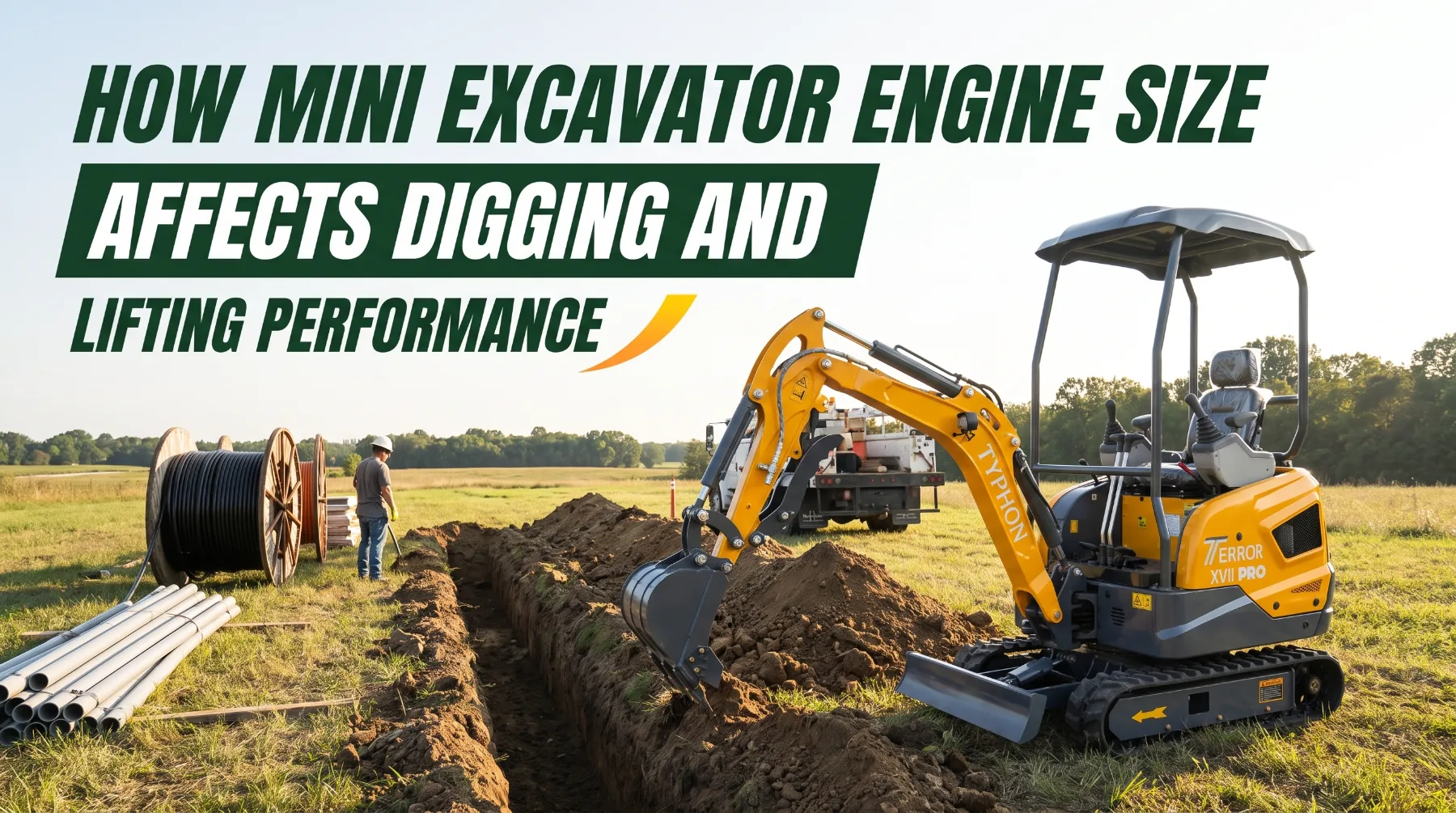
Engine size is easy to overlook when choosing a mini excavator. Most buyers focus on dig depth, bucket capacity, and operating weight, while treating horsepower as simply the number that keeps the machine running. In reality, engine output plays a major role in how much hydraulic power is available for digging, lifting, traveling, and handling demanding loads. A properly matched engine helps the excavator maintain performance when resistance increases, rather than struggling under heavy work.
The engine supplies the mechanical power that drives the hydraulic pump, and the hydraulic system converts that power into the force and movement used by the boom, arm, bucket, and other functions. That means engine size can influence hydraulic output, breakout and crowd force, lifting performance, and how well the machine handles multiple functions at once. It can also affect fuel consumption and component strain when the engine is consistently pushed beyond its practical capacity.
Engine Size Sets the Ceiling on Hydraulic Output
Think of the engine as the reservoir feeding everything downstream. A mini excavator never digs or lifts with the engine directly; instead, the engine turns a hydraulic pump, and that pump pressurizes fluid sent to the cylinders and motors that move the machine. The size of the engine, measured in horsepower and displacement, sets the hard limit on how much hydraulic power that pump can produce.
Two numbers translate engine size into work: flow and pressure. Flow, expressed in gallons per minute, controls how fast cylinders extend and motors turn. Pressure, expressed in PSI, controls how much force those cylinders can push through resistant ground or a heavy load. A larger engine can drive the pump to sustain higher flow and pressure at the same time, which is precisely what hard digging and heavy lifting demand.
The connection is direct and unforgiving. Hydraulic horsepower, calculated from flow multiplied by pressure, is a key measure of the power available for work, and the engine ultimately limits how much hydraulic power the system can deliver. When comparing two mini excavators, the one with the larger, properly matched engine is better able to maintain hydraulic flow and pressure under load, while a smaller engine can run out of power when digging or lifting demands increase.
Takeaway: engine size is the ceiling on hydraulic output, and hydraulic output is the ceiling on digging and lifting performance.
Breakout and Crowd Force Trace Back to Engine Size
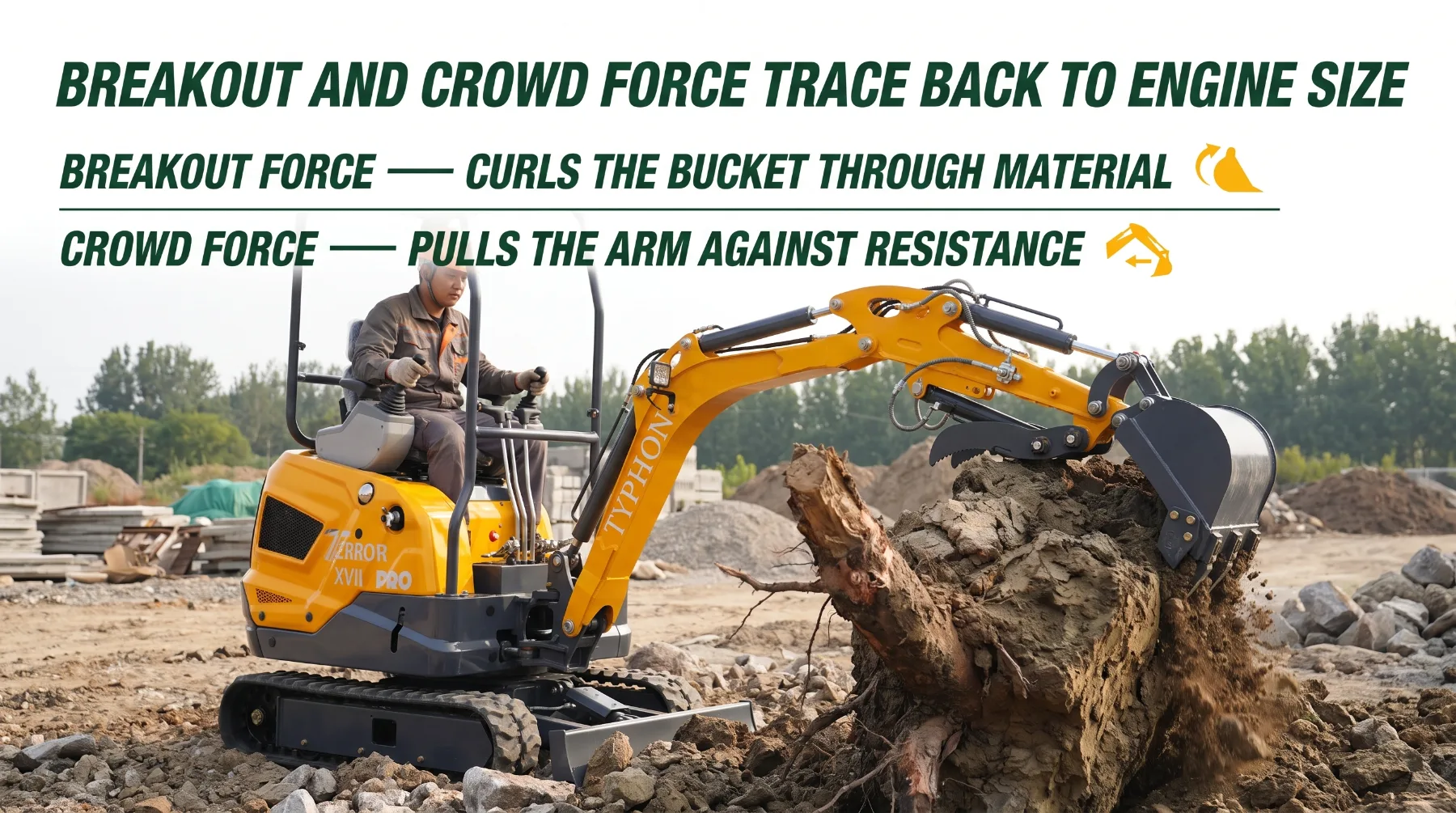
Digging muscle comes down to two forces. Bucket breakout force is the maximum force the bucket cylinder generates to curl the bucket and pry material loose. Arm crowd force is the force the arm cylinder produces to pull the bucket through the ground. Both depend entirely on hydraulic pressure, and pressure depends on an engine large enough to keep the pump at full output.
Resistance is the test that separates engine sizes. Dig into loose topsoil and almost any engine copes. Hit compacted clay, frost, or a buried root, and the load on the hydraulic system spikes. A larger engine has the reserve to hold pressure through that spike, so breakout and crowd force stay strong exactly when the material fights back. A smaller engine bogs, pressure sags, and the bucket stalls mid-curl.
The difference becomes clear pass by pass. A well-sized machine can curl a full bucket of dense soil in one smooth motion. A smaller-powered machine may need to take a thinner cut, hesitate in the material, and make two or three passes to move the same amount. The result is slower cycle times and lower productivity because the engine cannot maintain the hydraulic power needed to keep digging force consistent under heavy resistance.
Takeaway: the bigger the engine, the more breakout and crowd force the machine holds when digging conditions turn tough.
Lifting Capacity and Load Control Depend on Engine Reserve
Raising a load high tests an engine differently than digging does. Lifting requires the hydraulic system to generate steady, sustained pressure to hoist a load and hold it precisely against gravity, often with the boom extended far from the machine. Engine size determines whether that pressure stays rock-steady or fades as the load climbs.
Control matters as much as raw capacity here. A larger engine feeds the lift cylinders smoothly, so the boom rises in one even motion and holds firm where the operator stops it. An undersized engine produces jerky, uneven lift movement and can let the load drift or settle when pressure sags, which turns a routine placement into a struggle the operator feels through the controls.
Picture setting a heavy pipe section into a trench. A properly sized machine lifts it cleanly, swings it over, and lowers it with confidence. A machine short on engine capacity lifts in fits and starts, sags under the weight, and forces the operator to fight for the precision the job demands. Load charts assume the hydraulics can deliver rated force, and only an adequately sized engine makes that assumption true.
Takeaway: engine reserve is what turns a lift-height rating into safe, controlled lifting you can trust at full extension.
Combined Tasks Reveal What a Small Engine Can’t Hide
Real work rarely involves one function at a time. A typical cycle can include digging, swinging a loaded bucket, and tracking forward, with the engine and hydraulic system handling these demands together. This is where engine capacity becomes more noticeable, because multiple functions require the machine to maintain hydraulic performance at the same time.
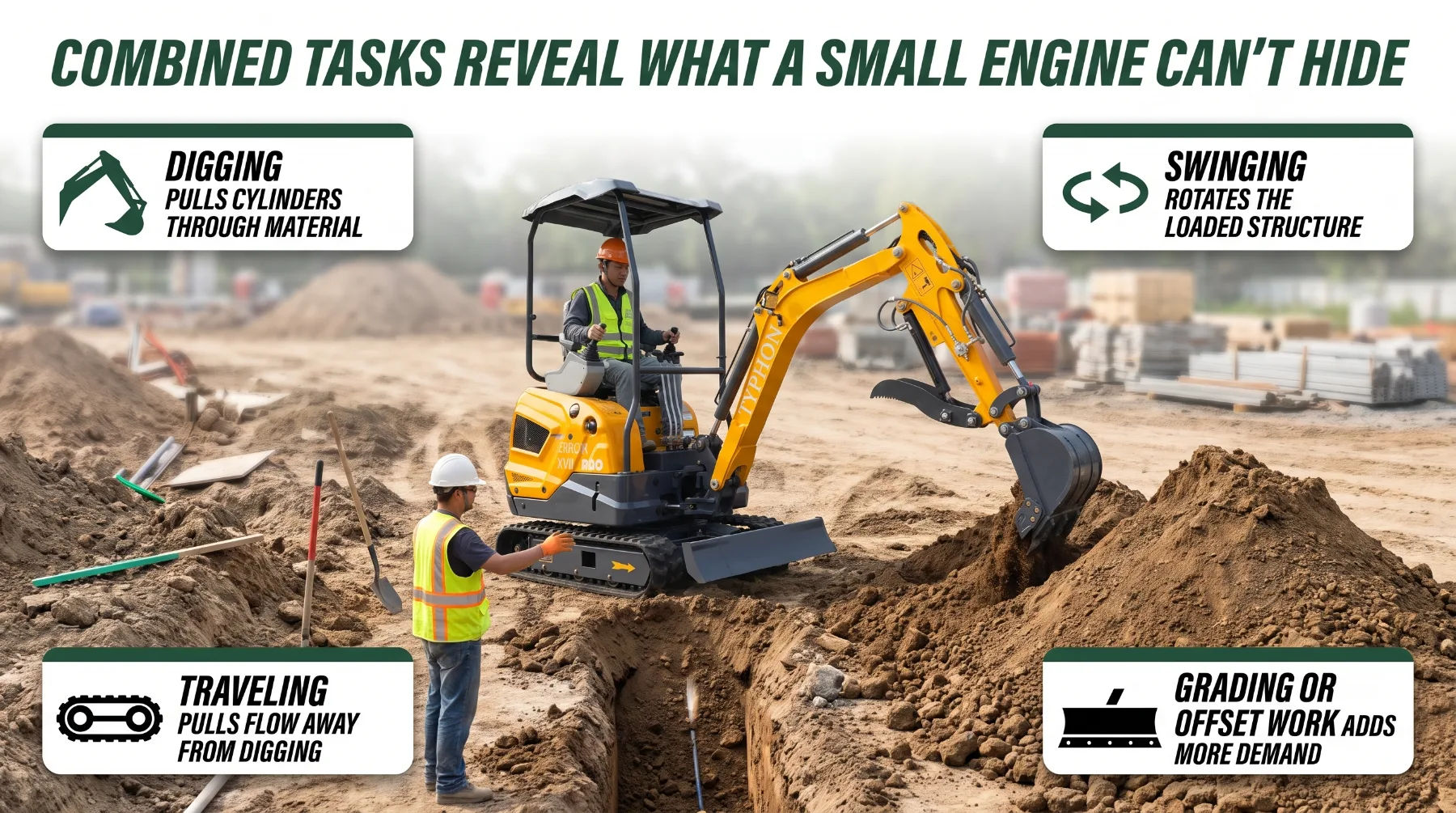
Walk through a standard dig-and-dump sequence:
- Digging pulls the bucket and arm cylinders hard through material, demanding high pressure.
- Swinging rotates the loaded upper structure, drawing its own share of hydraulic power.
- Traveling repositions the tracks, pulling flow away from the dig functions.
- Grading or offset work along a wall stacks still more demand on the system.
A larger engine can handle these overlapping demands more effectively, maintaining digging, swing, and travel performance within the same cycle. A smaller engine may struggle when several functions operate together, causing swing speed to drop, digging to slow, or travel performance to weaken. While single-function operation may appear adequate, combined hydraulic demand can reveal whether the engine has enough capacity for the machine’s workload.
Takeaway: engine size shows its true value in the overlap of tasks, where an undersized machine is forced to trade one function for another.
Fuel Efficiency and Wear Vary Sharply by Engine Size
Cost follows engine sizing in ways that compound over time. An engine forced to run near its ceiling all day burns fuel inefficiently, consuming more diesel per cubic yard moved than a larger engine working comfortably inside its efficient range. Across a season of hard shifts, that gap lands squarely on the fuel bill.
Heat is the second penalty, and it’s harsher on small engines pushed hard. A laboring engine runs hotter and drives hydraulic fluid past its efficient temperature range, where the fluid transmits power poorly and breaks down faster. The very system responsible for digging and lifting loses capability precisely when the machine needs it most.
Chronic strain can accelerate wear across an undersized machine. The hydraulic pump may run near full output more often, while heat and pressure spikes can shorten the life of seals and hoses. The cooling system also has to remove more heat, and the engine itself may spend long periods operating close to its limit, increasing stress over time. A properly sized engine can reduce this strain, operate more efficiently, and help protect the hydraulic system. However, a larger engine is not automatically cheaper to operate because an oversized engine working below its useful load can consume unnecessary fuel. The goal is to match engine size to the machine and workload, achieving the right balance between fuel cost, performance, and component life.
Conclusion
Engine size is the foundation behind every figure on a mini excavator’s spec sheet because it sets the hydraulic output available for digging and lifting, determines whether breakout and crowd force can be maintained under resistance, supports controlled lifting at height, and provides the reserve needed when digging, swinging, and traveling happen together. The right-sized engine delivers enough power for the machine’s toughest real work while avoiding unnecessary fuel consumption and wear, whereas an undersized engine can struggle under heavy loads and an oversized engine may waste fuel. When choosing a mini excavator, evaluate your hardest material, lifting demands, attachments, and actual work cycle, then confirm the engine-to-machine match with a hands-on test.
Frequently Asked Questions
Does a bigger engine always mean better digging performance?
Not necessarily. A larger engine provides greater power capacity for the hydraulic system, which can help maintain flow and pressure when digging resistance increases. This supports stronger and more consistent breakout and crowd performance in tough soil. However, a smaller engine that is properly matched to the machine can still deliver excellent digging performance in lighter soil and less demanding work while using less fuel. The best choice is an engine sized for the actual workload and operating conditions, rather than simply choosing the largest engine available.
How does engine size affect lifting at full extension?
Lifting a load high and far demands steady, sustained hydraulic pressure, and engine size determines whether that pressure holds. A larger engine feeds the lift cylinders smoothly, so the boom rises evenly and stays firm where you stop it, even at full reach. An undersized engine lets pressure sag under the load, causing jerky movement and drift that make precise, safe placement difficult. If you lift heavy loads at extension regularly, engine reserve is essential.
Why does my mini excavator slow down when I dig and swing at the same time?
Digging and swinging draw on the same engine and hydraulic system, so their demands increase when they happen together. If the engine is undersized, hydraulic performance can drop under this combined load, causing the swing to slow, digging force to decrease, or both functions to become less responsive. An engine with enough capacity for combined operation can maintain more consistent performance and keep the work cycle moving efficiently.