
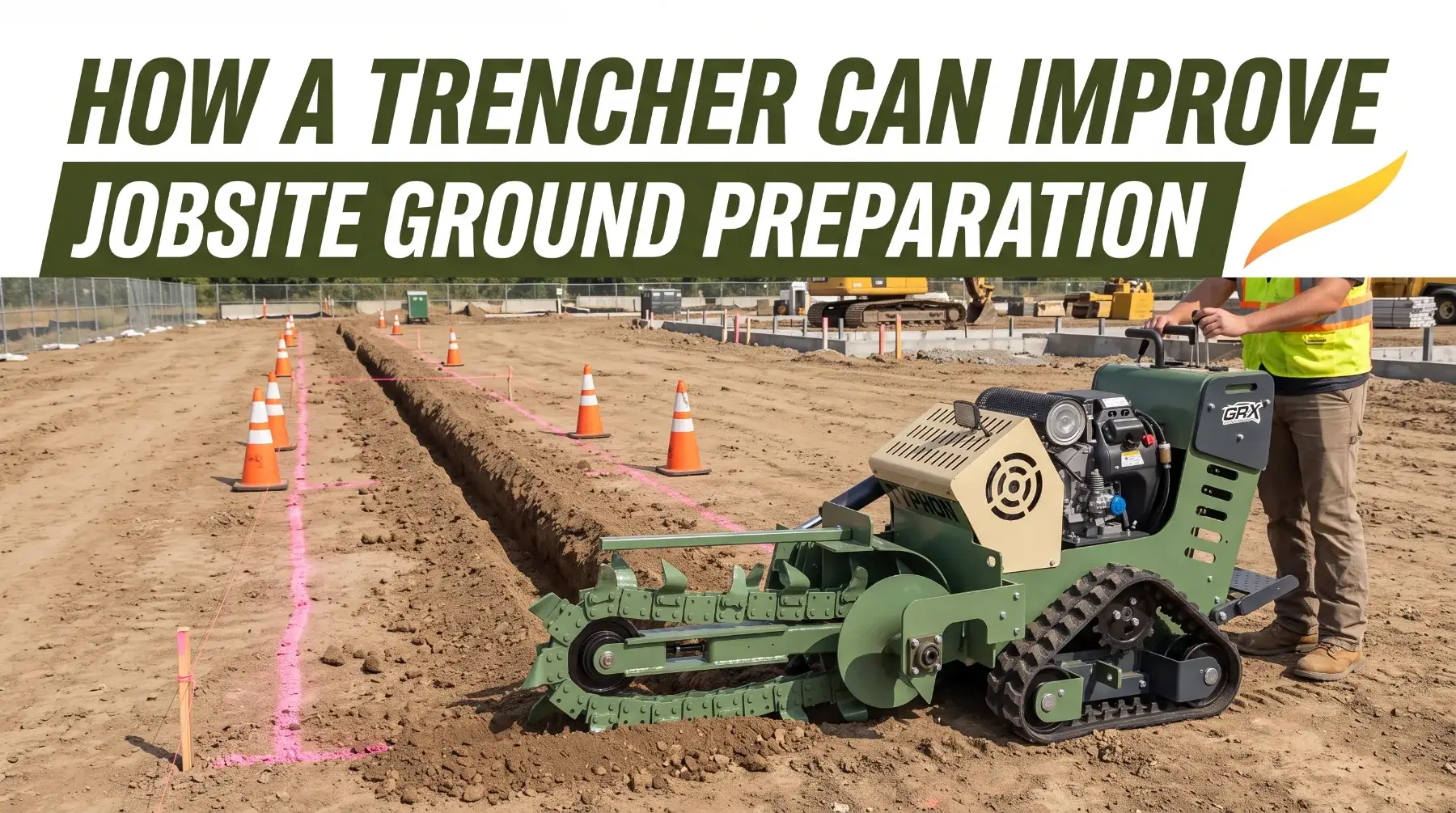
How a Trencher Can Improve Jobsite Ground Preparation
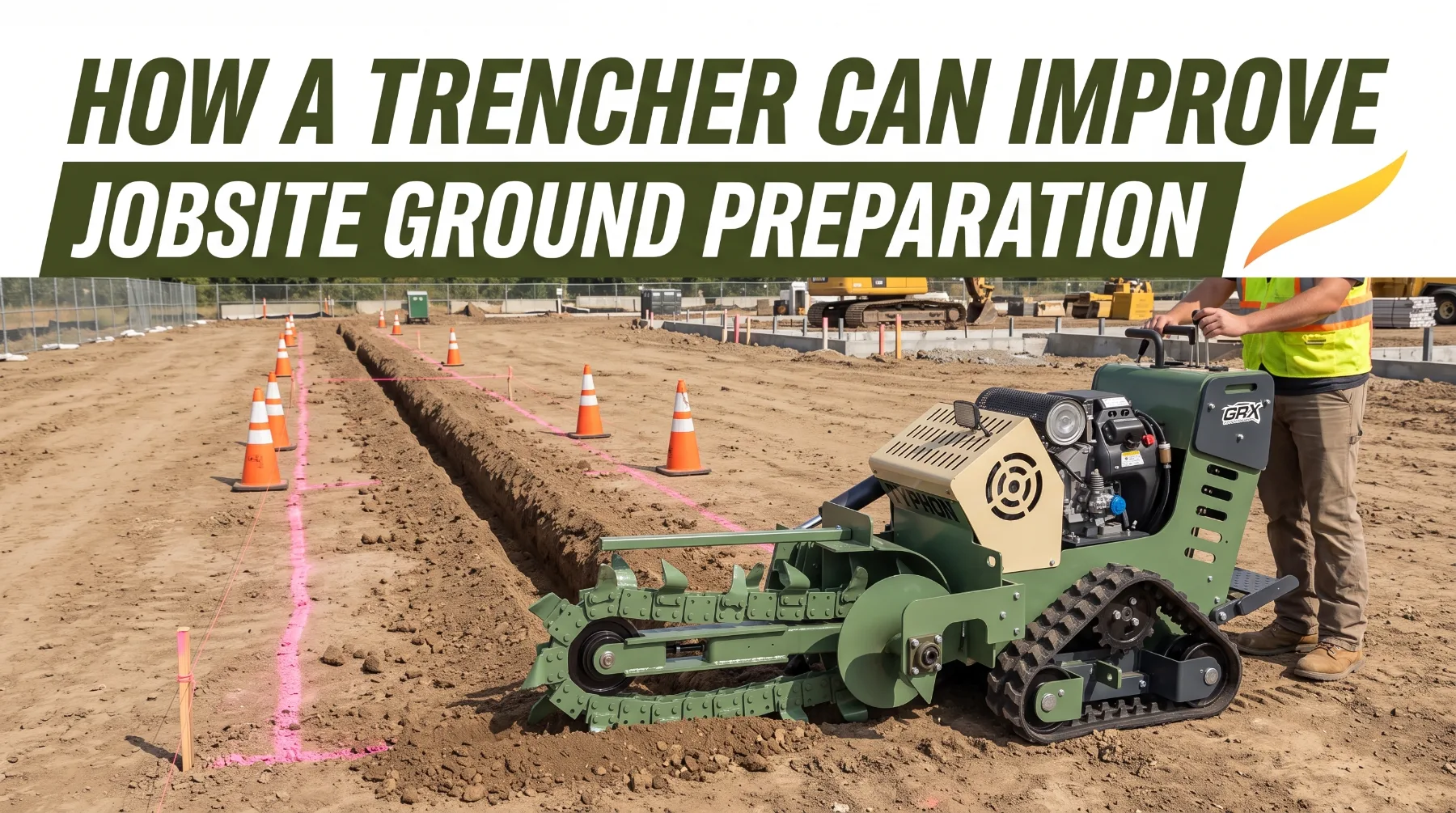
Before construction can move above ground, much of the important preparation happens below the surface. Drainage lines need defined routes, utilities require narrow paths, and irrigation systems need channels cut before finishing work can begin. Opening large sections of the site for these tasks would create unnecessary excavation and extra material to handle. A trencher provides a more focused approach by cutting narrow, defined channels along the required route.
Precise trenching allows specific sections of the jobsite to be prepared without disturbing more soil than necessary. The cutting chain or wheel follows the marked path while removing material in a continuous line, creating space for pipes, cables, and other underground systems. Trench dimensions can also be matched to the installation requirements, helping keep excavation work controlled and consistent.
Across early-stage construction work, this focused digging method can simplify the transition from ground preparation to installation. Less unnecessary excavation can mean less spoil to manage and less surrounding ground to restore afterward. Matching the trencher to the soil conditions, trench dimensions, and planned route helps create the defined channels needed for infrastructure before the visible stages of construction begin.
Creating Defined Ground Channels
A trencher uses a cutting chain or wheel to remove soil along a planned path, producing a defined channel exactly where the work requires it. Rather than opening a broad area and reshaping it afterward, the machine cuts a clean, consistent trench sized to the application in front of it. That precision is the foundation of everything else a trencher contributes to ground preparation.
Those defined channels set the stage for the infrastructure that follows. Consistent trenching gives crews prepared ground ready for pipes, cables, drainage systems, or similar installations, cut to a dependable line and profile. When the channel is clean and consistent from the start, the installation that comes next has a proper base to work from, which keeps the whole sequence on track.
Key takeaway: A trencher cuts a defined channel along a planned path with its chain or wheel, preparing consistent ground for pipes, cables, drainage, and similar infrastructure.
Preparing Routes for Utilities
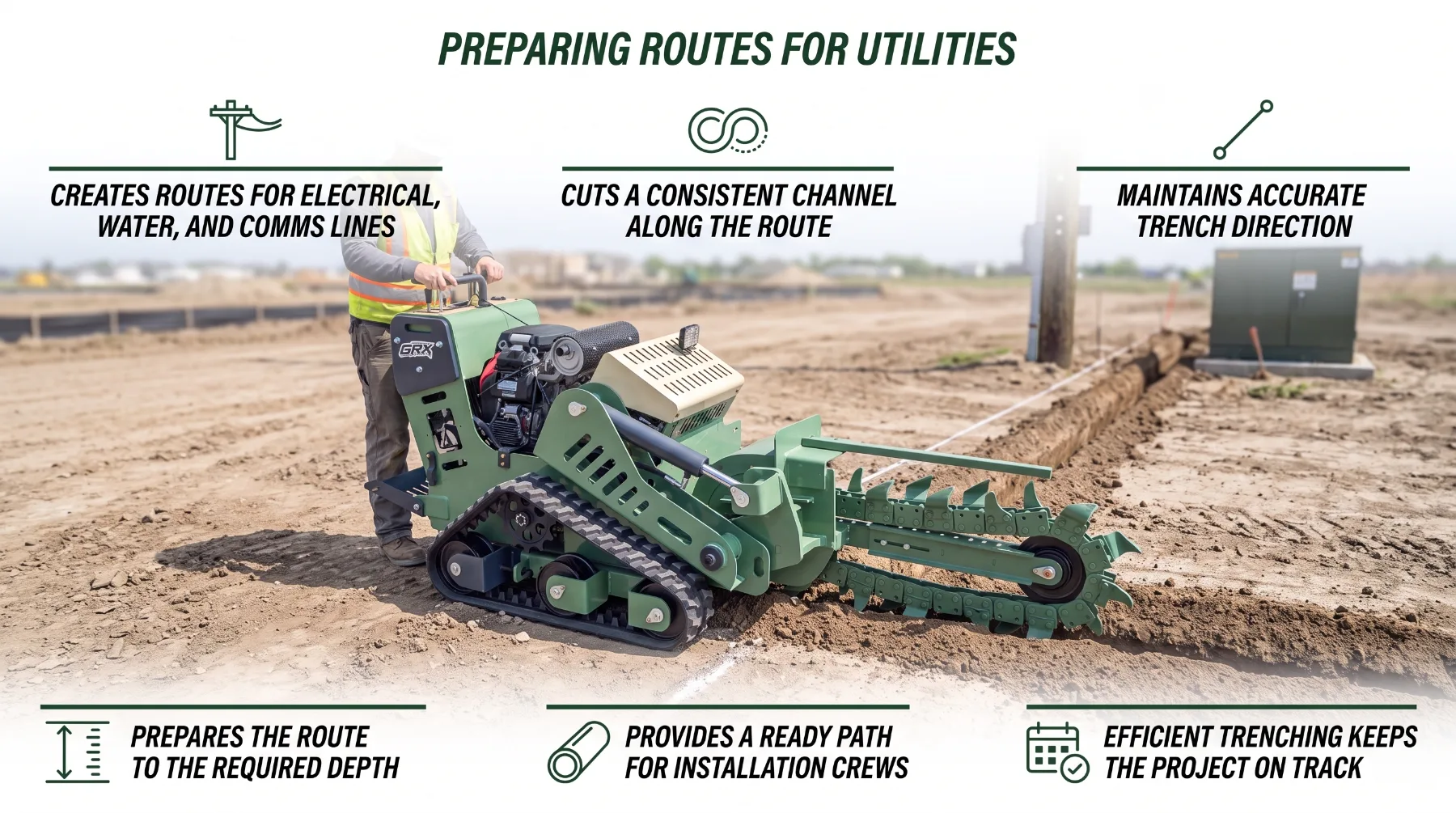
Utility installation often takes place early in site development, before roads, landscaping, and finished surfaces are completed. Electrical lines, communication cables, water lines, and irrigation systems all require underground routes, making efficient trench preparation an important part of keeping the project moving.
A trencher creates narrow, continuous channels as it travels, helping prepare utility routes with consistent cutting performance. Once the trench is completed to the required line and depth, installation crews can proceed with placing the underground services.
- Utility Routing: Creates underground paths for electrical, communication, water, and irrigation lines.
- Continuous Trenching: Cuts a consistent channel as the machine moves along the planned route.
- Line Accuracy: Helps maintain the required trench direction for utility installation.
- Trench Depth: Allows the route to be prepared according to the required installation depth.
- Installation Access: Provides a prepared path for crews to place underground services.
- Project Progress: Efficient trench preparation helps prevent utility work from delaying later site activities.
Key takeaway: A trencher efficiently prepares the underground routes utilities need early in site development, allowing electrical, communication, water, and irrigation installation to proceed on schedule.
Supporting Drainage Preparation
Proper drainage is often a critical part of preparing a construction site, and it starts with getting water routes into the ground. Trenches provide the paths for drainage pipes and other systems designed to move water away from specific areas, so the site stays workable and protected once building begins. Preparing those routes correctly is a job well suited to a trencher’s continuous, defined cut.
The specifics, though, always come from the plan. The required trench dimensions and layout depend on the drainage design and the conditions of the site itself, so there’s no single setup that fits every job. Depth, width, and alignment need to follow what the drainage design calls for and what the ground allows. Cutting the trench to those specifications is what lets the drainage system perform as intended, so it’s worth confirming the design requirements before the machine starts cutting.
Key takeaway: A trencher can cut the routes drainage systems need, with the required trench dimensions and layout determined by the drainage design and site conditions.
Reducing Unnecessary Excavation
Large excavation equipment can remove far more soil than a narrow installation actually requires, leaving extra spoil to manage and more ground disturbed than the work called for. A trencher takes the opposite approach, focusing its cutting action tightly on the required trench path. It removes what the installation needs and leaves the rest of the ground undisturbed.
That focus pays off wherever only a narrow channel is needed. By keeping the excavation confined to the trench line, a trencher limits unnecessary disturbance to the surrounding area, which means less soil to handle and less ground to restore later. On sites where preserving the areas around the work matters, that restraint is a real advantage. A narrow, purposeful cut keeps ground preparation efficient and the site easier to manage from start to finish.
Key takeaway: A trencher focuses excavation on the required trench path, reducing unnecessary soil disturbance compared with wider excavation methods where only a narrow channel is needed.
Working Along Planned Routes
Ground preparation frequently calls for excavation that follows a specific alignment, whether that’s a utility route, a drainage line, or an irrigation path laid out on the plans. A trencher suits this well because it travels along the intended route while its cutting system removes material continuously, producing the trench along the exact line as the machine advances.
Staying true to that line depends on preparation and control working together. Proper marking of the route gives the operator a clear path to follow, and steady operator control keeps the cut aligned with it as the machine moves. Together they keep the excavation matched to the project requirements from one end to the other. Marking the route clearly and maintaining consistent control is what turns the plan on paper into an accurately placed trench in the ground.
Key takeaway: A trencher cuts continuously along a specific alignment, so proper route marking and steady operator control keep the excavation aligned with the project requirements.
Handling Different Ground Conditions
Ground preparation rarely offers one uniform material to cut through. A route can pass through loose soil, compacted ground, clay, roots, and other conditions, and each behaves differently under the cutting system. Recognizing what the ground holds is the first step toward keeping the work productive rather than fighting the machine through unexpected material.
Performance here depends on the machine configuration and the cutting equipment selected for the conditions. Matching the chain and cutting teeth to the ground helps the trencher cut effectively while limiting unnecessary wear on the digging components. Equipment suited to hard or root-filled ground protects both output and the machine, whereas a mismatched setup slows the work and wears parts faster than it should. Choosing the right configuration for the conditions is a straightforward way to keep operation productive and the equipment in good shape.
Key takeaway: Cutting performance depends on machine configuration and cutting equipment, so matching the chain and teeth to the ground conditions maintains productive operation and limits component wear.
Improving Workflow Between Tasks
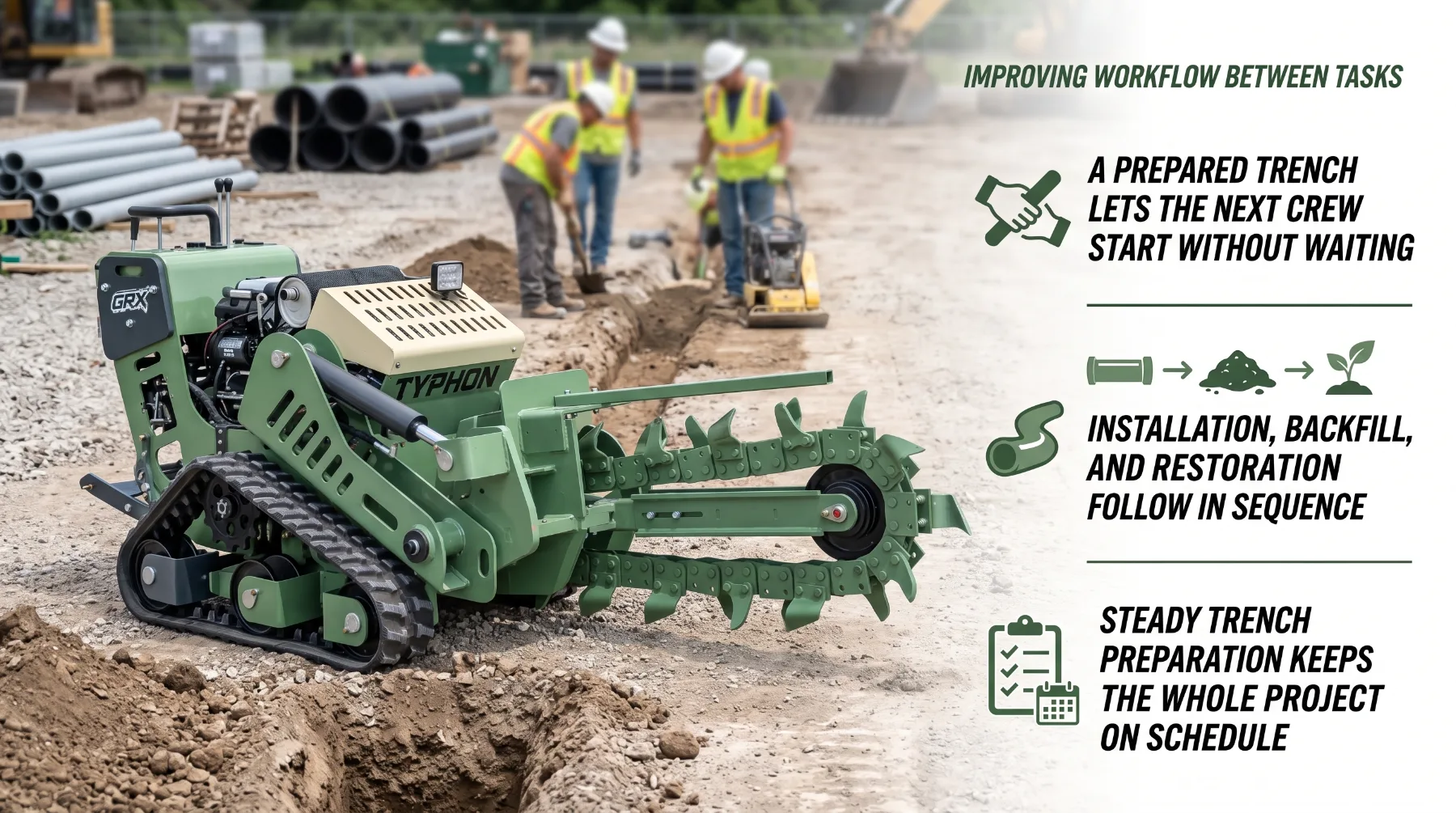
A trencher’s contribution reaches beyond the trench itself into how smoothly the whole project moves. A prepared trench lets different crews carry on with their work without waiting for slower manual excavation to catch up. Once a channel is cut and ready, the next stage can begin, which keeps the project sequence flowing rather than stalling between steps.
That handoff is where trenching shows its value as part of a larger process. As suitable sections become ready, installation, inspection, backfilling, and surface restoration can each follow in their planned order, one stage feeding the next. This makes trenching one link in a broader ground-preparation workflow rather than an isolated task. Preparing trench sections steadily and in sequence helps every crew that follows stay productive, keeping the overall project on schedule.
Key takeaway: A prepared trench lets installation, inspection, backfilling, and restoration follow in sequence without waiting on manual excavation, making trenching part of a broader ground-preparation workflow.
Conclusion
A trencher supports jobsite ground preparation by producing narrow, defined channels for utilities, drainage, irrigation, and other infrastructure while limiting excavation to the required route. Its continuous cutting system maintains steady trench production, allowing installation, inspection, backfilling, and surface restoration to follow in sequence. Trench dimensions should be established from the project or utility design, while machine configuration, chain or wheel type, and cutting teeth should be matched to soil conditions to maintain cutting performance and control component wear. Route alignment also requires accurate marking, underground utility verification, adequate site access, and consistent operator control to maintain the specified trench path and profile. Limiting excavation width can reduce unnecessary spoil and ground disturbance, but the trench must still meet the required dimensions and installation requirements. Coordinating trenching sections with the overall construction sequence helps keep following crews productive and reduces delays between excavation and subsequent work. Proper route planning, machine selection, cutting equipment, and site inspection allow a trencher to provide consistent ground preparation for utility and infrastructure projects.
Frequently Asked Questions
What ground preparation work can a trencher handle?
A trencher is suited to ground preparation that requires narrow, continuous channels rather than wide excavation. It can prepare routes for utilities, drainage, irrigation, cables, pipes, and other installations that follow a defined path. Since it cuts continuously along the planned route, it can create consistent trenches for early site-development work. The machine and cutting equipment should be matched to the required trench dimensions and ground conditions.
Does a trencher reduce soil disturbance?
Yes. A trencher focuses excavation on a narrow cutting path, reducing unnecessary soil disturbance compared with wider excavation methods. This means less soil to remove and stockpile, less disruption around the trench, and potentially less restoration work after backfilling. It is especially useful when only a narrow channel is required, although the excavation method should always match the project specifications and site conditions.
Can a trencher prepare drainage routes?
Yes. A trencher can create drainage channels when the required dimensions and ground conditions suit the machine. Its continuous cutting action is useful for preparing routes for drainage pipes and similar systems. Trench depth, width, and layout depend on the drainage design and site conditions, so the machine and cutting equipment should be checked before work begins. Cutting the trench to the specified dimensions provides a suitable route for the drainage system.
What should be checked before trenching?
Check the planned route and mark it clearly before cutting. Verify the location of existing underground utilities, then assess the soil and ground conditions, including compacted soil, clay, roots, or other resistance that may affect cutting. Confirm the required trench depth and width from the project design, and make sure the trencher can safely access and follow the route. Matching the machine and cutting equipment to the site helps keep the work accurate and productive.