
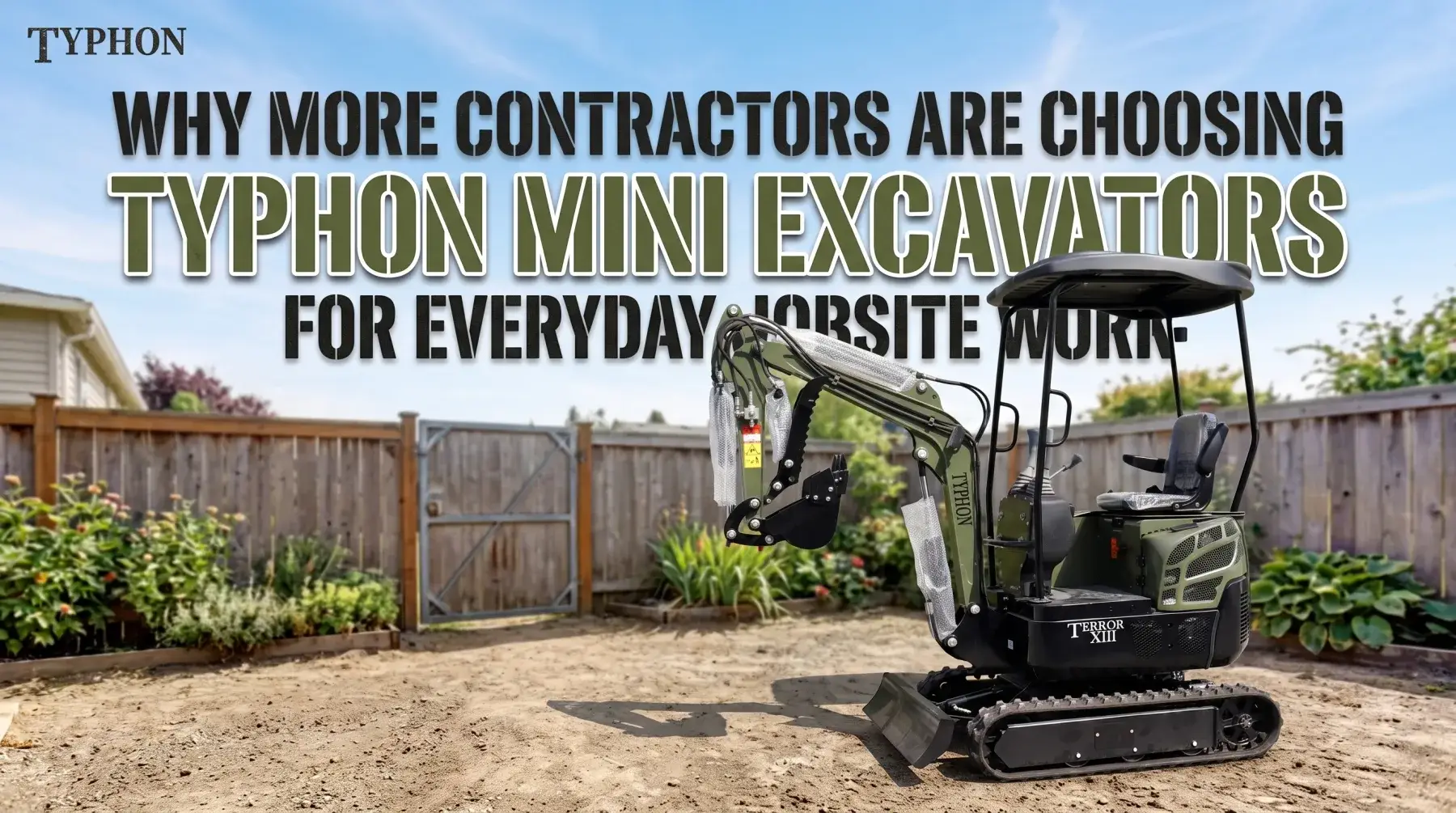
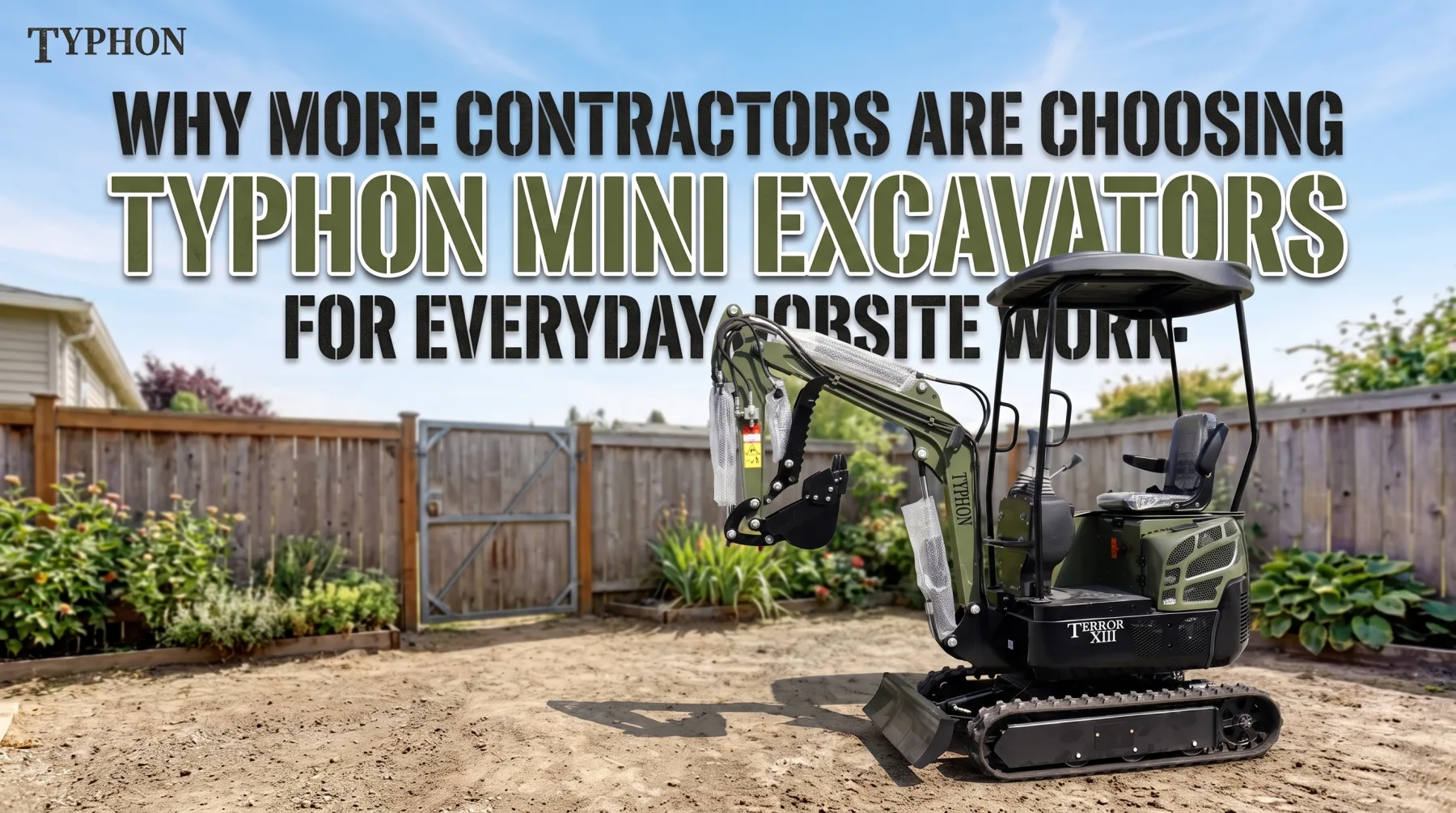
Why More Contractors Are Choosing TYPHON Mini Excavators for Everyday Jobsite Work
 A utility contractor pulls up to a backyard job that needs a trench for a new water line, a few stumps pulled, and footing holes dug before the week ends. He brings a full-size machine because it's what he owns, then spends the morning trying to squeeze it through a side gate it will never fit, tearing up the lawn as it lumbers across, and finally parking it useless while his crew digs the tight spots by hand. The big machine wasn't broken, and his operator knew it well. It simply couldn't work the confined, everyday jobs that fill most of his calendar, and a smaller machine would have finished the whole scope by lunch. That mismatch is precisely why so many crews are rethinking the machine they reach for on daily work. Handling the steady stream of small, varied jobs that make up a contractor's week takes a machine sized and built for exactly that rhythm, not one borrowed from heavy-duty work. TYPHON mini excavators earn their spot on everyday jobsites by pairing compact access, dependable Kubota power, and the attachment versatility that varied daily work demands. This guide walks through what makes these machines fit daily use:
- Why a mini excavator suits the everyday jobs contractors repeat most
- How compact size opens access a larger machine can't reach
- The reliability behind the Kubota engine
- Hydraulic versatility and the range of attachments they run
- Low ownership and running costs that protect a budget
- How to match the right TYPHON model to your work
Here's what to weigh before you commit a machine to your daily schedule.
Matching the Machine to the Work You Repeat
Everyday jobsite work rarely calls for the biggest machine on the lot, and that reality is exactly where a mini excavator proves its worth. Most daily jobs mean trenching, digging footings, pulling small stumps, grading tight areas, and moving material in spaces a full-size unit fights to enter. A machine built for that scale finishes the common tasks efficiently rather than overpowering them and creating problems. Contractors reaching for a TYPHON find a unit proportioned for the work that actually fills their week. Rather than hauling a heavy machine to a job a compact one handles cleanly, a crew runs the right-sized tool that fits the site, spares the ground, and gets in and out fast. Fit to the daily job beats raw power every time small, varied work is the norm. Repetition is what turns that fit into real savings. A machine sized for the jobs you take on again and again earns its keep across a full season instead of sitting idle between the rare tasks that demand something bigger. Key takeaway: a TYPHON mini excavator matches the scale of everyday work, so it handles the common jobs efficiently instead of overpowering them. Buy to the work you repeat, and the machine earns its place day after day.
Squeezing Into Spaces Bigger Machines Can't Reach
Access defines what a machine can actually accomplish on a tight site, and compact dimensions are where TYPHON mini excavators separate themselves. Slim enough to pass through standard gates, fit between structures, and work inside fenced backyards, these machines reach jobs a full-size excavator simply can't approach. Getting the machine to the work is half the battle on confined residential and urban sites. Maneuverability inside the site matters as much as fitting through the entrance. Many mini excavators offer a compact or zero tail swing, so the rear of the machine stays within the tracks as it rotates, letting an operator dig hard against walls, fences, and foundations without clipping them. Working close to obstacles is exactly what tight jobs demand, and a machine built for it keeps the crew productive where a larger unit stalls.
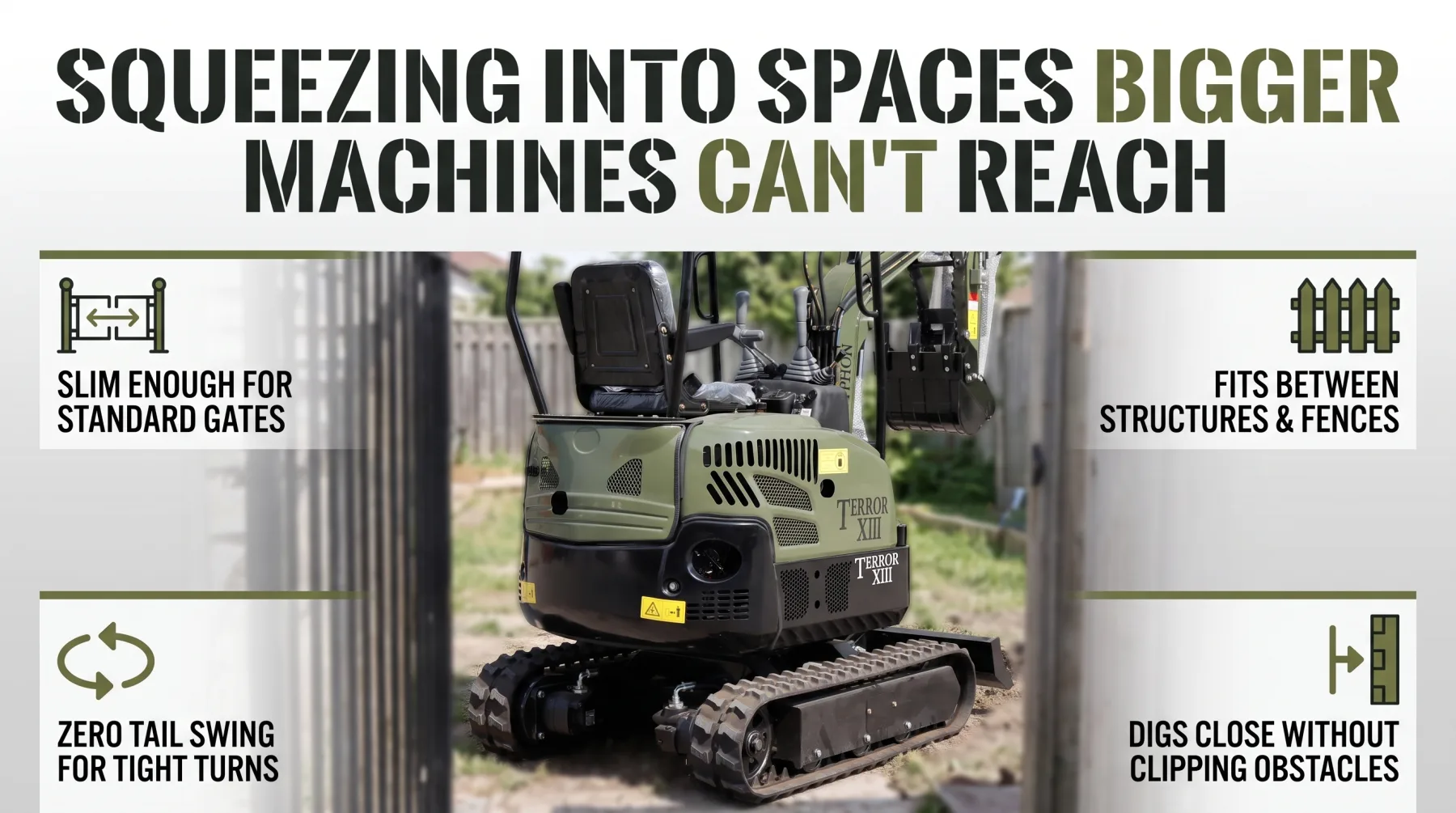 Ground protection rounds out the compact advantage on finished sites. Because a mini excavator rides light on rubber tracks, it crosses lawns, driveways, and pavers without the rutting and damage a heavy machine leaves behind, sparing you the repair bill and the unhappy client. Key takeaway: a TYPHON mini excavator fits through gates, works close to obstacles with tight tail swing, and spares finished ground. Compact size turns hard-to-reach jobs into work you can actually complete.
The Kubota Engine Keeping Crews Running
Reliability decides whether a machine helps a contractor or hurts one, since a breakdown mid-job stalls a crew that usually has no backup unit waiting. TYPHON mini excavators pair a Kubota engine with a rugged build, giving a contractor the dependability that a tight daily schedule can't do without. Equipment that starts every morning and finishes every job protects a calendar with no room for surprise downtime. Kubota's long track record carries genuine weight behind that dependability. Known for longevity and steady output, these engines hold up under the constant demands of daily digging and demand little beyond routine care, so the machine keeps working when a lesser powerplant would sideline the crew. Trusting a proven engine means fewer surprises and less time lost to repairs across a busy season. Sturdy construction stretches the machine's working life well past its purchase price. Heavy-duty components and a frame built for repeated digging absorb the daily strain, so a contractor gets years of service from a single investment rather than replacing a worn machine early. Key takeaway: a Kubota-powered TYPHON delivers the reliability and longevity daily work depends on, keeping downtime low and stretching one purchase across many seasons. Dependability is the quiet spec that pays back every shift.
One Machine, Many Tools
Versatility is what turns a single mini excavator into a machine that covers a contractor's whole daily spread. Beyond the standard digging bucket, these units run augers for post and footing holes, hydraulic thumbs for grabbing brush and rock, breakers for concrete, grapples for debris, and compaction plates for backfill. Each tool reshapes what the machine does, so one unit tackles jobs that would otherwise demand several pieces of equipment. Keep Your Mini Excavator Running Smoothly, A Guide to Hydraulic Cylinder Care helps ensure these attachments and hydraulic systems continue working efficiently through proper maintenance and regular inspection.
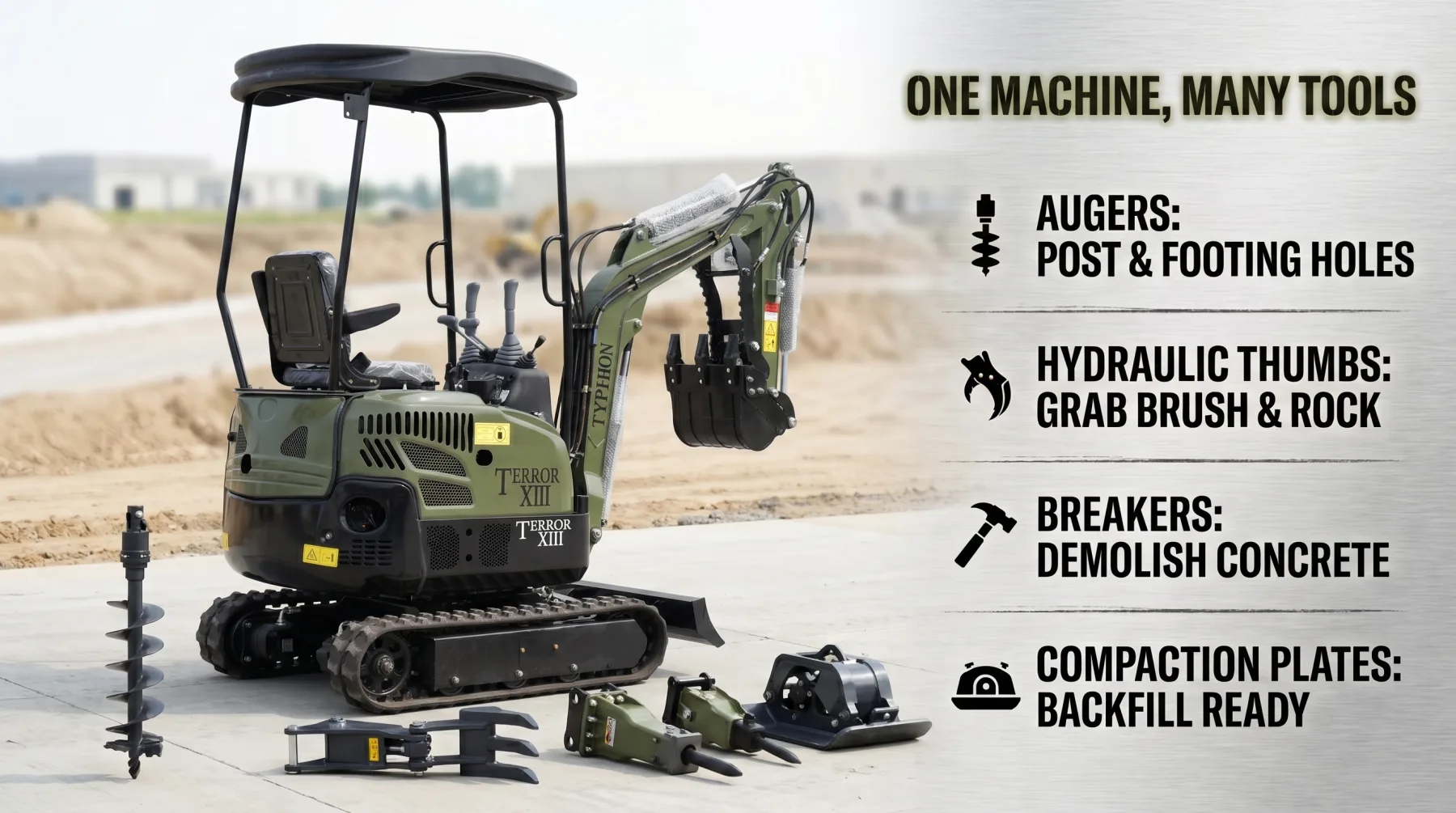 Auxiliary hydraulics are what make that range possible. TYPHON machines supply the hydraulic flow that powered attachments need to perform, so a thumb grips firmly and an auger drills steadily rather than starving halfway through the task. Confirming the machine feeds your thirstiest tool keeps every attachment earning its keep instead of stalling under load. Quick tool changes keep a varied day flowing on the site. Swapping from a bucket to a thumb to an auger without a fight means a crew moves from trenching to clearing to drilling on the same job without hauling a second machine, so the workday stays productive across its shifting tasks. Key takeaway: a TYPHON mini excavator runs the full range of daily attachments off one machine, from buckets and augers to thumbs and breakers. Owning one versatile unit turns a varied jobsite into single-machine work.
Keeping Ownership and Running Costs Lean
Cost control is where a mini excavator quietly outperforms a larger machine across a contractor's budget. A smaller unit carries a lower purchase price, so owning one is realistic even for a crew watching every dollar, and it turns work you'd otherwise rent a machine for into work you run on your own equipment. Affordable entry makes ownership a practical move rather than a stretch. Fuel and upkeep stay modest alongside that lower sticker. Because a compact machine burns less fuel than a full-size excavator and carries simpler, accessible service points, the ongoing expense stays lean and the machine doesn't quietly erode the savings its price delivered. Money that used to leave with every rental invoice stays in the business instead. Transport adds savings a contractor feels on every move between jobs. Since a mini excavator rides on a modest trailer behind a standard truck, hauling it costs far less than the heavy transport a big machine demands, keeping a crew flexible across a schedule packed with small jobs in different places. Key takeaway: a TYPHON mini excavator keeps purchase, fuel, maintenance, and transport costs low, so it pays itself back fast on regular work. Lean ownership protects the margins that everyday jobs live on.
Sizing the Right TYPHON to Your Jobs
Job type points toward the right machine faster than any spec sheet, so picture the work you repeat most before you choose. Tight backyard trenching, utility work, and light residential jobs suit a smaller one-ton class unit that fits narrow gates, while heavier digging, larger footings, and steady commercial work call for a bigger machine with more reach and lifting muscle. Naming your typical jobs first narrows the field to models that genuinely fit them. Dig depth and operating weight settle the size question next. Confirm the machine reaches the depth your trenching and footing work demand, and check that its weight suits both the ground you cross and the trailer you'll haul it on, since a unit too heavy strains your transport while one too light stalls on demanding digs. Reading these numbers against your real jobs keeps the choice honest. Hydraulic capability and tail swing tie the decision to your site. Confirm the model supplies the auxiliary flow your attachments require, and weigh whether a zero or compact tail swing suits the confined spaces you work most, since digging tight against walls rewards a machine that keeps its rear within the tracks. Key takeaway: match the TYPHON model to your jobs by weighing dig depth, operating weight, hydraulic flow, and tail swing against the work and sites you handle most. Let those realities steer the pick rather than the biggest option on the lot.
Conclusion
Choosing a TYPHON mini excavator for everyday jobsite work comes down to a machine sized, powered, and built for the small, varied jobs that fill a contractor's week. These units fit through gates and work close to obstacles where a full-size machine can't reach, pair a proven Kubota engine with a rugged frame that keeps downtime low, and run the full range of buckets, augers, thumbs, and breakers off one versatile unit. Because they keep purchase, fuel, maintenance, and transport costs lean, one machine pays itself back fast on the regular work a crew repeats. Match the model to your jobs by weighing dig depth, operating weight, hydraulic flow, and tail swing against the sites and tasks you handle most, then let those realities guide the choice. Picture your tightest access, your deepest dig, and your most demanding attachment, and the right TYPHON becomes clear. When you're ready to put a dependable, well-matched TYPHON mini excavator to work on your daily jobs, reach out to a trusted equipment specialist who can pair a reliable machine with the results your projects depend on.
Frequently Asked Questions
Why are TYPHON mini excavators good for everyday jobsite work? They're sized and built for the small, varied jobs contractors repeat most, from trenching and footing holes to clearing brush and moving material in tight spaces. Their compact dimensions fit through standard gates and work close to obstacles a full-size machine can't approach, while a proven Kubota engine and rugged frame keep downtime low across a busy schedule. Add the versatility to run a wide range of attachments and low running costs, and one machine covers the daily work a crew faces without the bulk or expense of a larger unit. What attachments can I run on a TYPHON mini excavator? Quite a range, thanks to the machine's auxiliary hydraulics. Beyond the standard digging bucket, these units run augers for post and footing holes, hydraulic thumbs for gripping brush and rock, breakers for concrete, grapples for debris, and compaction plates for backfill. Simple tools rely on the machine's dig and lift, while powered attachments draw on the hydraulic flow, so confirm the model feeds your most demanding tool. Swapping between them quickly lets one machine move from trenching to clearing to drilling on the same job. How do I choose the right size TYPHON mini excavator? Start with the work you repeat most. Tight backyard trenching, utility work, and light residential jobs suit a smaller one-ton class unit that fits narrow gates, while heavier digging, larger footings, and commercial work call for a bigger machine with more reach and lifting power. Confirm the dig depth meets your trenching needs, the operating weight suits both your ground and your trailer, and the hydraulic flow drives your attachments. For confined sites, a zero or compact tail swing lets you dig close to walls and fences without clipping them.