
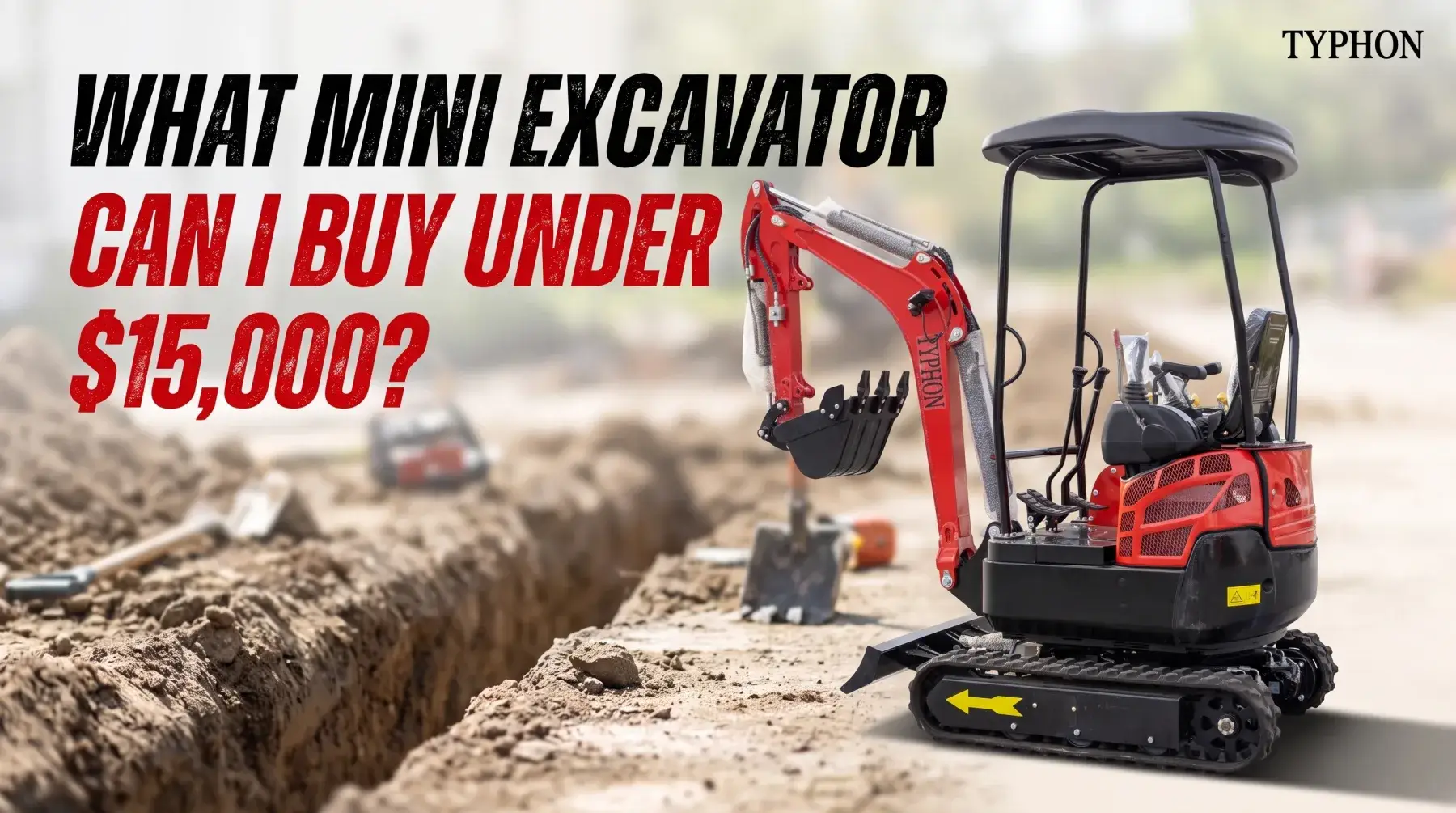
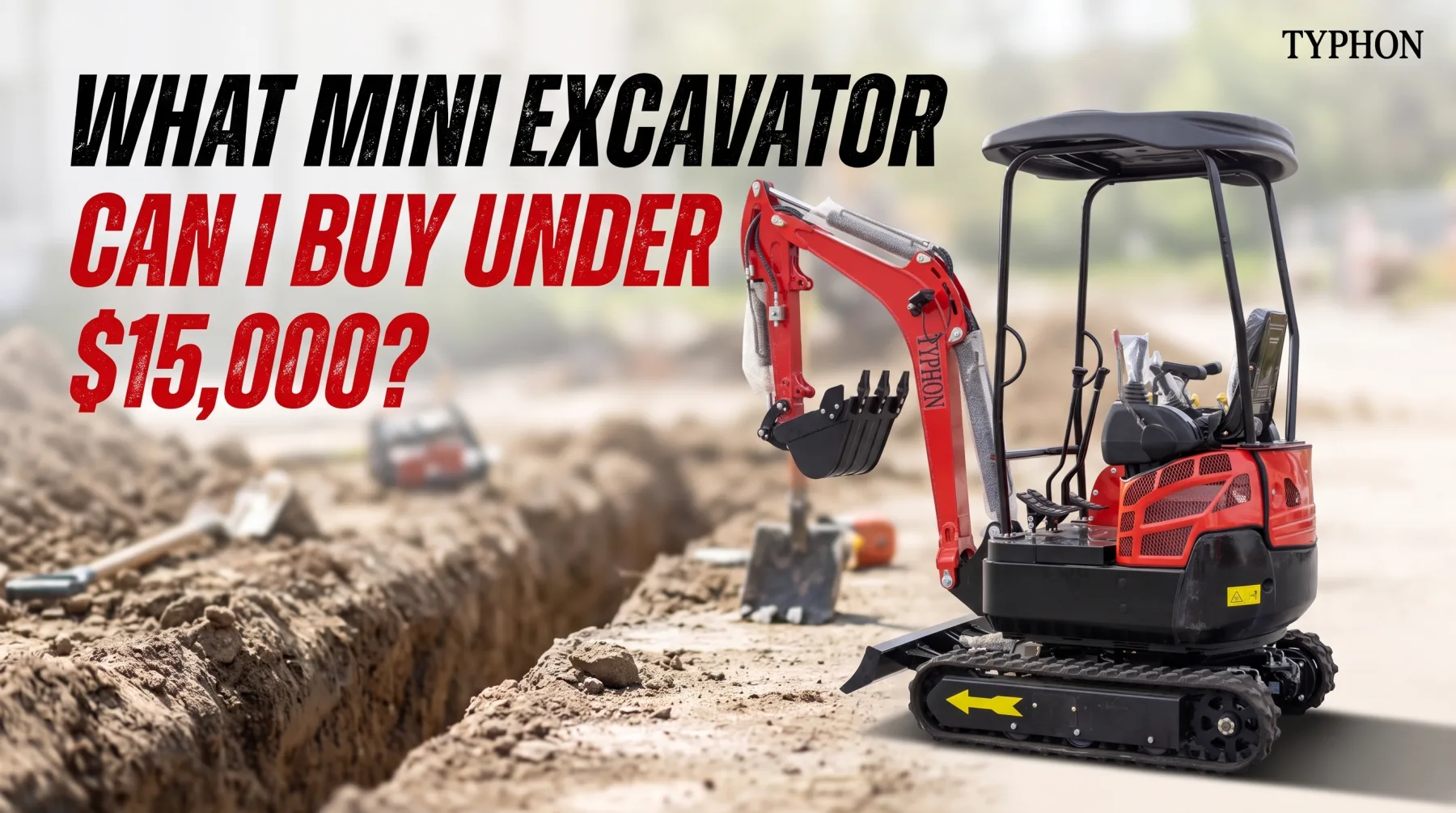
What Mini Excavator Can I Buy for Under $15,000?
A landscaper decides it’s finally time to stop renting and buy his own compact machine. He sets a hard ceiling of $15,000, sees a listing that fits the number, and wires a deposit that afternoon without a walk-around or a service history. The excavator arrives with a tired engine, a hydraulic system that lifts weakly, and worn tracks he’ll replace within a month. What looked like a bargain turns into a machine that spends more time in the shop than on the job, and the money he thought he saved disappears into repairs. The budget was fine. The plan behind it wasn’t. That gap between a number and a strategy is where buyers in this price range lose the most. Fifteen thousand dollars is a real budget for a compact machine, but it demands sharp decisions about what to prioritize and what to walk away from. This post breaks down exactly what your budget buys: what $15,000 realistically gets you, how to weigh new against used, which specs to prioritize, what to watch out for at this price point, and how to make the most of the investment once it’s yours. Get the plan right, and the money works hard for you.
What $15,000 Realistically Gets You
Setting honest expectations is the first step to a smart purchase. This budget puts a capable compact machine within reach, but it steers you toward a specific corner of the market. Knowing that corner before you shop keeps you from chasing listings that were never realistic.
The Class of Machine You’re Shopping
At this price, you’re firmly in the compact and mini class, usually machines in the one to four ton range. New units at the smallest end and quality used machines in the middle sizes both live here. You’re not buying a large earthmover, and that’s fine, because most work that suits a mini excavator falls well within this class anyway. Be clear about what these machines do well. They dig footings, trench utility lines, plant, grade small areas, and work tight sites where bigger equipment can’t fit. If your jobs match that profile, a machine in this budget covers the majority of your work without strain.
New Compact Options at the Low End
Your budget can reach a brand-new machine if you stay at the smallest end of the class. These micro and one-ton units offer full life ahead of them, a warranty, and no history to worry about, which appeals to buyers who value peace of mind over raw size. The trade-off is capability. A new machine in this range will be small, with modest mini excavator digging depth and lift, so confirm it handles your typical dig before you commit. For light residential, landscaping, and tight-access work, that smaller size is often exactly right rather than a compromise.
Used Machines With More Muscle
Spend the same money on the used market, and you can step up to a larger, more powerful machine with more reach and lifting strength. A well-maintained two to three ton used excavator often delivers far more capability per dollar than a new micro unit. The catch is condition and unknown history, which we’ll address later. Takeaway: $15,000 buys you a capable compact machine, either a small new unit with a warranty or a larger, stronger used one, so decide which of those two paths fits your work before you start shopping.
New vs. Used: Which Path Fits Your Budget
The central decision at this price point is whether to buy new small or used bigger. Both are legitimate, and the right answer depends on your priorities, not on a rule. Weighing them honestly points you toward the machine that serves you best.
The Case for Buying New
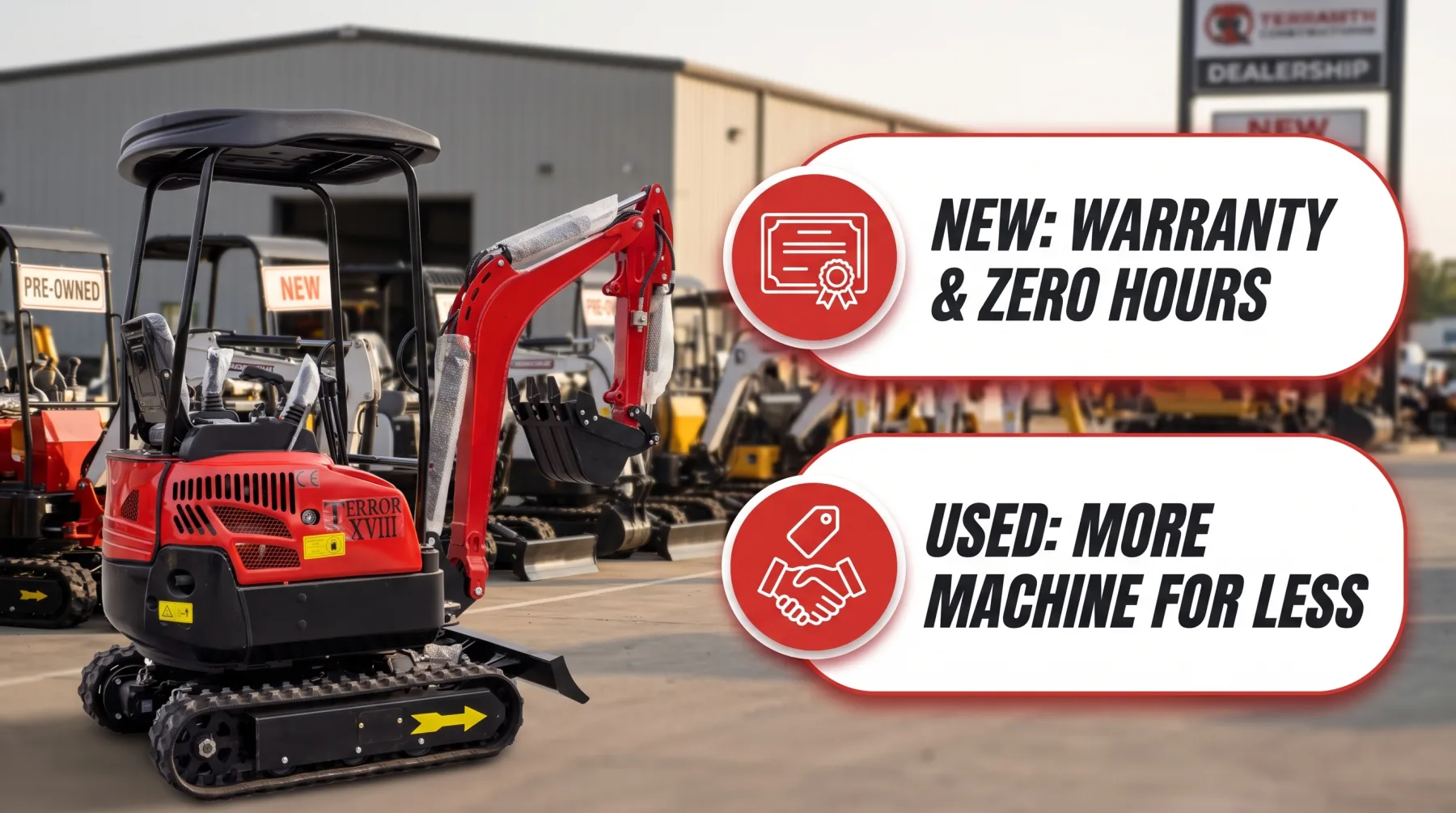
A new machine buys confidence. You get zero operating hours, a manufacturer warranty, current features, and no mystery about how the previous owner treated it. For a first-time buyer or anyone who can’t afford surprise downtime, that reliability is worth accepting a smaller size. New machines also start their maintenance life fresh, so your early costs stay low and predictable. If your work is light and access-driven rather than dig-heavy, a compact new unit keeps you running dependably without the risk that comes with an unknown history.
The Case for Buying Used
Used buying stretches your dollar further on capability. The same $15,000 can land a larger machine with stronger hydraulics, greater reach, and higher compact excavator lift capacity than any new unit at this budget. For dig-heavy work, that extra muscle changes what jobs you can take. The risk is real but manageable. A used machine carries wear and an unknown past, so its value hinges entirely on condition, service records, and a careful inspection. Buy right, and used delivers the best capability per dollar in this range.
Matching the Choice to Your Work
Let your jobs decide. If you run light, frequent, tight-access tasks and value reliability, lean new. If you dig often and need reach and lift, a well-vetted used machine serves you better. Consider how hard the machine will work, too. A weekend or light-duty user benefits from a new unit’s simplicity, while a daily operator often needs the capability only used money buys. Takeaway: buying new trades size for peace of mind while buying used trades certainty for capability, so match the choice to whether your priority is reliability or digging power.
Key Specs to Prioritize at This Price
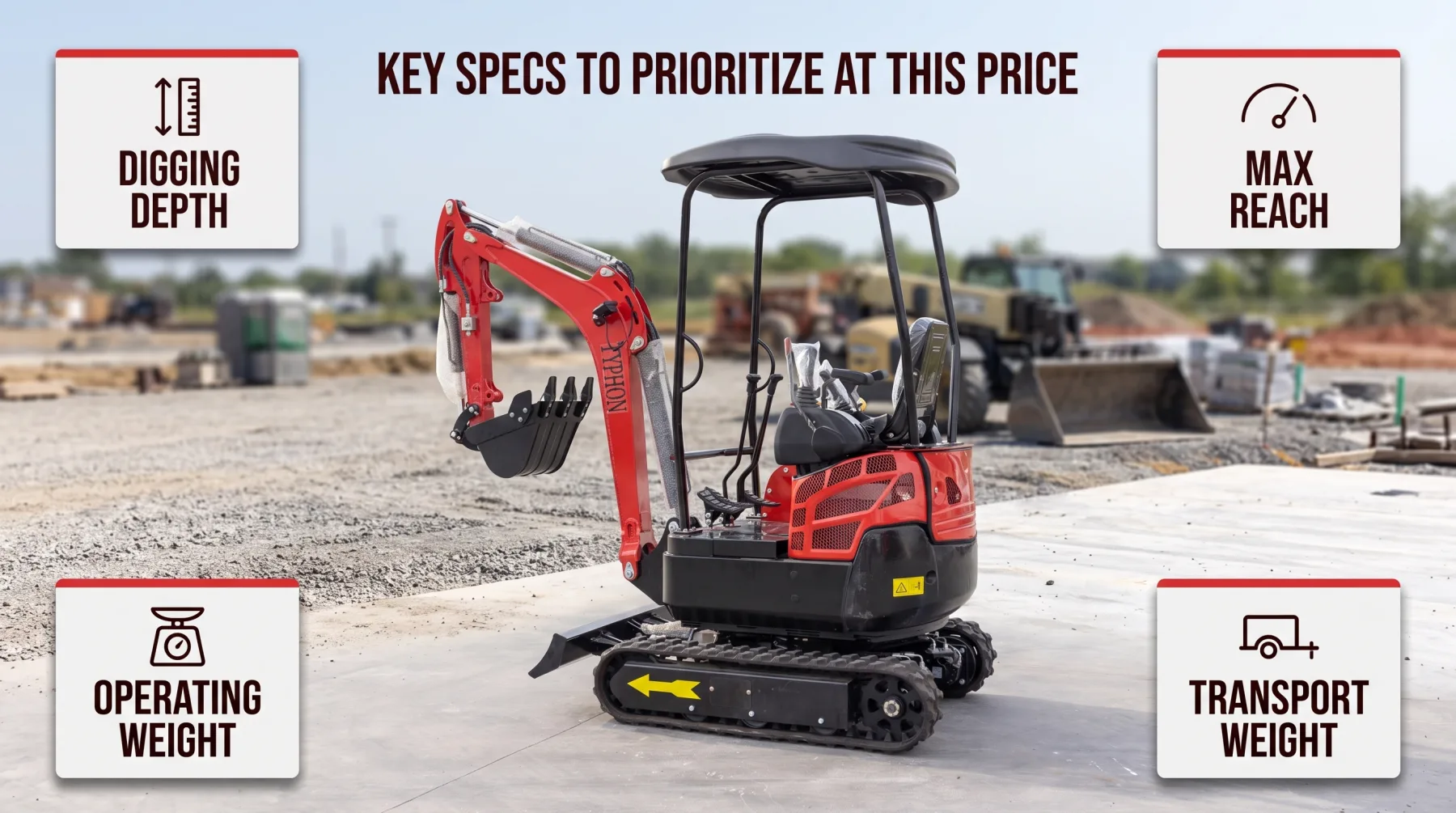
With a budget this focused, you can’t have every feature, so knowing which specs matter most keeps you from overpaying for the wrong things. Three numbers deserve your attention above the rest. Prioritize these, and the machine will fit the work.
Digging Depth and Reach
Start with how deep and far the machine digs, because that dictates the jobs it can handle. Footings, drainage lines, and utility trenches each demand a certain reach, so confirming the machine’s maximum dig depth clears your typical work with margin to spare. A machine that comes up short forces awkward workarounds on every job. Check the specs against your real tasks rather than assuming a mini excavator digs deep enough. Matching depth and reach to your work is the single most important fit to get right.
Operating Weight and Stability
Operating weight shapes both capability and access. Heavier machines dig and lift with more force and stay stable under load, while lighter ones fit tighter sites and transport more easily behind a standard truck. This budget spans that range, so pick the weight that balances your needs. Think about transport and ground, too. A machine light enough to tow on a modest trailer saves you hauling costs, while enough weight to stay planted keeps the work safe. Weigh the mini excavator operating weight against both the digs you do and how you’ll move the machine between sites.
Hydraulic Flow for Attachments
If you plan to run powered attachments, hydraulic capability matters as much as digging specs. An auger, breaker, or grapple only works if the machine supplies enough flow and pressure to drive it, so this spec quietly decides how versatile your excavator will be. Confirm whether the machine has an auxiliary hydraulic circuit and check its output. Matching the auxiliary hydraulic flow to any tool you intend to run means an attachment mounts and performs rather than stalling. Takeaway: prioritize digging depth and reach, operating weight and stability, and hydraulic flow for attachments, because these three specs decide whether the machine actually fits your work at this price.
What to Watch Out for at This Price Point
Buying at the lower end of the market rewards caution. The same budget that lands a solid machine can also hide a costly one, and the difference comes down to how carefully you inspect and buy. Guard against these traps, and you protect every dollar.
Inspecting Condition Before You Buy
Never buy sight unseen at this price. Walk around the machine and look for hydraulic leaks, cracked welds on the boom and arm, worn or damaged tracks, and excessive play in the pins and bushings. These wear points reveal how hard the machine lived and what you’ll spend to set it right. Run it if you can. Start the engine cold, cycle the boom, arm, and bucket, and watch for slow or jerky movement, unusual noise, or smoke. A test dig tells you more than any listing photo, so insist on seeing the machine work before money changes hands.
Reading Hours, History, and Records
Engine hours tell you how much life a used machine has left, so treat a low, well-documented hour count as a strong signal. A machine with clear service records that prove regular maintenance is worth more than a cheaper one with no history at all. Be wary of gaps. No records, a reset hour meter, or a seller who can’t explain the machine’s past all point to risk. Paying a little more for a documented, honestly represented machine almost always costs less than a mystery unit that fails early.
Avoiding the False Bargain
The lowest price is rarely the best value. A machine priced well below the rest of the market usually carries a hidden cost in worn components, deferred maintenance, or looming repairs. Factor those likely expenses into the true price before you celebrate a deal. Watch parts availability, too. A cheap machine from an obscure or unsupported line can strand you when a part fails, so favor a well-supported model even at a slightly higher price. Takeaway: inspect condition in person, verify hours and service history, and treat suspiciously cheap listings with caution, because the real cost of a machine at this price is what you spend after you buy it.
Frequently Asked Questions
Can you really buy a good mini excavator for under $15,000?
Yes, if you shop with a clear plan. This budget reaches a brand-new machine at the smallest end of the compact class or a larger, more capable used machine in the two to three ton range. The key is deciding which path fits your work and inspecting any used machine carefully, since condition and service history matter far more than the sticker price at this level.
Is it better to buy a new small excavator or a used bigger one?
It depends on your priorities. A new small machine gives you a warranty, zero hours, and no unknown history, which suits light-duty and reliability-focused buyers. A used bigger machine delivers more reach, lift, and digging power for the same money, which suits dig-heavy work. Match the choice to whether you value peace of mind or raw capability most.
What specs matter most on a budget mini excavator?
Focus on three. Digging depth and reach decide which jobs the machine handles, operating weight balances digging force against tight-site access and easy transport, and hydraulic flow determines whether you can run powered attachments like augers and breakers. Confirm these three against your real work before weighing lesser features, because they decide whether the machine actually fits.
What should I check before buying a used mini excavator?
Inspect it in person. Look for hydraulic leaks, cracked welds, worn tracks, and play in the pins and bushings, then run the machine to test the boom, arm, and bucket for smooth movement and unusual noise. Verify the engine hours and ask for service records. A documented, honestly represented machine is worth more than a cheaper one with no history.
Why should I avoid the cheapest listing I can find?
Because the lowest price often hides the highest cost. A machine priced well below the market usually carries worn components, skipped maintenance, or repairs waiting to happen, and those expenses land on you after the sale. A cheap machine from an unsupported line can also strand you when a part fails, so weigh true cost and parts availability, not just the asking price.
Conclusion
A $15,000 budget is genuinely enough to put a capable mini excavator to work, but only when a clear plan sits behind the number, so start by accepting what this price range realistically offers, either a small new machine with a warranty and no history to worry about or a larger, stronger used machine that stretches your dollar toward real digging power, then let your actual jobs decide which path fits by weighing reliability against capability honestly rather than chasing the biggest listing or the lowest price, and once you’ve chosen a direction, prioritize the three specs that decide fit above everything else, namely digging depth and reach, operating weight and stability, and the hydraulic flow that lets you run attachments, while guarding hard against the traps that catch budget buyers by inspecting any used machine in person, verifying its hours and service records, and treating a suspiciously cheap deal as a warning rather than a win, because the true cost of a machine at this level is what you spend after the sale, not before it, and when you’re ready to match the right machine to your budget and your work, reach out to a trusted equipment specialist who can pair dependable equipment with the results your projects depend on.