
What Is the Best First Attachment for a Skid Steer?
You finally bought the skid steer, and it came with a standard bucket that handles the basics well enough. Then the jobs start pulling you in every direction. One client wants a row of fence posts set, another needs a brush-choked lot cleared, and a third asks if you can move pallets off a delivery truck. Suddenly that one bucket feels like a fraction of what the machine could do, and you’re staring at a wall of attachments wondering which one to buy first. Spend on the wrong tool and it collects dust in the corner. Spend on the right one and the machine starts paying for itself faster than you expected.
That first-attachment decision matters more than most owners realize. It sets the tone for how much work your skid steer can win, how quickly it earns back its cost, and how often you’re stuck renting or subcontracting tasks the machine should handle in-house. The trouble is that no single attachment is “best” for everyone. The right first pick depends on the work you actually do, the material you move, the hydraulic power your machine supplies, and how often each task shows up on your calendar.
This post walks you through how to make that call with confidence. We’ll look at the attachments most owners reach for first and why, how to read your own workload to find your real priority, the compatibility checks that separate a smart buy from a costly mismatch, and a simple framework for deciding what to own now and what to add later. Get this first choice right, and your skid steer stops being a one-trick machine and starts becoming the most versatile asset on your crew.
The Attachments Owners Reach for First
A few tools rise to the top of nearly every “what should I buy first” conversation, and for good reason. They cover the widest range of everyday work, install easily, and deliver returns fast. Let’s look at the strongest candidates and where each one shines.
Pallet Forks for Lifting and Loading
Pallet forks are often the first purchase owners never regret. They turn a skid steer into a compact loader that moves pallets, lumber, block, bagged material, and equipment around a site with ease. On construction jobs, farms, landscape yards, and delivery docks, forks handle the lifting and staging that eat up hours when done by hand.
Their appeal is simplicity paired with constant usefulness. Forks need no hydraulic power, install in seconds, and pay off on almost any job that involves receiving or moving material. When you check your skid steer lift capacity against the loads you handle most, forks quickly prove themselves as one of the highest-value tools a machine can carry.
A Second, Task-Specific Bucket
Your machine came with a bucket, but the right second bucket can be a smarter first add than you’d think. A low-profile dirt bucket, a heavy-duty rock bucket, or a grapple bucket each tackles a job the standard bucket does poorly. Matching bucket style to material turns a generic scoop into a precise tool.
Volume and durability drive the choice. If you move dense material all day, comparing skid steer bucket capacity across sizes helps you pick one that carries enough per pass without overloading the machine. For owners whose work is mostly earthmoving, the right specialized bucket may deliver more value than any powered tool.
An Auger for Fast, Clean Holes
An auger earns its spot for anyone drilling holes regularly. Fence lines, deck footings, sign posts, and tree planting go far faster with a hydraulic auger than with hand tools or a two-person post-hole digger. Swap the bit, and one drive handles everything from narrow fence holes to wide structural footings.
The catch is that an auger runs on your machine’s hydraulics, so it only makes a strong first pick if drilling is a recurring part of your work. For fencing contractors, landscapers, and builders who set posts often, few tools return their cost as quickly.
Takeaway: Pallet forks, a task-specific bucket, and an auger are among the most valuable first attachments because they handle many of the jobs skid steer owners perform most often. The best choice depends on the type of work you do every day and the tasks you want your machine to handle most efficiently.
Read Your Own Workload First
Popular picks are a starting point, not an answer. The best first attachment is the one that matches the work filling your schedule, so an honest look at your own jobs points you straight to it. Skip the generic advice and study your calendar instead.
List the Tasks That Repeat
Start by writing down the jobs you take on week after week. If you’re constantly receiving deliveries and staging material, forks jump to the top. If you’re moving dirt and gravel all day, a better bucket wins. If you’re setting posts or planting, the auger earns its place before anything else.
Frequency is the deciding factor. A task you handle daily justifies owning the tool outright, while a job that shows up twice a year rarely does. Rank your recurring work from most to least common, and your first attachment usually reveals itself at the top of that list without much debate.
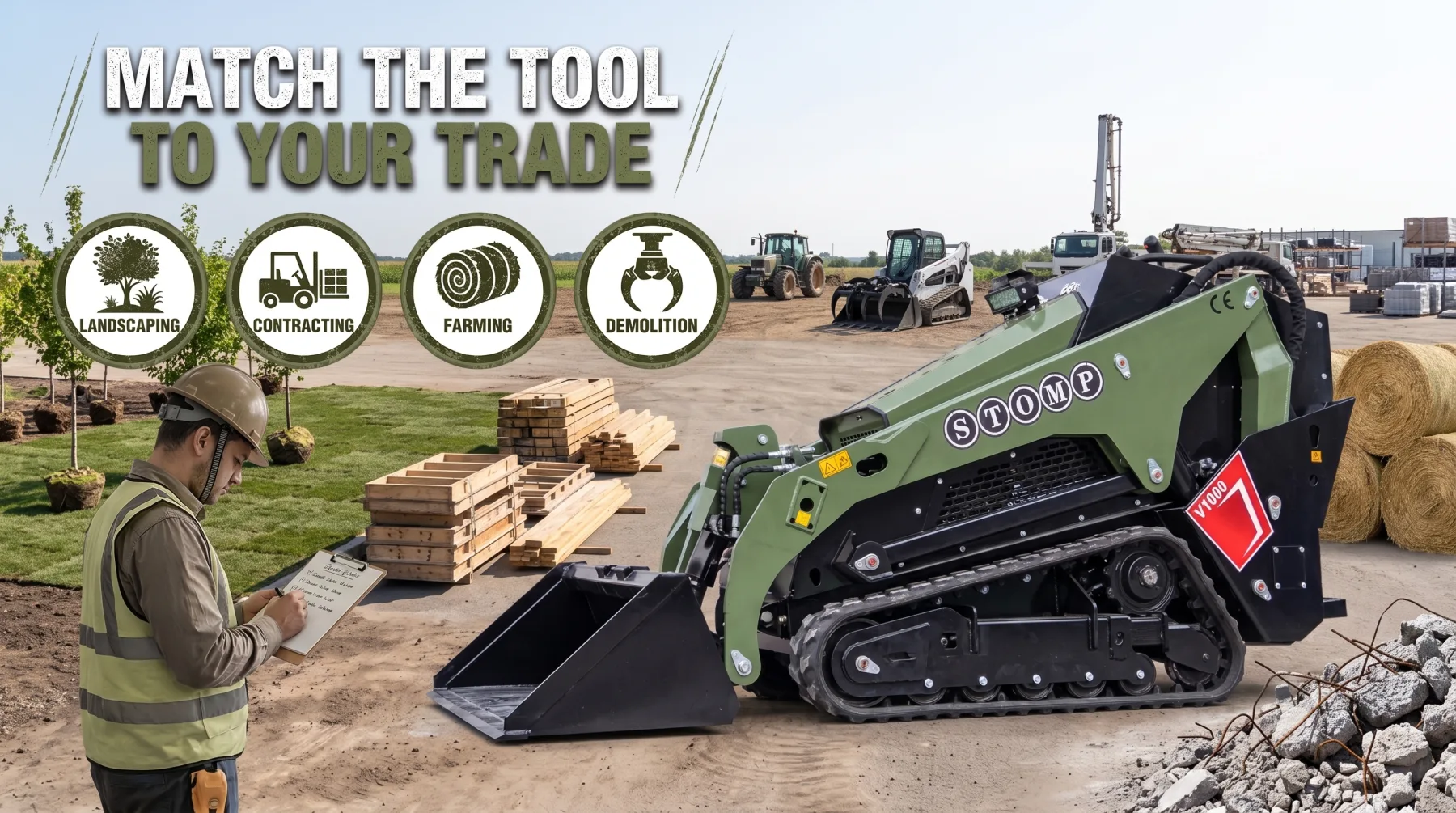
Match the Tool to Your Trade
Your line of work often narrows the field on its own. Landscapers lean toward grapples and augers for clearing and planting. General contractors prize forks for material handling. Farmers and ranchers value forks and bale-handling tools, while demolition and cleanup crews reach for grapples that grab and sort debris.
Think about the bottleneck you hit most often. The task that slows you down, forces a rental, or pushes you to subcontract is exactly the one your first attachment should solve. Buying to eliminate your biggest recurring headache delivers the fastest, clearest return on the purchase.
Weigh Return on the Investment
A first attachment should pay for itself quickly, so estimate how it changes your work. A tool that saves hours on jobs you do weekly, eliminates a regular rental fee, or lets you bid work you currently turn away is an easy call. One that sits idle most of the year is not.
Do the simple math before you buy. Compare the attachment’s cost against the labor, rental, or subcontracting expense it replaces over a season.
Takeaway: the best first attachment is the one that matches your most frequent work and your trade, so map your recurring tasks and pick the tool that solves your biggest, most common bottleneck.
Confirm the Attachment Actually Fits
The smartest attachment choice fails if it won’t work with your machine. Compatibility comes down to a handful of hard specifications, and checking them before you buy saves both money and downtime. Three factors decide the fit almost every time.
Coupler and Mounting Compatibility
Skid steers connect attachments through a quick-attach plate, and while most North American machines share a common standard, it pays to confirm. Verify that the attachment’s mounting plate matches your machine’s coupler so it locks on securely and releases cleanly when you swap tools.
Double-check the locking pins engage fully every time you connect. A plate that seats but doesn’t latch properly can drop the attachment, damaging the tool and endangering anyone nearby. Getting the mounting interface right is the first and most fundamental compatibility check, and it takes only a moment to confirm.
Machine Size and Rated Capacity
The last factor is a match of scale. Skid steers range widely in size and lifting power, and attachments are built for specific classes. A grapple or bucket sized for a large machine can overwhelm a compact one, hurting stability and performance.
Confirm that the attachment’s weight and working load stay within your machine’s rated operating capacity, and that its width suits your machine’s frame. An oversized tool strains the skid steer and wears it prematurely, while an undersized one wastes capability.
Takeaway: confirm coupler fit, sufficient hydraulic flow and pressure for powered tools, and a proper match to your machine’s size and rated capacity, so your first attachment performs safely from day one.
Decide What to Own Now and What to Add Later
A skid steer can run dozens of tools, but you don’t need them all at once. The winning strategy is buying your highest-value attachment first, then expanding as new work justifies each addition. Build your toolkit deliberately, and every purchase earns its place.
Start With Your Highest-Use Tool
Your first attachment should be the one you’d reach for most often. For many owners that’s pallet forks, thanks to their constant usefulness and zero hydraulic demand. For others it’s a specialized bucket or an auger, depending on the work that dominates their week.
Resist the urge to buy for jobs you rarely see. A breaker or mulcher can wait until that work becomes regular. Anchoring your first purchase to your most frequent task guarantees the fastest payback and keeps the machine productive from the moment the tool arrives.
Own the Frequent, Rent the Rare
Not every attachment belongs in your trailer. A tool you’ll use weekly earns its cost quickly through ownership, while one you need a couple of times a year often makes more sense to rent. Renting spares you the purchase price and the storage space for tools that would otherwise sit.
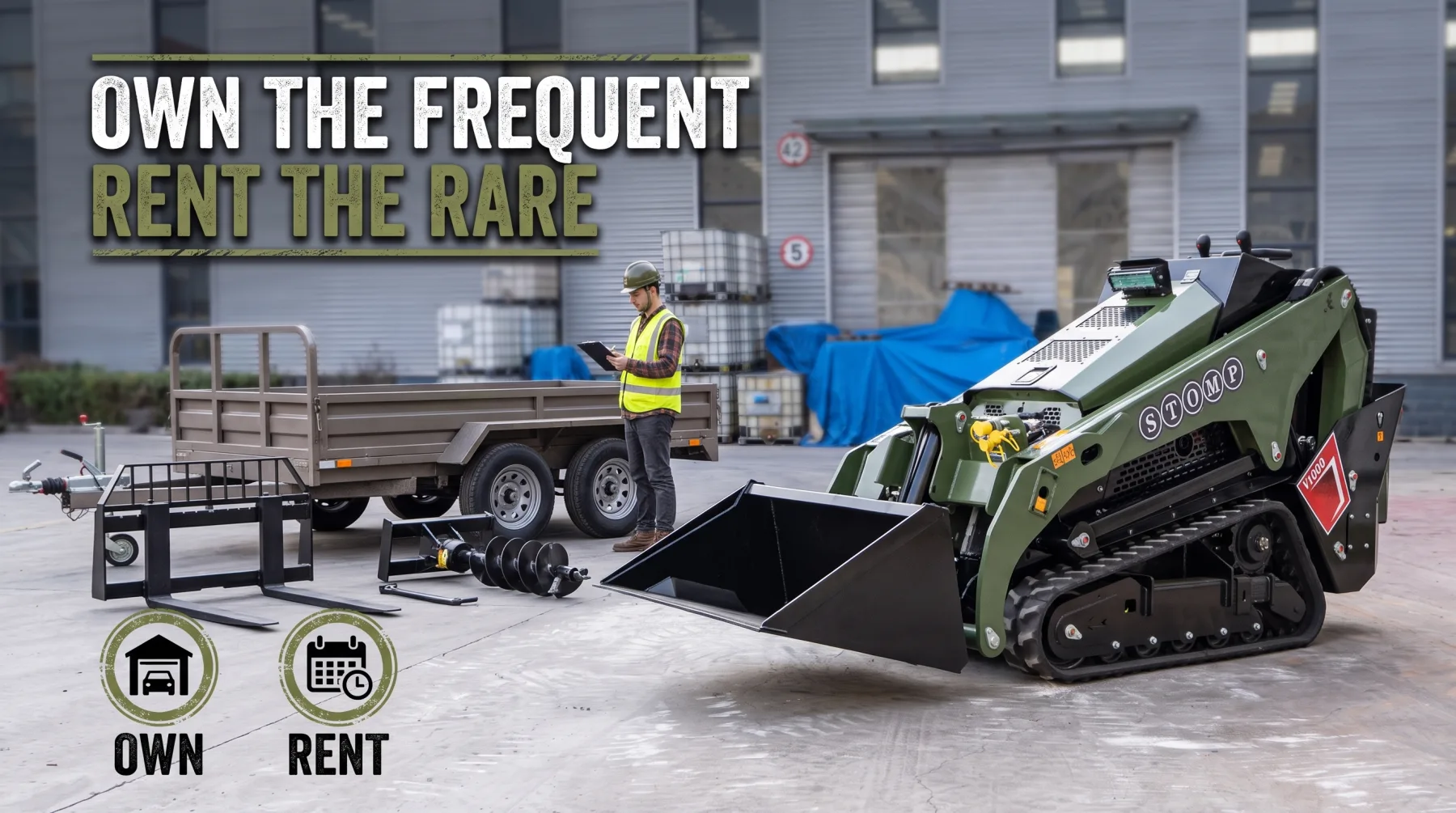
Track how often each tool comes up. When rental fees for a given attachment start adding up to more than a purchase, that’s your signal to buy it. This discipline keeps your money in tools that work rather than tools that wait, and it lets your toolkit grow in step with your actual demand.
Build a Practical Toolkit Over Time
Think of attachments as a collection you assemble deliberately, not all at once. After your first high-value tool, add the next based on the work you’re winning and the bottlenecks you keep hitting. Each addition should answer a real, recurring need rather than a hypothetical one.
Confirm compatibility for every new tool just as carefully as the first, since your machine’s flow, pressure, and capacity limits apply to all of them.
Takeaway: buy your highest-use attachment first, own the tools you use often while renting the rare ones, and grow your toolkit deliberately so every purchase matches real, recurring work.
Frequently Asked Questions
How do I know if my skid steer can run a powered attachment?
Check two specifications on your machine: the auxiliary hydraulic flow, measured in gallons per minute, and the operating pressure. Compare these against the attachment’s stated requirements, and confirm whether it needs a standard-flow or high-flow circuit. If your machine supplies less flow than the tool demands, it will run weakly or stall. Non-powered tools like forks and buckets skip this concern entirely and only need a matching coupler.
Is it better to buy or rent my first attachment?
Buy the attachment you’ll use frequently and rent the ones you need only occasionally. A tool that pays off on weekly jobs recovers its cost quickly through ownership, while an expensive tool you’d use twice a year usually makes more sense to rent. Track how often each task appears; when accumulated rental fees start exceeding a purchase price, that’s your cue to buy the tool outright.
Will any attachment fit my skid steer?
Not automatically. An attachment fits only when three things align: the mounting plate matches your machine’s quick-attach coupler, your hydraulics supply enough flow and pressure for powered tools, and the attachment suits your machine’s size and rated operating capacity. Most North American skid steers share a common coupler standard, but always confirm mount, hydraulics, and capacity against your specific machine before buying or renting.
Conclusion
The best first attachment for your skid steer isn’t necessarily the most popular one. It’s the attachment that helps you complete the jobs you perform most often and reduces the need for additional equipment or rentals. Start by identifying the tasks that take up the most time in your workflow, then choose an attachment that delivers the greatest impact on productivity. Before purchasing, confirm it matches your skid steer’s coupler, hydraulic flow and pressure, and rated operating capacity. A well-matched first attachment not only expands what your skid steer can do but also helps you complete more work with the machine you already own.