
How Mini Excavators Save Time and Labor Costs
Running a profitable construction or landscaping business requires navigating a complex landscape of strict deadlines, tight operating margins, and a persistent shortage of skilled labor. For decades, contractors relied heavily on large crews of manual laborers to execute the detailed earthmoving and grading tasks that heavy machinery simply could not reach. However, as the cost of labor continues to rise and worker availability plummets, depending on manual effort has become an unsustainable business model. Property owners and project managers expect exceptional results delivered at record speeds, leaving zero room for outdated, inefficient processes. To remain competitive, contractors must fundamentally rethink how they deploy their resources on the jobsite.
The most effective strategy for overcoming these industry challenges is investing in highly capable compact equipment. Specifically, the mini excavator has emerged as an indispensable asset for modern construction operations, completely transforming how crews approach difficult site conditions. By delivering the immense hydraulic power of a full-sized machine within an incredibly compact footprint, these excavators allow businesses to drastically reduce their reliance on manual labor. This comprehensive guide explores exactly how mini excavators save time and lower labor costs. We will detail how mastering this compact machinery solves severe access limitations, eliminates backbreaking physical work, and maximizes overall project profitability, ensuring your business consistently delivers excellence on every job.
Overcoming Restricted Jobsite Access
Every residential and commercial project takes place within a unique environment characterized by distinct physical boundaries. Established neighborhoods frequently feature narrow side yards, low-hanging tree branches, and decorative masonry walls that define the property lines. To execute a comprehensive landscape renovation or utility installation, contractors must somehow move tons of soil and debris into and out of these highly restricted areas. Navigating these constraints efficiently dictates the entire rhythm and profitability of the project.
A severe limitation arises when contractors attempt to deploy traditional, full-sized construction equipment on these established properties. Standard excavators and backhoes simply cannot fit through standard backyard gates or maneuver along tight residential pathways. Attempting to squeeze oversized machinery into confined spaces guarantees catastrophic damage to fences, mature vegetation, and existing concrete driveways. When large equipment is ruled out due to size constraints, crews are often forced to revert to the painfully slow, exhausting process of digging trenches and hauling material by hand using nothing but shovels and wheelbarrows.
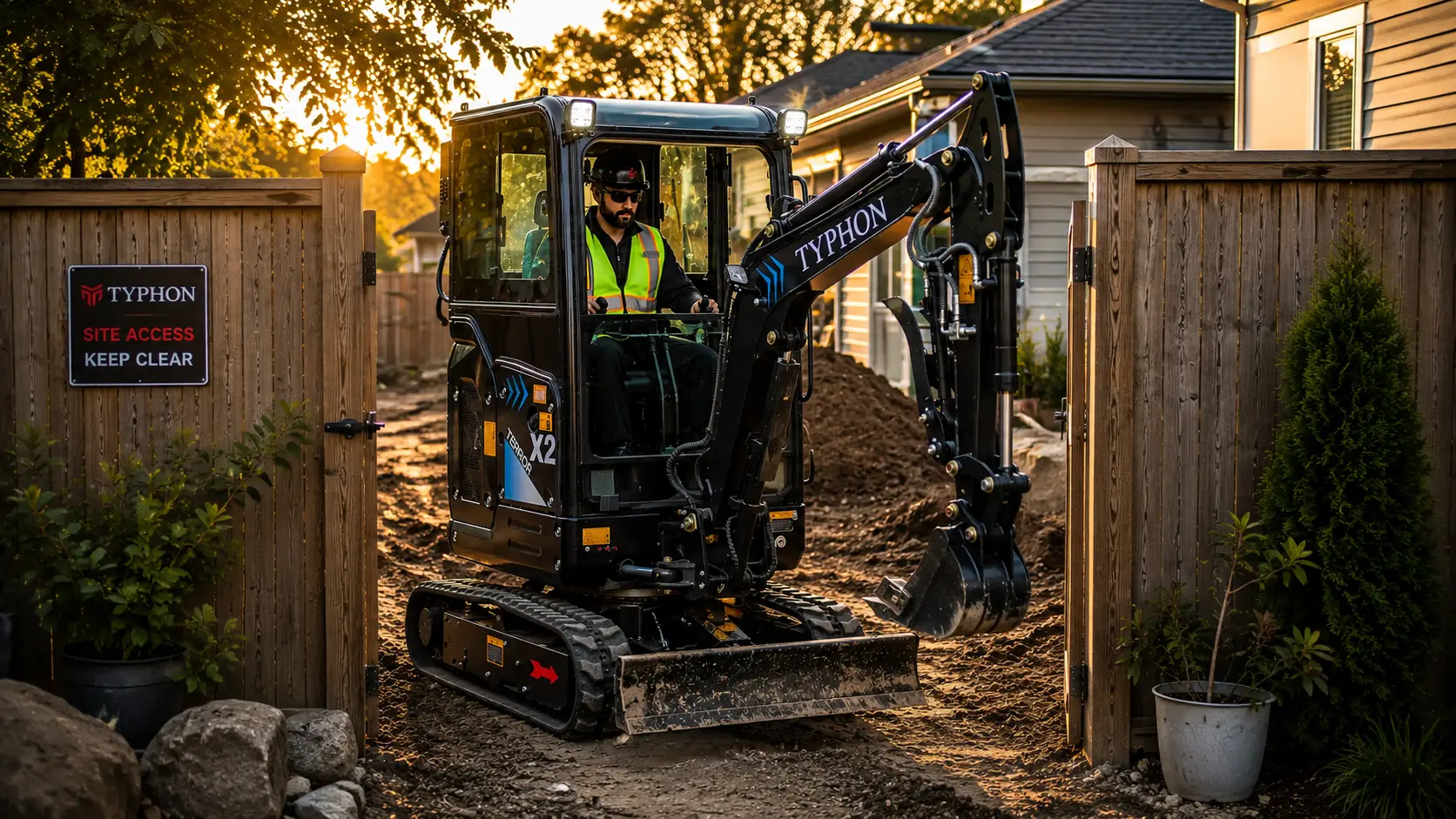
The definitive solution is the deployment of a highly maneuverable mini excavator. Engineered specifically for confined space operation, many of these compact machines feature retractable undercarriages that allow them to shrink to less than three feet wide. This incredibly narrow footprint allows operators to drive the machine directly through standard pedestrian gates and maneuver effortlessly around tight corners. Once inside the work zone, the tracks expand to provide a highly stable digging platform, delivering massive hydraulic breakout force exactly where the installation crew needs it.
Solving this access challenge delivers a profound, immediate impact on your daily business operations and project cost control. By bringing mechanical digging power directly to the exact point of excavation, you completely eliminate the bottleneck of manual material transport. Crews finish complex backyard utility installations in a fraction of the time, dramatically increasing overall productivity and labor efficiency. Successfully maneuvering through these tight spaces naturally leads to a closer examination of how this machinery replaces grueling manual effort.
Committing to rigorous pre-operation inspections delivers an immediate and lasting impact on your operational efficiency and overall equipment protection. Identifying a worn hydraulic hose before it bursts saves your company from expensive emergency repairs, hazardous environmental cleanup fines, and hours of lost jobsite productivity. This proactive maintenance approach drastically reduces your total cost of ownership, keeping your fleet operational and far away from the repair shop. When operators know their machine is in pristine mechanical condition, they work with absolute confidence, setting the perfect stage for evaluating the ground they are about to disturb.
Eliminating the Burden of Manual Digging
The construction and landscaping industries have historically relied heavily on the physical endurance of their workforce. Tasks such as digging extensive irrigation trenches, excavating for foundation footings, and removing dense root balls demand extreme physical exertion. As projects grow in scale and complexity, the physical toll on ground personnel becomes a critical operational liability. Keeping your crews healthy, motivated, and highly productive is a constant management challenge for any business owner.
Relying primarily on manual labor creates severe bottlenecks that actively destroy project profitability. Human endurance is strictly finite, meaning the pace of work inevitably slows down as the day progresses and fatigue sets in. Pushing crews to manually dig trenches through hard clay or rocky soil leads directly to an increase in workplace injuries, chronic back pain, and high employee turnover. When a key worker is injured or leaves the company due to exhaustion, the entire project timeline halts, forcing business owners to spend valuable time and resources recruiting and training replacements.
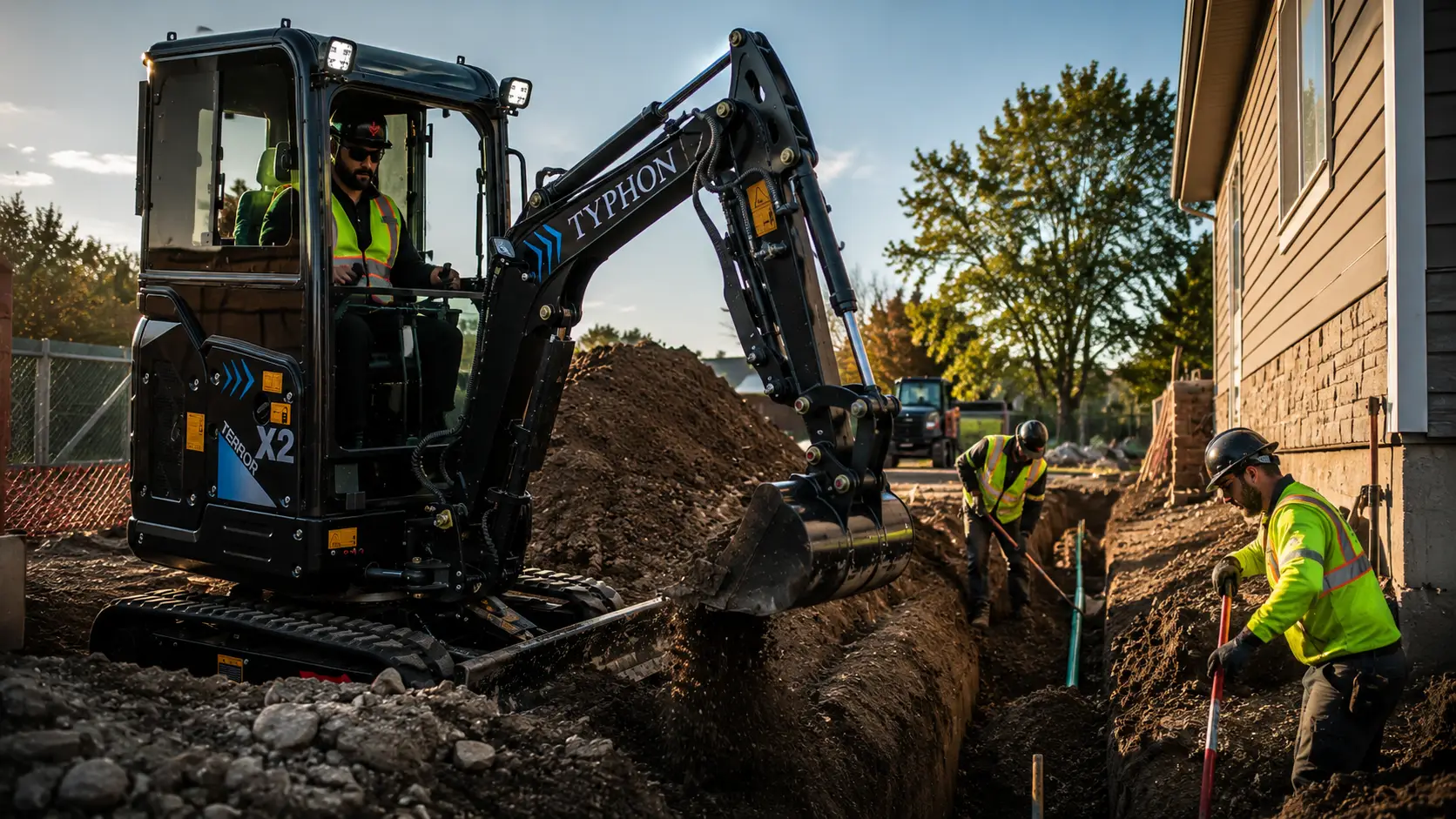
Integrating a mini excavator directly attacks this problem by replacing backbreaking human effort with relentless, mechanically driven power. These machines feature exceptional digging depths and breakout forces, easily ripping through compacted soil and buried debris that would otherwise require multiple workers to excavate. The comfortable, climate-controlled cab allows the operator to maintain a clear, unobstructed view of the work zone, digging perfect trenches and loading debris directly into dumpsters without ever breaking a sweat.
Deploying mechanical power to handle the heavy digging completely transforms your jobsite efficiency and protects your most valuable asset: your workforce. Labor savings are realized instantly, as tasks that once required a team of four men with shovels can now be completed by a single operator in a fraction of the time. This massive reduction in physical strain drastically lowers workers’ compensation claims and boosts overall employee morale. With the heavy lifting resolved, the focus must shift to how this single machine can perform a multitude of diverse jobsite tasks.
Maximizing Output with Attachment Flexibility
A comprehensive construction project rarely consists of just one type of earthmoving work. A single site might require digging a deep utility trench, drilling holes for structural fence posts, breaking up an old concrete patio, and clearing dense brush. Historically, contractors had to mobilize a different piece of specialized equipment for each specific phase of the project. Coordinating the delivery and rental of multiple machines creates a logistical nightmare for project managers.
The problem with relying on single-purpose machinery is the massive operational inefficiency and bloated overhead it creates. Renting a dedicated trencher, a separate stump grinder, and a motorized concrete breaker devours your project budget and clutters the jobsite. Furthermore, constantly switching between entirely different machines disrupts the workflow and forces operators to constantly adjust to different control systems. If one of these specialized rental machines breaks down, that specific phase of the project is entirely paralyzed until a replacement can be secured.
The mini excavator eliminates this logistical chaos by functioning as a universal hydraulic power plant. The true genius of this equipment lies in its universal quick-attach mounting system and high-flow auxiliary hydraulics. In a matter of seconds, an operator can drop a standard trenching bucket and lock into a heavy-duty hydraulic breaker, a massive auger drive, or a precision material grapple. This attachment flexibility allows a single mini excavator to seamlessly transition from ripping out old concrete to boring perfect foundation footings without ever leaving the property.
Mastering attachment flexibility provides an incredible return on investment and drives exceptional project speed. You maximize your equipment utilization rate, ensuring the machine is actively generating revenue during every single phase of the job rather than sitting idle. For the construction business owner, eliminating the need to transport and maintain multiple pieces of single-purpose machinery strictly controls fleet costs. This incredible versatility naturally requires an equally impressive level of precision to ensure the existing property remains pristine.
Delivering Precision in Confined Spaces
Working on established residential or commercial properties demands an extraordinary level of care and precision. Clients expect you to completely overhaul specific areas of their yard or building footprint while leaving their existing driveways, mature trees, and manicured lawns entirely undisturbed. Maintaining the delicate balance between heavy earthmoving and preserving the surrounding environment is a hallmark of a premier, highly trusted contractor.
A significant limitation of utilizing standard construction equipment on established properties is the massive collateral damage it inevitably causes. Heavy machines require wide turning radiuses, meaning the rear counterweight often swings violently into nearby walls or structures. When large machines maneuver near sensitive landscaping, their tracks violently tear the turf, leaving deep, muddy ruts that completely destroy the lawn. Repairing this collateral damage at the end of a project requires importing topsoil, reseeding, and spending unbillable hours fixing mistakes, which aggressively eats into your established profit margins.
Mini excavators offer a highly engineered solution to the challenge of jobsite preservation. Many models feature a zero tail swing design, meaning the housing of the machine never extends beyond the width of the tracks during rotation. This allows the operator to dig directly alongside existing foundations or fences without any fear of the machine striking the structure. Furthermore, the light operating weight and rubber tracks distribute the machine’s mass evenly, preventing deep ruts and protecting decorative concrete from heavy stress fractures.
Eliminating costly ground damage directly protects your profit margins and fiercely defends your professional reputation. When clients see that your crews can execute heavy renovations without destroying the rest of their property, you establish immediate, enduring trust. This precision work eliminates the frustrating, unpaid days spent repairing collateral damage, allowing your crew to finish the job cleanly and move immediately to the next site. Protecting the property seamlessly transitions into the logistical advantages of moving the machine between locations.
Reducing Transportation and Logistical Overhead
In the highly competitive construction industry, time spent mobilizing equipment is time entirely wasted. Your ability to scale your business and increase annual revenue depends on how efficiently you can move your crews and machinery from one completed site to the next. Managing the logistics of heavy machinery transportation is a complex, highly regulated process that drains considerable resources from a growing business.
When contractors rely on full-sized excavators, they face severe logistical and financial barriers simply trying to get the equipment to the jobsite. Moving heavy machinery requires hiring specialized heavy-haul trucking companies, obtaining expensive oversize load permits, and carefully mapping out approved travel routes to avoid low bridges or weight-restricted roads. These transportation costs severely inflate the project budget before a single scoop of dirt is ever moved. Furthermore, coordinating these deliveries leaves your crew waiting idly on site if the heavy hauler is delayed by traffic.
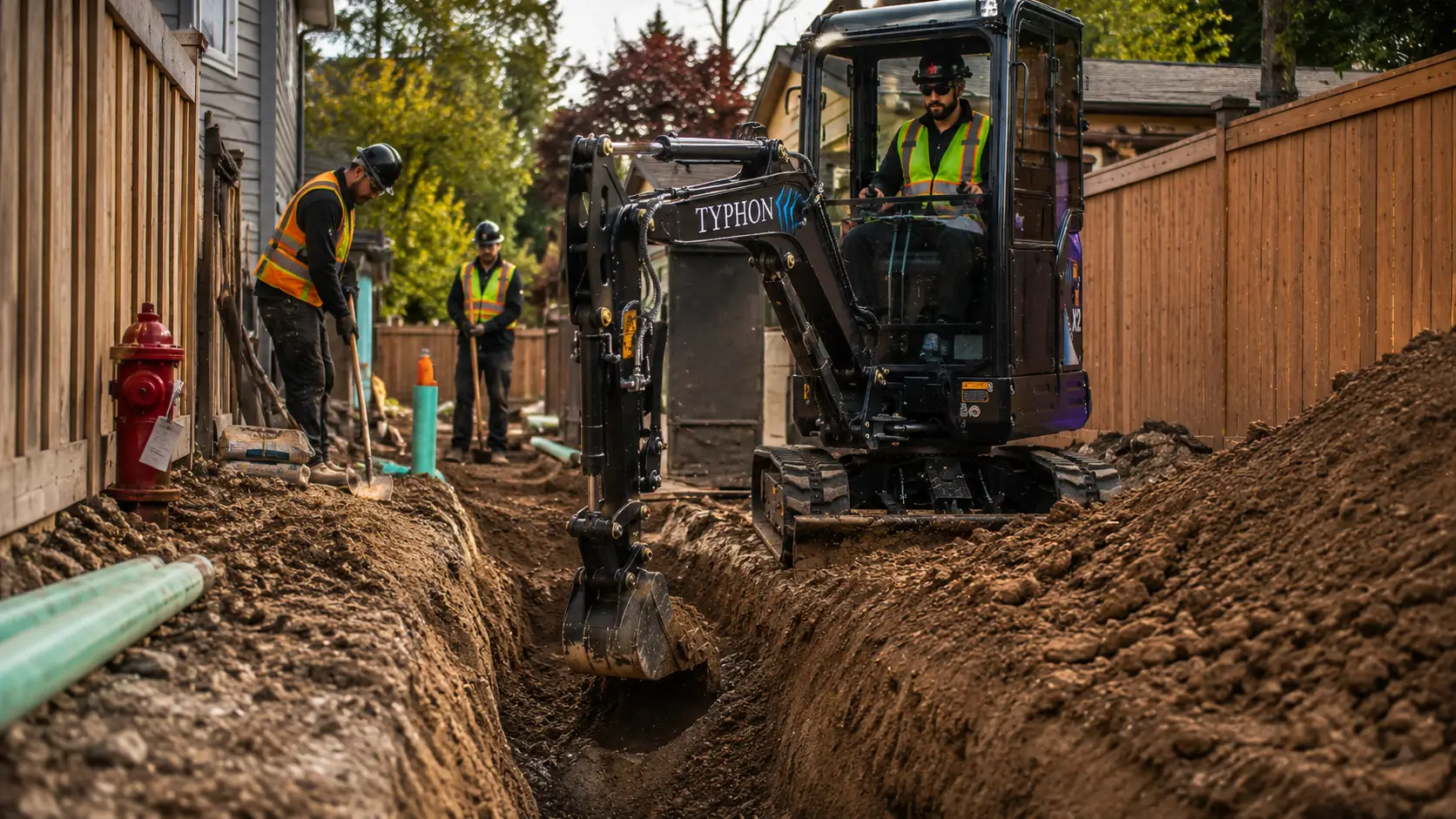
Deploying a mini excavator completely streamlines your logistical operations and drastically reduces transportation overhead. Because these machines are highly compact and relatively lightweight, they can be easily towed behind a standard heavy-duty pickup truck on a conventional equipment trailer. Your foreman or site supervisor can directly tow the machine to the jobsite at the exact moment it is needed, requiring no specialized commercial driver’s licenses or expensive municipal permits.
Streamlining transportation delivers a massive business impact by giving you absolute control over your project scheduling. Eliminating third-party hauling fees keeps thousands of dollars in your company’s bank account every single month. Your crews mobilize faster, start digging sooner, and finish projects days ahead of schedule. This newfound logistical freedom allows your business to take on smaller, highly profitable jobs that would have previously been impossible to service with larger equipment. This rapid pacing naturally leads to a profound improvement in the daily working conditions of your staff.
Elevating Overall Crew Productivity and Morale
The ultimate success of any construction business relies entirely on the capability, dedication, and morale of the ground crew executing the work. High-performing teams generate higher profits, while exhausted, frustrated crews make costly mistakes and slow down production. Building a culture of excellence requires providing your workforce with the tools they need to succeed safely and efficiently.
A critical problem arises when business owners fail to invest in proper equipment, forcing their crews to compensate through sheer physical exertion. When workers are pushed to their physical limits day after day using shovels and wheelbarrows, morale plummets rapidly. This exhaustion leads to poor attention to detail, skipped safety protocols, and a severe drop in final work quality. Ultimately, top-tier talent will leave your company to work for competitors who provide modern machinery, leaving you constantly struggling to staff your projects.
Providing your teams with a mini excavator fundamentally changes the working environment and elevates the entire operational standard. By offloading the most punishing physical tasks to the hydraulic machine, your workers preserve their energy for the highly skilled, detail-oriented aspects of the project. Ground personnel can focus on precisely laying pipe, setting forms, or installing complex hardscapes rather than spending their morning digging a trench.
Elevating crew productivity through mechanical support heavily protects your labor investments and drastically increases employee retention. When workers feel supported and protected from unnecessary physical breakdown, they take greater pride in their workmanship and operate at a much faster, more consistent pace. This high level of productivity ensures your labor costs stay well under budget, directly increasing the net profit of every single installation. Maximizing this daily efficiency ultimately proves the long-term strategic value of your equipment fleet.
Conclusion
Understanding how mini excavators save time and labor costs is a mandatory requirement for any contractor serious about scaling their operations and dominating their local market. When business owners abandon the slow, exhausting methods of manual earthmoving and instead embrace the power of compact utility equipment, they completely transform their capability to deliver premium results. These highly engineered machines provide the definitive answer to the toughest challenges of site access, property preservation, and overall project speed.
For construction business owners, site supervisors, and equipment buyers, integrating a mini excavator into your daily workflow is a strategic necessity that drives unparalleled profitability. By investing in attachment flexibility and protecting your workforce from severe physical strain, you guarantee superior project outcomes and eliminate costly logistical delays. Evaluate your current operational bottlenecks, upgrade your equipment strategy today, and commit to delivering the uncompromising excellence and efficiency that clients demand and your business deserves.