
Understanding Excavator Boom, Arm, and Bucket Geometry
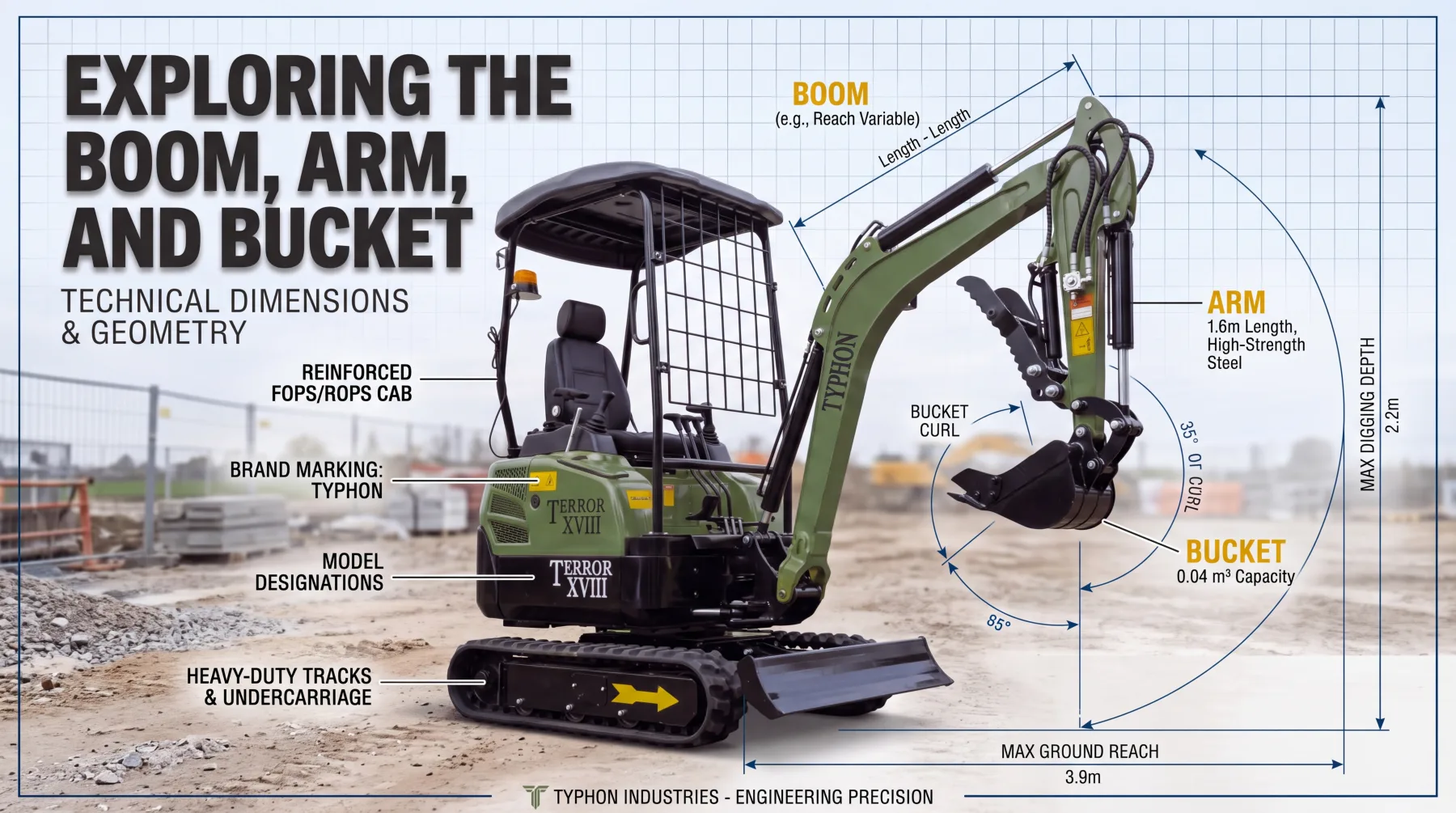
An excavator is defined by the three components that reach out from its body and do the actual work: the boom, the arm, and the bucket. Together, these parts form the machine's working geometry, and the way they are shaped and sized determines how far it reaches, how deep it digs, and how efficiently it moves material. Get that geometry right for the job, and the machine works smoothly, safely, and productively. Get it wrong, and even a powerful excavator will struggle. This guide breaks down each component in turn, explains how they work as a connected system, and shows how to choose the right combination for the work you do.
Boom Length and Reach Capabilities
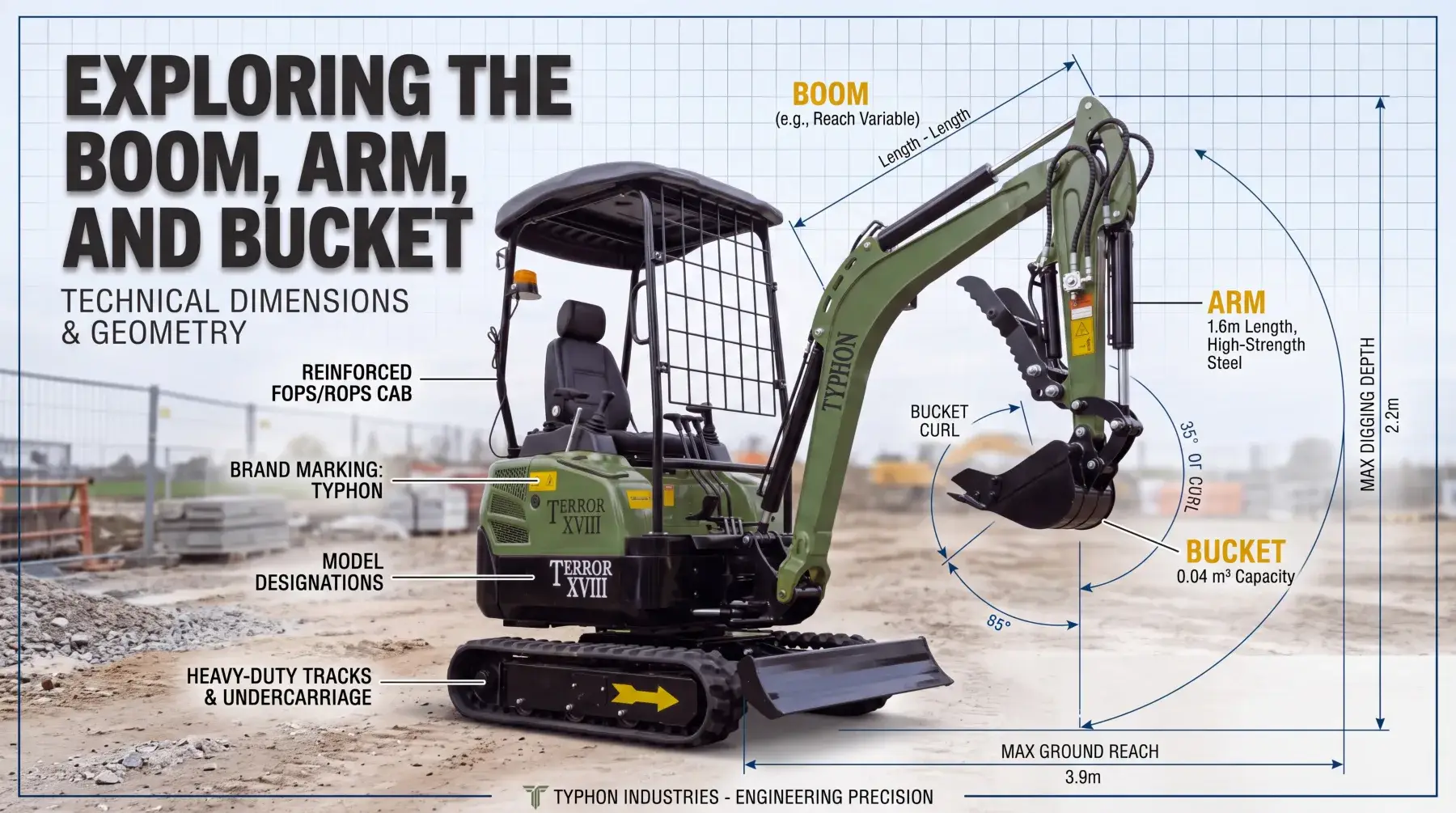
The boom is the large, curved arm that connects the excavator's body to the stick and bucket, and it sets the outer limits of the machine's working range. Its length and shape determine how far and how high the machine can work, which makes boom geometry one of the first things to understand when matching an excavator to a job. A longer boom extends the machine's reach outward and upward, letting it work at a greater distance and load into taller trucks or hoppers. A shorter, more compact boom trades some of that reach for strength and control, which suits work in confined spaces or applications that demand more digging force close to the machine.
Boom geometry affects three areas of performance that operators care about most, and weighing them helps you pick the right configuration:
**Excavation depth**, since the boom's angle and length influence how the whole arm reaches below grade. **Loading height**, which decides whether the machine can clear the sides of trucks and hoppers comfortably. **Jobsite efficiency**, because greater reach often means less repositioning and steadier workflow.
Some excavators offer specialized boom options, such as longer-reach designs for work across barriers or two-piece booms that fold for added flexibility in tight conditions. Choosing wisely comes down to an honest look at your typical work. A machine loading high-sided trucks all day benefits from a boom built for height, while one digging in cramped quarters is better served by a compact design that keeps power close and control tight. Understanding what the boom governs lets you select a configuration that fits the real shape of your projects rather than settling for a general-purpose setup that never quite fits.
Arm Design and Digging Performance
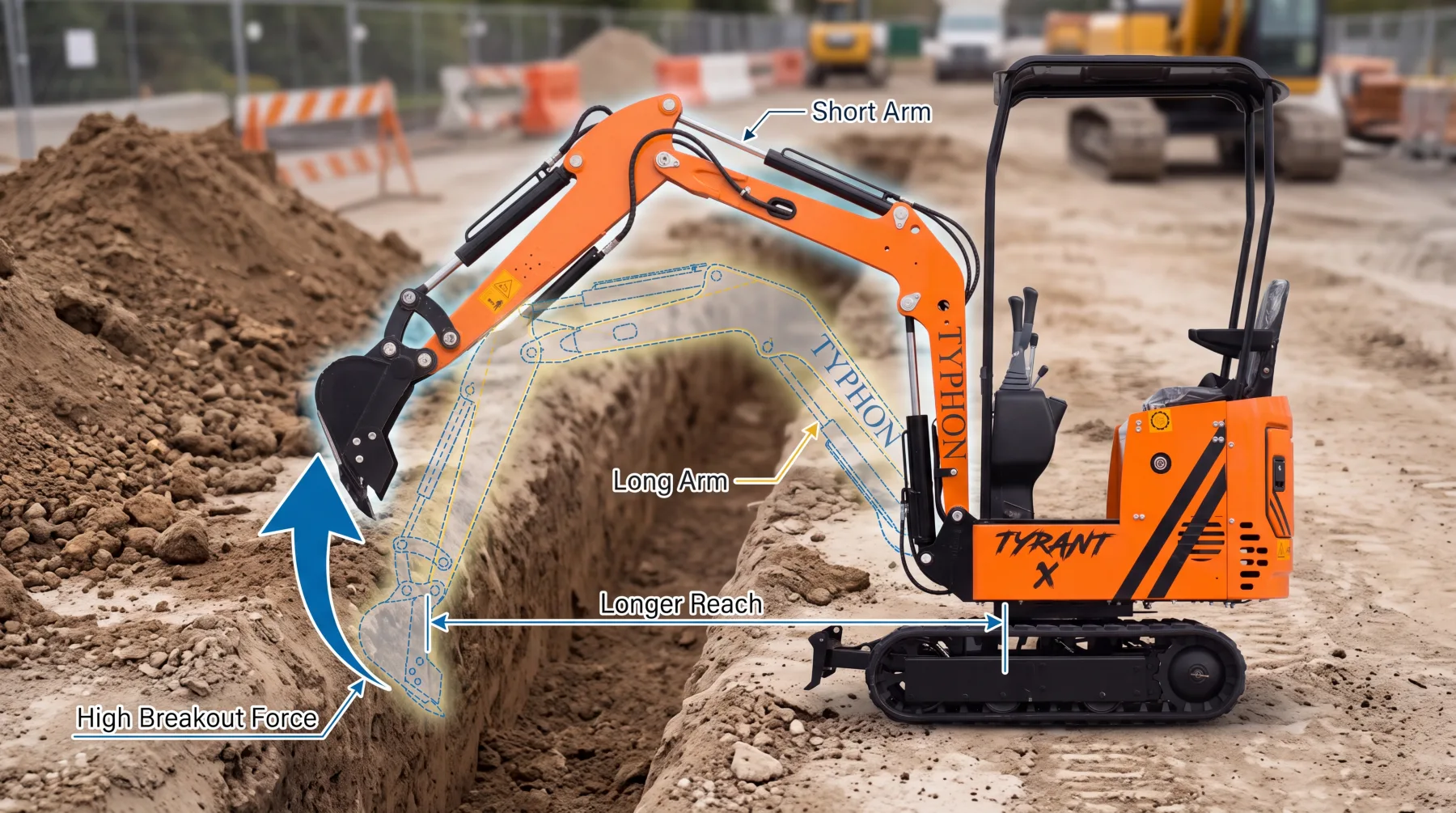
The arm, often called the stick, is the component that links the boom to the bucket, and it plays a decisive role in how the excavator digs. Arm length directly affects digging depth, breakout force, and working radius, so the design you choose shapes the machine's core capability. A longer arm extends both reach and digging depth, letting the bucket travel farther out and deeper down in a single setup. That extra reach is valuable for deep trenching and for covering more ground without moving the machine, but it comes with a trade-off worth understanding.
A shorter arm, by contrast, concentrates power where it matters. Because the bucket sits closer to the machine, a short arm delivers greater breakout force, the power the bucket uses to break into and pry loose tough, compacted material. Short arms also improve precision and lifting performance, since the load is held nearer the machine and the geometry favors control over distance.
These differences translate into clear advantages depending on the work:
**Long arms** maximize digging depth and working radius for reaching farther and deeper. **Short arms** boost breakout force, lifting power, and precise control near the machine. **Balanced arms** offer a versatile middle ground for general-purpose digging.
Choosing the right arm means matching its strengths to your most common tasks. A contractor digging deep utility trenches gains from a long arm that reaches the required depth in one pass, while an operator handling dense rock or heavy lifting is better served by a short arm that maximizes force and control. Understanding this balance between reach and power lets you configure a machine that performs confidently on the work you do most, rather than compromising on the tasks that matter.
Bucket Geometry and Material Handling
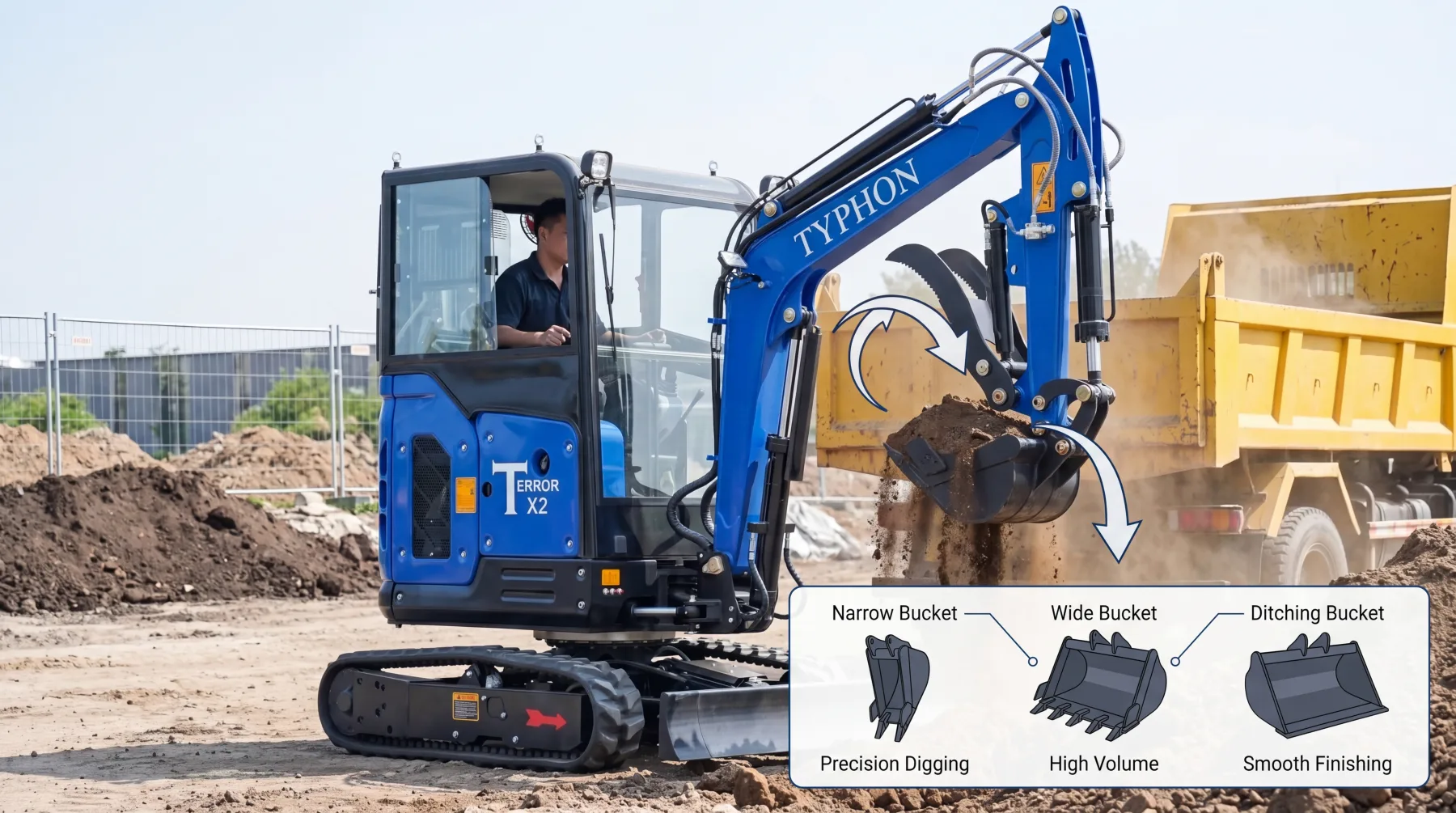
The bucket is where the excavator meets the material, and its geometry has a direct effect on how efficiently the machine digs, fills, and dumps. Bucket shape, width, and tooth design all influence performance, and matching those features to the application is one of the simplest ways to improve productivity while reducing wear. Width is often the most visible factor. A narrow bucket concentrates force for cutting into hard ground and digging precise trenches, while a wide bucket moves a larger volume of loose material in each pass, which suits general excavation and material handling.
Shape and tooth design work together to determine how well the bucket penetrates, fills, and releases its load. A well-designed curved profile helps material flow into the bucket smoothly and empty cleanly, cutting down on the sticking and carry-back that slow a machine and waste effort. Tooth design matters just as much, since teeth focus the digging force at the cutting edge to break into tough material.
Different bucket features suit different conditions, and choosing well pays off directly:
**Narrow buckets** for precise trenching and cutting into hard, compacted ground. **Wide buckets** for high-volume digging and loading of loose material. **Heavy-duty teeth** for rock, frozen soil, and abrasive conditions. **Smooth or ditching buckets** for grading, cleanup, and finishing work.
Matching bucket geometry to the material and task improves both output and equipment life. A bucket suited to its work fills fully, empties cleanly, and cuts efficiently, so the machine completes more in each cycle. It also wears more slowly, because the right design faces the right stresses rather than fighting conditions it was never built for. Taking the time to select the correct bucket protects your productivity and your investment, turning a simple component choice into a meaningful gain in performance.
How Boom, Arm, and Bucket Work Together
The boom, arm, and bucket rarely act alone. They function as a connected system, and every movement of one affects the others. When an operator digs, the boom lowers the arm into position, the arm draws the bucket through the material, and the bucket curls to capture the load, all in a smooth, coordinated motion. The geometry of these three components governs how well that coordination flows. When their lengths and angles are matched thoughtfully, the machine moves through its digging cycle efficiently, with each part complementing the next rather than working against it.
Proper geometry also underpins stability, which is critical to safe and productive operation. As the boom and arm extend and the loaded bucket reaches out, the machine's center of gravity shifts, and a well-balanced configuration keeps the excavator planted and secure through the full range of motion. A poorly matched combination, by contrast, can leave the machine straining at the edges of its range or feeling unsteady when handling heavy loads at reach.
The benefits of a well-integrated working system show up across everyday operation:
**Smoother operation**, as the boom, arm, and bucket move in coordinated harmony. **Greater stability**, since balanced geometry keeps the machine secure at reach. **Optimized digging**, with each component contributing its strength to the cycle. **Reduced strain**, because the parts work together rather than fighting one another.
Understanding this interconnection helps operators and buyers judge an excavator by more than any single specification. A machine with an impressive boom reach may disappoint if its arm and bucket are poorly matched to the work, while a well-balanced combination performs reliably across a range of tasks. Viewing the boom, arm, and bucket as one integrated system, rather than three separate parts, is what leads to smoother digging, steadier handling, and dependable performance on every job.
Choosing the Right Geometry for Different Applications
No single boom, arm, and bucket combination fits every job, and recognizing that is the key to configuring an excavator well. The right geometry depends entirely on the work you perform, and selecting a combination suited to your primary tasks maximizes both efficiency and machine performance. Trenching, grading, demolition, and material handling each place different demands on the machine, so the ideal setup for one can be a poor fit for another. Thinking carefully about your most common applications points you toward the configuration that will serve you best.
Consider how the demands change from one task to the next:
**Trenching** favors a longer arm for depth and a narrower bucket for precise, clean digging. **Grading** benefits from balanced geometry and a smooth bucket for controlled, even finishing. **Demolition** calls for strength and control, favoring a shorter arm and heavy-duty attachments. **Material handling** rewards good reach and a wide bucket for moving high volumes efficiently.
Beyond the task itself, weigh the conditions you work in and the demands you place on the machine. Tight, confined sites favor compact geometry that keeps power close and movement controlled, while open sites with spread-out work reward greater reach. Tough, abrasive materials call for robust, heavy-duty components, while lighter work allows more flexibility in your choices. You should also confirm that any configuration suits your machine's size and hydraulic capacity, since a well-matched setup performs reliably while a mismatch limits both output and safety.
Taking the time to match geometry to your application protects your productivity and your investment. A machine configured for its real work digs efficiently, handles material cleanly, and holds up well over time, while a poorly suited setup slows every task and wears prematurely. Choosing thoughtfully ensures your excavator delivers the performance and dependability your projects require.
Conclusion
The boom, arm, and bucket form the working heart of every excavator, and understanding their geometry is fundamental to getting the most from the machine. The boom sets the machine's reach and height, shaping excavation depth, loading height, and overall efficiency, while the arm balances reach against breakout force, lifting power, and precision. Bucket geometry determines how efficiently the machine digs, fills, and dumps, and matching it to the material improves output while reducing wear. Most importantly, these three components function as a connected system, where balanced geometry delivers smoother operation, greater stability, and optimized digging. Since no single combination fits every job, selecting the right setup for trenching, grading, demolition, or material handling is what maximizes efficiency and performance. Match the geometry thoughtfully to your work, and your excavator will dig, lift, and handle material dependably on every project.