
How Bucket Cylinder Protection Extends Mini Excavator Service Life
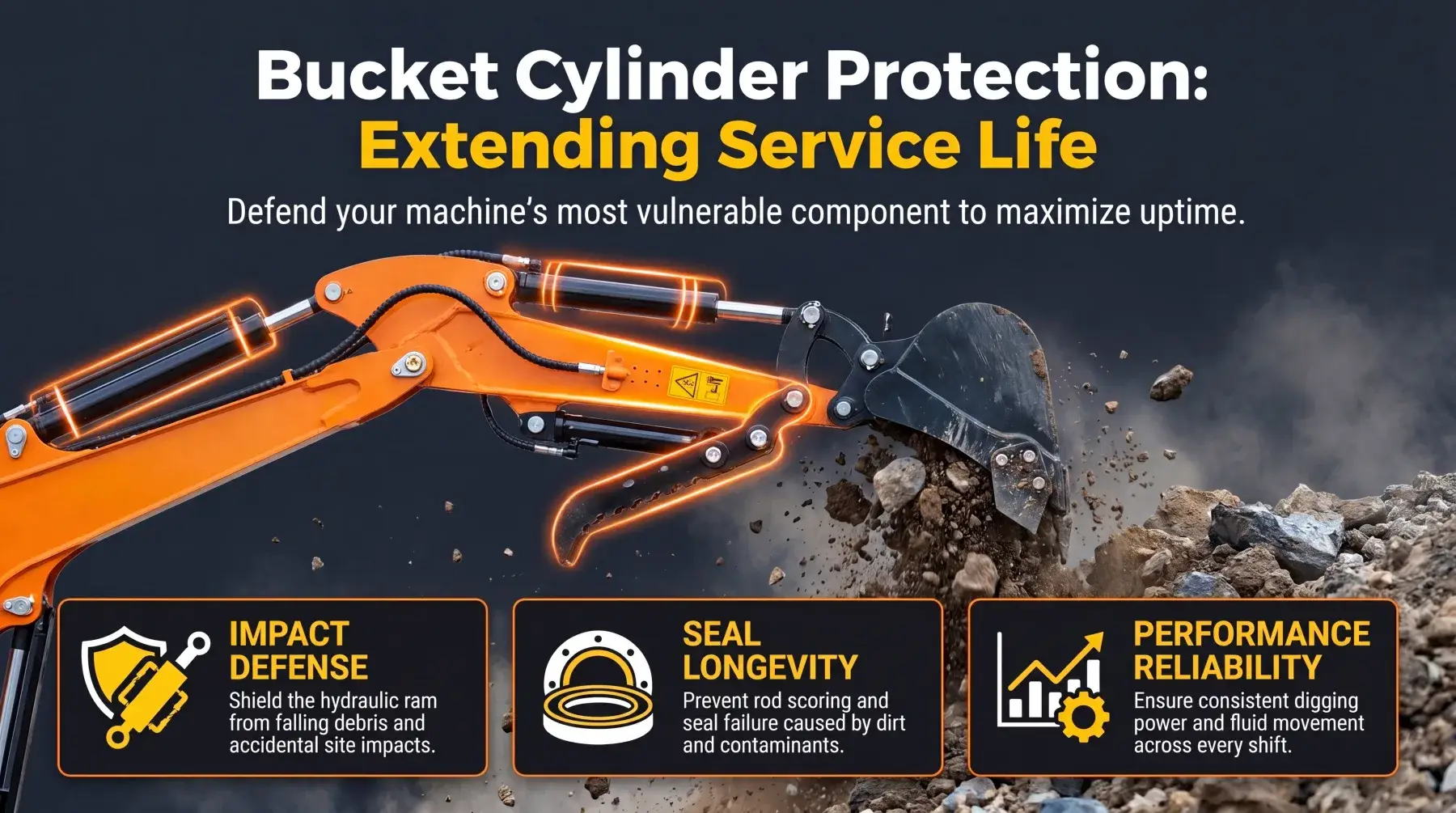
The bucket cylinder takes more abuse than almost any other component on your mini excavator. Every dig, pry, and curl puts pressure on that hydraulic ram, and a single bent rod or torn seal can sideline the machine for days. For contractors who count on every working hour, protecting this cylinder is one of the smartest ways to defend both productivity and long-term value.
This guide explains what bucket cylinder protection is and why it matters for the life of your machine. You’ll learn how cylinders get damaged, how protection features work, the real benefits they bring to service life and uptime, and the operator habits and maintenance steps that keep your cylinder working for years. By the end, you’ll understand why this often-overlooked feature deserves attention before you buy and every day you operate.
Beyond preventing expensive repairs, effective bucket cylinder protection helps preserve the excavator’s overall performance throughout its service life. A well-protected cylinder maintains smooth bucket movement, consistent hydraulic power, and dependable digging performance, allowing operators to work confidently even in demanding conditions.
What Bucket Cylinder Protection Is
Before you can judge the value, it helps to understand what bucket cylinder protection actually means. The idea is simpler than it sounds once you picture where the cylinder sits and what threatens it.
Because the bucket cylinder performs one of the machine’s highest-load functions, even minor damage can quickly affect overall productivity. Understanding how the cylinder is protected allows buyers and operators to better evaluate machine durability before making a purchase or beginning demanding work.
Defining the Bucket Cylinder
The bucket cylinder is the hydraulic ram that curls and uncurls the bucket. It converts hydraulic pressure into the force that pries material loose and rolls it into the bucket. Because it sits at the working end of the arm, it’s constantly exposed to dirt, debris, and impact.
The cylinder works continuously throughout nearly every excavation cycle, making it one of the most frequently used hydraulic components on the machine. Its constant movement under heavy loads means it requires both durable construction and proper protection to maintain reliable performance over thousands of operating hours.
That exposure is exactly why protection matters. The cylinder rod and its seals are precision parts, and even small damage can cause leaks, lost force, or total failure.
What “Protection” Actually Covers
Bucket cylinder protection refers to the design features and guards that shield the cylinder from harm during normal work. This can include physical guards over the rod, smart positioning of the cylinder, reinforced rod ends, and built-in pressure relief that prevents internal overload.
Modern mini excavators often combine several protection methods rather than relying on a single guard. By integrating protective structures with thoughtful hydraulic engineering, manufacturers reduce the likelihood of both accidental damage and long-term component wear.
Together, these features keep the cylinder safe from both external impact and internal stress. The goal is simple: keep the ram straight, the seals intact, and the hydraulics sealed tight.
Why Bucket Cylinders Get Damaged
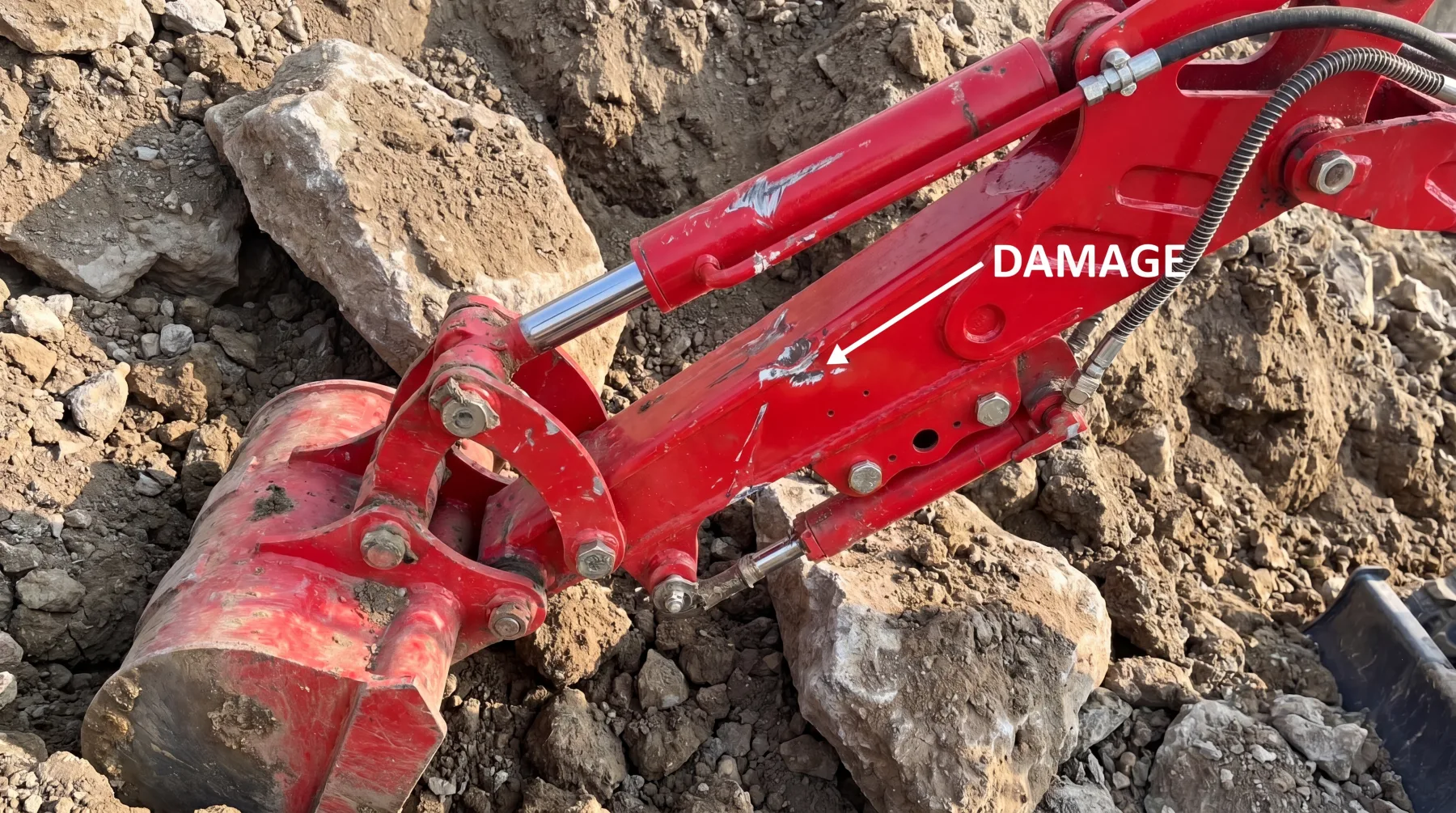
Understanding how cylinders fail is the first step toward preventing it. Most damage traces back to a handful of common causes you’ll recognize from everyday work.
Many cylinder failures develop gradually rather than occurring from a single incident. Small impacts, repeated overloads, and poor maintenance can accumulate over time, making preventive care and protective design essential for extending cylinder service life.
Impact and Physical Contact
The most obvious threat is direct impact. Striking rocks, concrete, or buried debris can dent or bend the cylinder rod. Even a small ding on a rod surface can score the seals as the cylinder strokes, leading to leaks down the road.
Working in demolition sites, rocky terrain, or heavily compacted ground increases the likelihood of accidental contact with hard objects. Protective guards help absorb these impacts before they reach sensitive hydraulic components, reducing the chance of costly repairs.
A bent rod is one of the costliest cylinder failures. Once the rod loses its true line, the seals wear unevenly and the whole cylinder needs rebuilding or replacement.
Overextension and Internal Overload
Cylinders can also fail from the inside. Forcing the bucket against an immovable object, or repeatedly bottoming out the cylinder at full stroke, creates pressure spikes that strain seals and mounts. Over time, this internal stress causes leaks and weakens the cylinder.
Repeatedly operating the excavator beyond its intended digging limits also places unnecessary stress on the bucket cylinder. Using proper digging techniques and allowing the hydraulics to do the work helps minimize internal pressure spikes and extends component life.
These failures often build slowly, which makes them easy to ignore until performance drops. Recognizing the cause helps you operate in a way that prevents it.
How Protection Features Work
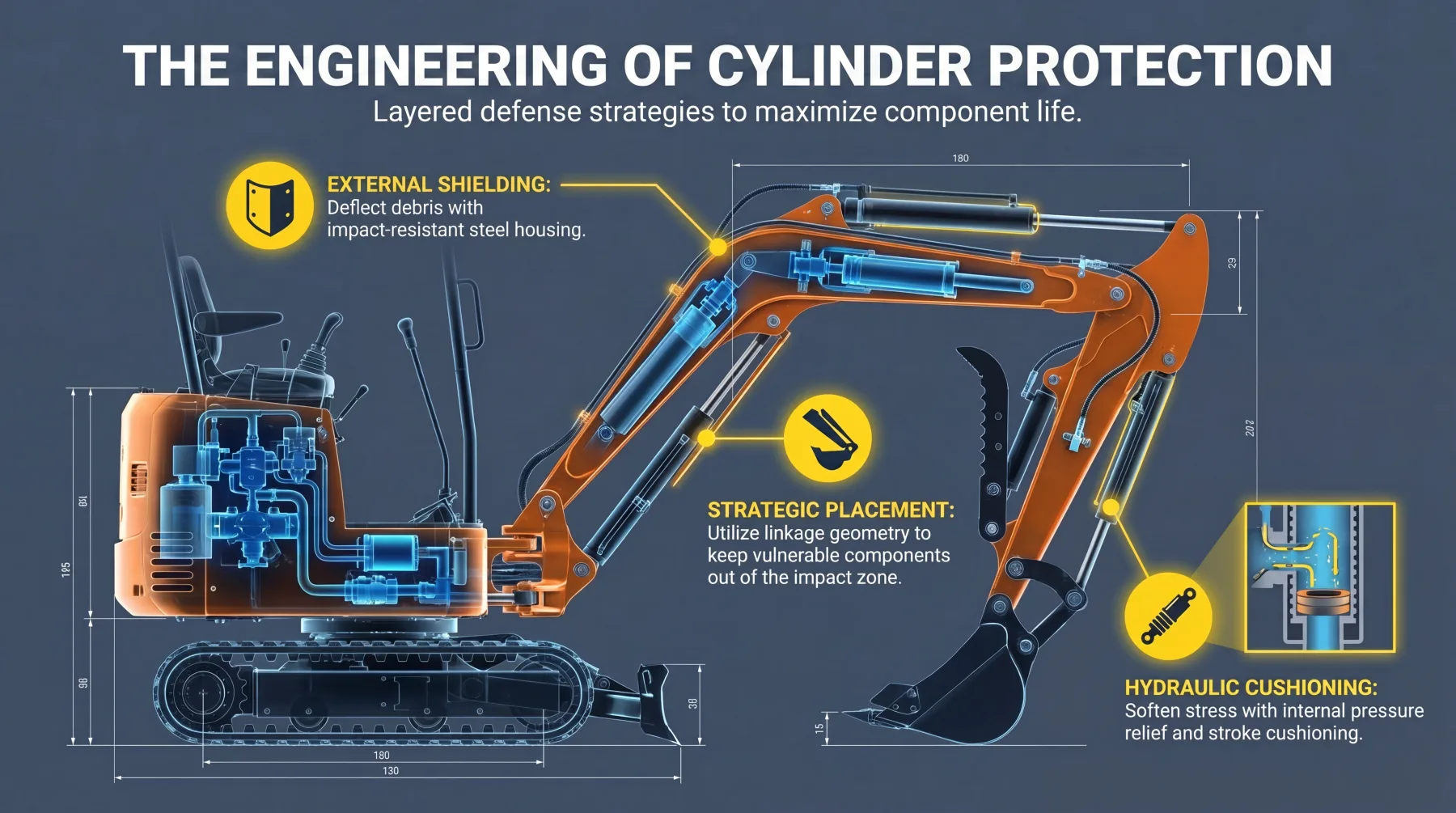
A well-protected cylinder relies on smart engineering, not luck. Knowing how each feature works helps you appreciate why it matters and what to look for when comparing machines.
Manufacturers design these protective systems to work together as part of the excavator’s overall durability strategy. Combining physical protection with hydraulic safeguards helps the machine withstand demanding daily use while reducing maintenance requirements over time.
Physical Guards and Shielding
Many machines include guards that cover or partially shield the bucket cylinder. These guards take the hits that would otherwise reach the rod, deflecting rocks and debris during digging. By absorbing impact, they keep the rod straight and the seals intact.
Well-designed guards are typically constructed from durable steel capable of withstanding repeated impacts without interfering with normal cylinder operation. This added layer of protection helps preserve the cylinder even when working in abrasive or debris-filled environments. Good guard design protects the cylinder without blocking its movement or making service difficult. The best setups balance defense with easy access for maintenance.
Smart Cylinder Positioning
Engineering plays a quiet but powerful role. By positioning the bucket cylinder where the arm and linkage shield it during digging, manufacturers reduce the cylinder’s exposure to direct impact. The geometry itself becomes a form of protection.
Careful cylinder placement also reduces exposure during bucket rollback and material loading. Keeping vulnerable hydraulic components tucked within the machine’s linkage helps lower the risk of accidental impacts throughout normal excavation operations. This thoughtful placement keeps the cylinder tucked away from the worst of the action. It’s protection you never see but benefit from on every dig.
Pressure Relief and Cushioning
Internal protection matters just as much as external guards. Relief valves cap pressure spikes before they damage seals, while cushioning at the end of the stroke softens the impact when the cylinder reaches full extension. Both features reduce internal stress.
These hydraulic safety features not only protect the cylinder but also reduce stress on hoses, pins, bushings, and surrounding hydraulic components. The result is smoother machine operation and improved long-term system reliability. These built-in safeguards protect the cylinder from the overload that everyday work creates. They keep the hydraulics within safe limits even when conditions get tough.
Maintenance Tips to Maximize Cylinder Life
Protection features and good habits go further when backed by steady maintenance. A simple routine keeps the cylinder sealed, smooth, and reliable for years.
Uptime is money. Fewer cylinder failures mean steadier schedules and fewer costly surprises. Following sound mini excavator hydraulic cylinder maintenance practices alongside built-in protection keeps your machine running reliably through demanding work.
Preventive maintenance is far less expensive than repairing or replacing a damaged hydraulic cylinder. A few minutes spent inspecting and cleaning the cylinder each day can significantly reduce downtime and help maintain consistent excavation performance.
Inspect the Rod and Seals Regularly
Make the cylinder part of your daily walk-around. Look for scratches, dents, or pitting on the rod surface, and check for any oil weeping around the seals. Catching small issues early prevents them from becoming full failures.
Pay close attention after working in rocky conditions or demolition environments, where impacts are more likely to occur. Early detection of scratches or leaks allows repairs to be completed before contamination or seal failure causes more extensive hydraulic damage.
A few seconds of inspection can save a costly rebuild. Treat any leak or rod damage as an early warning to address promptly.
Keep the Cylinder and Rod Clean
Dirt and grit are the enemy of any hydraulic cylinder. Wipe down the exposed rod when it gets caked with mud, and keep the area around the cylinder free of packed debris. Clean surfaces protect the seals and keep contaminants out of the system.
Avoid using abrasive tools when cleaning the exposed rod, as they can scratch the polished surface and accelerate seal wear. A soft cloth and routine cleaning are usually sufficient to remove dirt while preserving the cylinder’s finish. This simple cleaning habit directly extends seal life. Less grit on the rod means less wear inside the cylinder.
Maintain Clean Hydraulic Fluid
The cylinder is only as healthy as the fluid that powers it. Keep hydraulic fluid clean and at the right level, and replace filters on schedule to trap contaminants before they reach the cylinder. Clean fluid protects the rod, seals, and every other hydraulic component.
Periodic hydraulic fluid analysis can also help identify contamination or excessive wear before noticeable performance problems develop. Maintaining clean fluid throughout the hydraulic system supports not only cylinder longevity but also the health of pumps, valves, and other critical components. Routine fluid care is the foundation of cylinder longevity. Stay on top of it, and the whole system rewards you with reliable performance.
Conclusion
Bucket cylinder protection is one of the quietest yet most valuable factors in a mini excavator’s service life. By shielding the rod from impact, keeping seals clean, and managing internal pressure, these features prevent the failures that lead to costly repairs and lost working hours. Protect the cylinder, and you protect the productivity and value of the entire machine.
The smart move is combining good design with good practice. Choose a machine with strong, accessible cylinder protection, operate with care by avoiding bottoming out and prying at full reach, and stay consistent with inspections, cleaning, and fluid maintenance. Build those habits now, and your bucket cylinder will reward you with longer life, less downtime, and dependable digging power on every job your business takes on.
Whether you’re performing trenching, landscaping, utility installation, or heavy construction work, protecting the bucket cylinder is an investment in the excavator’s long-term reliability. A well-protected hydraulic system helps reduce unexpected downtime, maintain consistent digging performance, and lower overall ownership costs throughout the machine’s working life.