

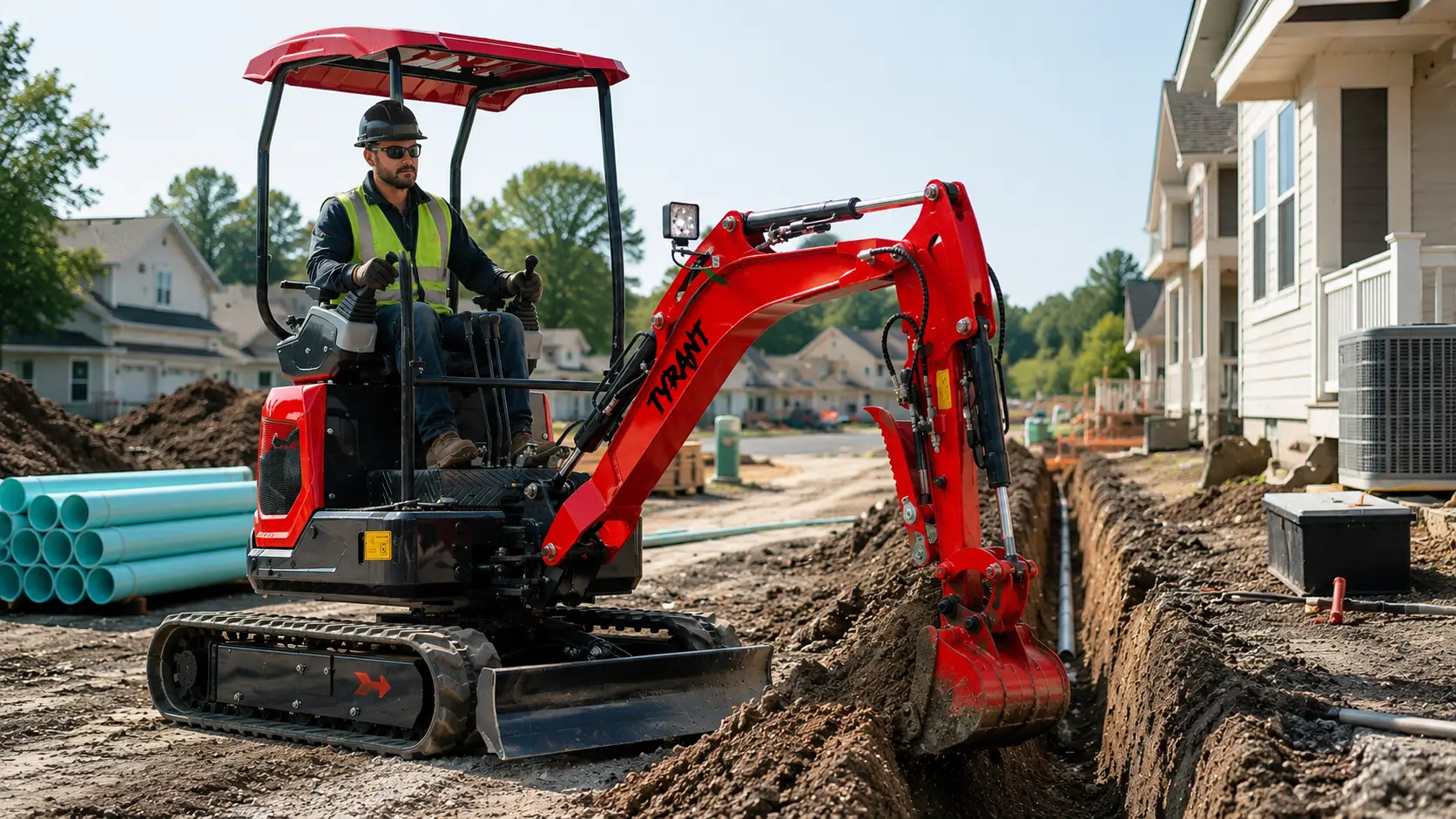
Mini Excavator Fuel Efficiency: Save More on Every Job
Fuel is one of the few costs on a jobsite that never stops climbing, and it quietly shapes the profitability of every project you take on. For contractors and small business owners running compact equipment, the gallons burned each day add up fast, especially across a fleet or a busy season packed with back-to-back jobs. Yet many owners treat fuel as a fixed expense, something they simply have to accept rather than control. The reality is that mini excavator fuel efficiency is largely within your power to influence, and the savings you capture flow straight to your bottom line.
This guide is written for contractors, landscapers, construction business owners, property developers, and equipment buyers who want to stretch every gallon further. We will look at why mini excavators already sip fuel compared with larger machines, how idling silently drains your tank, and how digging technique, machine sizing, hydraulic efficiency, and disciplined maintenance all shape consumption. We will also cover transport efficiency and the work practices that help you save on every job. Understand these levers, and you turn fuel from an uncontrollable cost into a genuine source of competitive advantage.
Why Mini Excavators Already Burn Less Fuel
The first thing worth understanding is that a mini excavator starts with a built-in efficiency advantage over larger equipment. These machines run smaller engines, lighter frames, and more compact hydraulic systems, all of which demand far less fuel to accomplish the same residential and light-commercial tasks. For the kind of trenching, grading, and utility work most crews handle day to day, a full-size excavator is often burning fuel to move mass and power capacity you simply do not need.
The mistake many buyers make is assuming bigger always means better, then paying for that assumption at the pump every single day. A larger machine idling and digging on a job it is overqualified for wastes fuel on every cycle, and across a season that waste compounds into thousands of dollars. The compact alternative completes the same work while consuming a fraction of the diesel, because its engine is matched to the actual demands of the task.
The business impact is straightforward and immediate. When the machine fits the work, you spend less on fuel per hour, per job, and per year. That lower consumption also reduces your environmental footprint and your operating cost on every bid, letting you price more competitively while protecting your margin. The takeaway is simple: choosing a mini excavator for residential-scale work is itself a fuel-saving decision. From there, how you run the machine determines how much of that advantage you actually keep.
How Idling Quietly Drains Your Tank
Idling is the most overlooked fuel drain on any jobsite, precisely because it feels harmless. The machine sits running while an operator talks to a homeowner, waits on a delivery, or steps away for a few minutes, and the engine keeps burning diesel the entire time. None of that fuel moves a single bucket of dirt, yet it shows up on your fuel bill all the same, job after job.
The problem is that idle time accumulates in small, invisible increments. A few minutes here and there feels insignificant, but studies of construction equipment routinely find that machines spend a substantial share of their running hours idling rather than working. Every one of those hours consumes fuel, adds wear, and accrues engine hours that bring service intervals closer, all without producing any billable output. Multiply that across a crew and a season, and idling becomes one of the largest controllable costs you have.
The solution is a simple discipline backed by the right habits and technology. Train operators to shut the machine down during any pause longer than a few minutes rather than letting it run out of convenience. Many modern mini excavators include automatic idle-reduction or auto-shutdown features that throttle the engine back or stop it entirely after a set period of inactivity, and these systems pay for themselves quickly. Here is how to lock in the savings: make idle awareness a standard expectation, not an afterthought.
The real-world payoff reaches across fuel, maintenance, and machine life at once. Cutting idle time lowers daily fuel consumption directly, slows the accumulation of engine hours that drive maintenance costs, and reduces unnecessary wear on the engine. The takeaway is that the cheapest fuel you will ever buy is the fuel you never burn while the machine sits idle. Once idling is under control, attention shifts to how efficiently the machine works when it is actually digging.
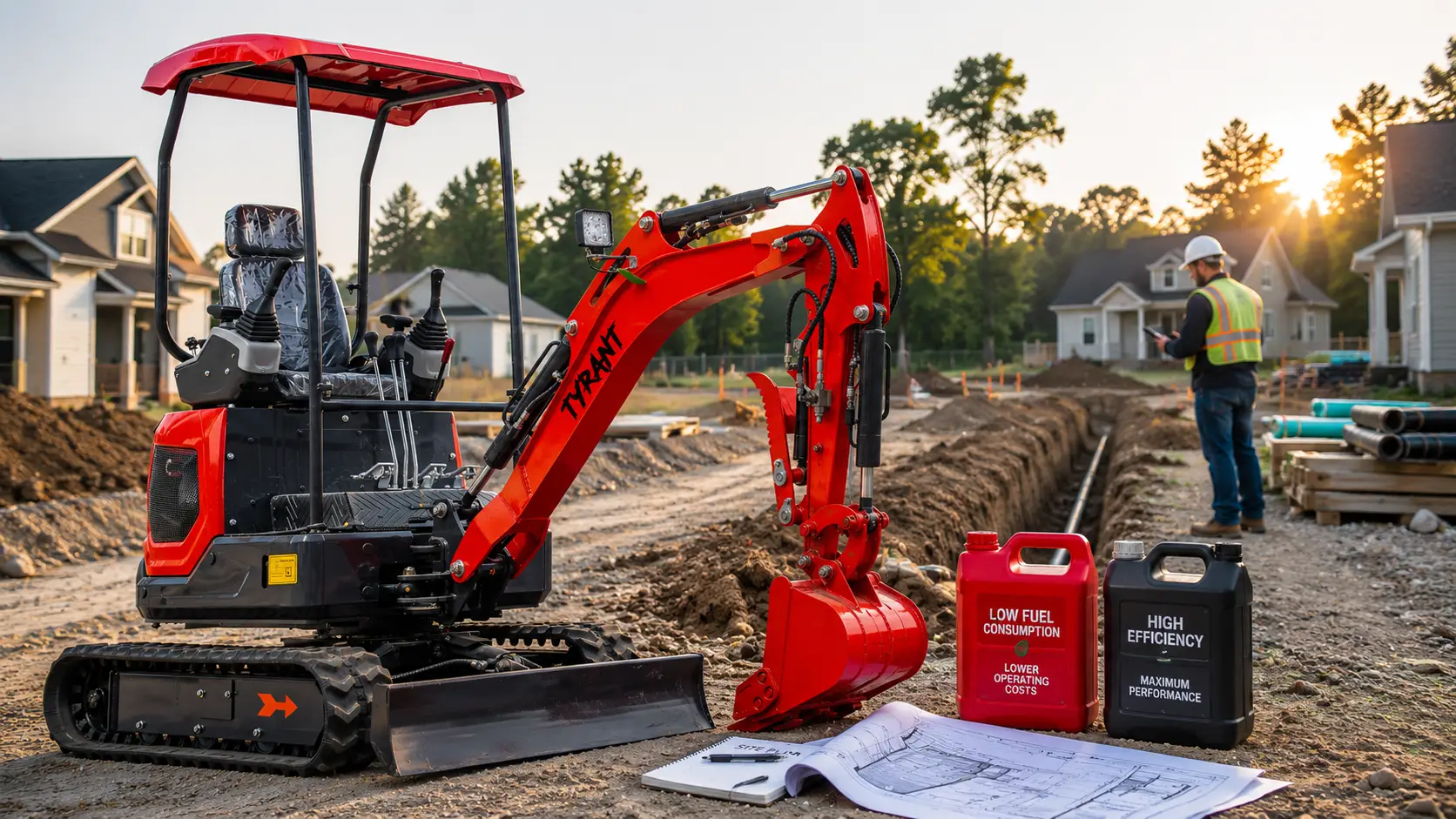
Efficient Digging Technique That Saves Fuel
How an operator digs has a direct and measurable effect on fuel consumption, yet technique is rarely discussed as a fuel-saving lever. A mini excavator is engineered to dig efficiently when the boom, arm, and bucket work together in smooth, coordinated motion. When that technique breaks down into jerky, forceful, or repetitive movements, the engine works harder, the hydraulics strain, and fuel burns faster for less productive output.
The common mistake is fighting the machine instead of working with it. Operators who overload the bucket on every pass, crowd it too aggressively, or pry against immovable material force the hydraulic system to draw maximum power repeatedly. The same applies to operators who reposition constantly because they set up poorly, or who take ragged, inconsistent cuts that require rework. Each of these habits burns extra fuel to accomplish the same, or less, actual work.
The correct approach relies on smooth, deliberate motion and smart positioning. Take manageable bites rather than straining the machine through dense material in a single overloaded pass, and let the bucket teeth do the cutting in a controlled arc. Position the machine thoughtfully so you can dig, swing, and dump with minimal travel and repositioning, since unnecessary movement is wasted fuel. Plan the dig so each cycle is productive rather than corrective.
The payoff shows up in fuel savings, faster cycles, and reduced wear simultaneously. An operator who works efficiently completes the job in fewer engine hours, which means less diesel consumed and less stress on the hydraulics and structure. The takeaway here is that a skilled operator is a fuel-saving asset, and good technique pays dividends on every cut. Yet technique can only do so much if the machine itself is mismatched to the work.
Smart Machine Sizing for the Work You Actually Do
Matching the machine to the job is one of the most powerful fuel decisions you will ever make, and it happens long before anyone turns the key. Mini excavators span a wide range of operating weights and engine sizes, and each step up in class consumes more fuel. Choosing the right size means paying only for the power and capacity the work genuinely requires, rather than hauling and fueling excess capability you rarely use.
The trap many buyers fall into is sizing up for the rare heavy job rather than the typical daily work. Buying a larger machine “just in case” means you burn extra fuel on every routine task for the sake of occasional jobs that a rental could cover more economically. Conversely, an undersized machine forced to strain at the top of its limits also wastes fuel, because an overworked engine running at full output constantly is rarely efficient. Neither extreme serves your fuel budget well.
The right approach is to study your typical jobs and size the machine to that reality. Consider the digging force, reach, and lifting you perform most often, the spaces you regularly access, and the loads you handle day to day. Match the machine to that working profile, and rent a larger unit for the occasional job that genuinely exceeds it. This keeps your everyday fuel consumption low while still letting you take on bigger work when it appears.
The business impact compounds over the life of the machine. A correctly sized excavator burns less fuel on every routine task, costs less to transport, and still handles the vast majority of your work comfortably. The takeaway is clear: right-sizing your machine is a fuel strategy that pays off on every job for years. With the right machine selected, keeping its systems healthy is what preserves that efficiency over time.
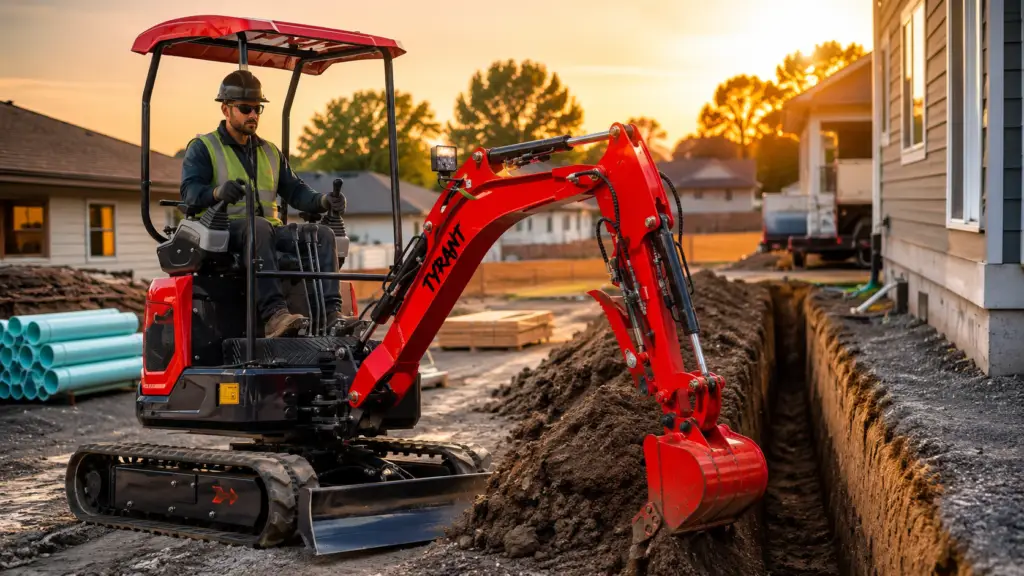
Hydraulic Efficiency, Maintenance, and Clean Filters
A mini excavator‘s fuel efficiency depends heavily on the health of its hydraulic system and engine, and these are exactly the systems that suffer first when maintenance slips. The hydraulics convert engine power into digging force, and when they run clean and well-tuned, that conversion is efficient. When fluid degrades, filters clog, or components wear, the engine has to work harder to deliver the same performance, and fuel consumption climbs steadily and silently.
The mistake is treating maintenance as something to defer until a problem appears. A clogged air filter starves the engine of air and forces it to burn fuel inefficiently. Dirty fuel filters restrict flow and strain the system. Degraded or low hydraulic fluid makes the hydraulics sluggish and power-hungry, while a poorly maintained engine simply burns more diesel for every hour of work. None of these issues announce themselves dramatically; they quietly raise your fuel costs until the bill becomes impossible to ignore.
The correct approach is disciplined, scheduled maintenance treated as a core operating habit. Change air, fuel, and hydraulic filters on the manufacturer’s schedule, keep hydraulic fluid clean and topped to the proper level, and service the engine consistently. Monitor for leaks, listen for changes in how the machine performs, and address small issues before they grow. A machine that is clean, tuned, and properly serviced delivers its rated efficiency rather than slowly bleeding fuel through neglect.
The payoff is measured in both fuel savings and uptime. A well-maintained machine burns less diesel, performs more reliably, and lasts longer before requiring major repairs, protecting both your fuel budget and your resale value. The takeaway is that clean filters and healthy hydraulics are among the cheapest fuel savings available to you. Beyond the machine itself, how you move it between jobs also shapes your total fuel spend.
Transport Efficiency and Fuel-Saving Work Practices
Fuel costs do not begin and end at the dig. The fuel your truck burns hauling the machine between jobsites is a real and often overlooked part of your total consumption, and the way you plan transport and structure your work can either compound waste or eliminate it. For crews moving between several properties in a week, transport efficiency can rival on-machine consumption in its impact on the bottom line.
The problem arises when transport and scheduling are treated as afterthoughts. Hauling an oversized machine with a heavier truck than the work requires burns extra fuel on every trip. Disorganized scheduling that sends a crew crisscrossing a service area, returning to the yard repeatedly, or making redundant trips wastes fuel that never touches a jobsite. These inefficiencies add up quietly across a busy season.
The solution combines smart transport with thoughtful work planning. Match your trailer and tow vehicle to the machine so you are not hauling more truck than necessary, and keep both well maintained, since proper tire pressure and tuning improve towing economy. Plan routes and schedules to group nearby jobs together, minimizing travel and redundant trips. On the jobsite, choose attachments and work methods suited to the task, since the right tool completes work in fewer cycles and less time, which directly saves fuel. A quick coupler that lets operators switch tools efficiently keeps the machine productive rather than idling between tasks.
The combined impact reaches across your entire operation. Efficient transport lowers the fuel burned getting to and from work, while smart scheduling and well-chosen attachments reduce the fuel consumed once you arrive. The takeaway is that fuel efficiency is a whole-operation discipline, not just an on-machine habit. Together, these practices turn scattered savings into a consistent profitability advantage.
Conclusion
Mini excavator fuel efficiency comes down to a series of deliberate choices that each protect your bottom line. The machine already burns less fuel than larger equipment, and you extend that advantage by cutting idle time, digging with smooth and efficient technique, sizing the machine to your real work, and keeping the hydraulics and filters in healthy condition. Add disciplined transport and smart scheduling, and the savings compound across every job and every season. None of these levers requires a dramatic investment; they simply require attention and consistency.
For contractors, landscapers, construction business owners, property developers, and equipment buyers, the next step is to look honestly at where your fuel actually goes. Track your idle time, evaluate whether your machine is sized to your typical jobs, commit to a real maintenance schedule, and plan your transport and routes with intention. Start with the easiest wins, idle reduction and clean filters, then build the rest into how your crew works every day. Make these habits standard, and your mini excavator will reward you with lower fuel costs, stronger reliability, and better profitability on every job you take on.