
Working in Mud: Strategies to Keep Your Mini Excavator From Getting Stuck
Stability is also greatly influenced by track location. Avoid making sudden maneuvers in deep muck and always keep the machine on the firmest terrain possible. The tracks may dig in and lose traction due to sudden motions. Smooth, controlled motion lessens the chance of sinking and helps distribute weight more evenly.
Flotation can be greatly enhanced by using mats, plywood sheets, or other temporary ground protection. By distributing the machine’s weight over a greater surface area, these materials enable the excavator to move over soft terrain without making deep ruts.
When excavating, operators need also be mindful of the location of their machines. The likelihood of getting stuck can rise when working with the rails perpendicular to a slope or unstable region. Better balance and traction are achieved throughout the task when the machine is positioned on the most stable portion of the site.
Lastly, don’t wait to act until the excavator is trapped. Stop right away and reevaluate the situation if the tracks start to slip or the machine starts to sink. A minor problem can be avoided from turning into an expensive recovery operation by using the boom and bucket to aid in movement or moving to firmer ground early.
Master Your Ground Contact
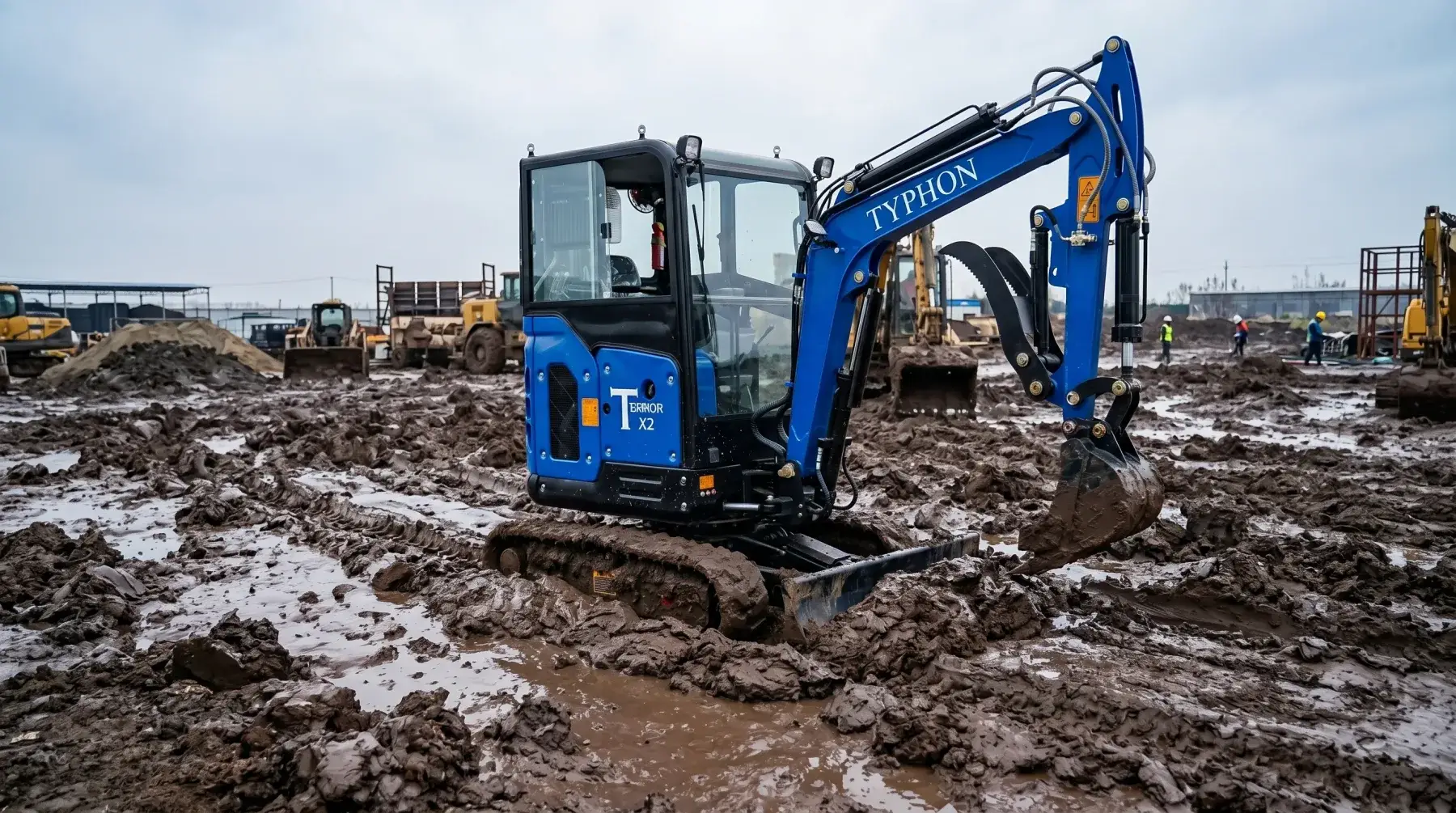
Mini excavators’ performance is impacted by ground contact, which is essential for stability in muddy circumstances. The excavator’s capacity to maintain traction and distribute weight across the ground determines how effective it is, regardless of its power. Using the machine’s widest tracks is a crucial tactic to improve performance in muck. By increasing the area of contact with the ground, wider tracks lower ground pressure and allow the excavator to float rather than sink on top of soft soil. In rainy, poor soil conditions, even a small track widening can make a big difference.
Furthermore, operator skill is crucial to performance. By stirring up the mud and forming ruts that might impede traction, aggressive motions and abrupt turns can jeopardize stability. Operators should concentrate on performing slow turns and seamless directional changes to protect the ground surface in order to reduce this risk. In difficult muddy conditions, controlled motions improve the excavator’s stability and general efficacy by maintaining support beneath the tracks. To avoid expensive downtime and recovery activities, it is crucial to comprehend these elements.
Track maintenance should not be overlooked. Mud, clay, rocks, and debris often become packed between track components during operation. This buildup can reduce traction, interfere with track performance, and make machine movement less predictable. Regularly inspecting and cleaning the tracks ensures they can grip the surface effectively when conditions become challenging.
It is also good practice to monitor track performance throughout the workday. If excessive slipping occurs, stop and reassess the terrain before continuing. Paying attention to ground contact, track condition, and operating technique can significantly reduce the chances of becoming stuck and help keep productivity high even when working in difficult, muddy environments.
Strategize Your Digging Path
A well planned digging path is one of the most effective ways to prevent a mini excavator from becoming stuck in muddy conditions. While many operators focus on machine power and track performance, the route the excavator takes across the job site often has an even greater impact on stability and productivity. Careful planning before work begins can reduce risks, improve efficiency, and help avoid costly recovery efforts.
One of the most important rules is to work toward firm, stable ground rather than away from it. By maintaining a connection to solid terrain, operators always have a dependable area to retreat to if ground conditions deteriorate. This approach provides an extra margin of safety and reduces the likelihood of becoming trapped in increasingly soft soil as the job progresses.
Machine positioning also plays a significant role in maintaining stability. Whenever the terrain allows, position the excavator to dig from the high side toward the low side of the work area. Elevated ground is typically firmer because water naturally drains downhill. Keeping the machine on higher ground helps reduce the effects of saturated soil and provides a more stable platform for digging operations. At the same time, improved drainage around the excavation area can help prevent mud from accumulating where the machine needs to travel.
Successful operators think several steps ahead rather than focusing only on the immediate task. Before starting work, take time to identify travel routes, turning areas, and potential trouble spots. Consider how the machine will enter, operate within, and exit the work zone. This level of planning helps avoid the common mistake of backing into freshly disturbed ground, where the soil has already been loosened and weakened by excavation activities.
By creating a clear digging strategy before the first bucket enters the ground, operators can maintain better traction, preserve ground stability, and keep the excavator moving efficiently throughout the project. A few minutes of planning can save hours of recovery time and help ensure the job stays on schedule.
Build a Stable Work Platform

When job sites remain wet for extended periods, relying on existing ground conditions can lead to significant problems, including reduced traction and increased risks of accidents. To mitigate these issues, building a stable work platform before excavation is crucial. This platform supports the weight of mini excavators, minimizes ground disturbance, and enhances control during operation, ultimately preventing costly delays and equipment recovery efforts. Common materials for constructing reliable platforms include clean rock, which allows for drainage while providing support, and crushed gravel, which can be quickly spread. Wooden timber mats are also effective, offering flexibility as they can be relocated as work progresses, thus continuing to protect the underlying ground in various construction scenarios.
Beyond preventing the excavator from sinking into mud, a properly constructed platform improves overall job site efficiency. Operators can travel more confidently, position the machine more accurately, and complete tasks without constantly worrying about unstable ground conditions. Equipment wear may also be reduced because the tracks experience less strain from slipping and spinning.
Most importantly, a stable work platform contributes to a safer working environment. Firm footing helps reduce unexpected machine movement and creates more predictable operating conditions for workers nearby. By establishing a solid foundation before production begins, contractors can improve safety, maintain productivity, and keep projects moving forward even when the weather creates challenging ground conditions.
Utilize Proper Weight Distribution
Proper weight distribution is a critical factor when operating a mini excavator in muddy or unstable ground conditions. Even with the right tracks and a well prepared work area, poor weight management can quickly cause the machine to lose stability and sink into soft soil. Understanding how the excavator’s weight is distributed across the tracks helps operators maintain traction, improve control, and reduce the likelihood of becoming stuck.
One of the most effective practices is keeping the bucket low to the ground and positioned close to the machine while traveling. This helps maintain a lower center of gravity, which improves overall stability and makes the excavator less susceptible to sudden shifts in balance. A lower center of gravity also allows the machine to move more confidently across uneven or saturated terrain, where stability can change from one section of the site to another.
Problems often occur when operators carry the bucket too high or extend it too far forward while moving. These positions shift a significant portion of the machine’s weight toward the front of the undercarriage. As a result, the leading section of the tracks applies greater pressure to the ground, causing the front end to push into soft mud rather than glide across it. In severe cases, the excavator can begin to act like a wedge, digging itself deeper into the terrain with every movement.
Balanced weight distribution allows the full length of the tracks to share the load more evenly. Instead of concentrating pressure in one area, the machine spreads its weight across a larger surface, reducing ground pressure and improving flotation. This makes it easier for the excavator to stay on top of soft ground rather than sinking into it.
Operators should also remain aware of how attachments, loads, and machine positioning affect balance throughout the workday. Small adjustments in bucket placement can make a significant difference when conditions are challenging. By maintaining proper weight distribution at all times, operators can improve machine stability, reduce the risk of bogging down, and travel more safely and efficiently across muddy job sites.
Know When to Stop and Pivot

Even the most experienced operators can encounter unexpected ground conditions. Rain, hidden soft spots, underground water, or disturbed soil can quickly turn a stable work area into a challenging environment. The key to avoiding a major problem is recognizing the warning signs early and taking action before the situation escalates.
One of the first indicators of trouble is excessive track spinning. When the tracks begin rotating without generating forward movement, the machine is losing traction and the ground may no longer be able to support its weight. Other warning signs include sluggish travel performance, deeper than normal track impressions, or the excavator beginning to lean slightly to one side. These signals should never be ignored, as they often indicate that the soil is weakening beneath the machine.
When these conditions appear, the best response is to stop and evaluate the situation immediately. Continuing to push forward in hopes of reaching firmer ground can often make the problem worse. As the tracks continue to spin, they churn the soil and remove any remaining support under the machine. What starts as a minor loss of traction can quickly develop into a situation that requires equipment recovery and costly downtime.
Instead, operators should carefully move the machine back toward known stable ground whenever possible. Reassessing the work area, adjusting the travel route, or creating additional ground support may be necessary before operations continue. Taking a few minutes to make these adjustments is far more efficient than dealing with a stuck excavator later.
Successful operation in muddy conditions is not just about keeping the machine moving. It is also about knowing when to pause and adapt. Operators who recognize early warning signs and pivot to safer conditions protect their equipment, maintain productivity, and help keep projects on schedule despite challenging terrain.
Conclusion
Working in muddy conditions is never ideal, but it does not have to bring productivity to a halt. The difference between a smooth operation and a costly recovery often comes down to preparation, awareness, and smart operating practices. By taking the time to assess site conditions, improve ground contact, plan a safe digging path, and establish a stable work platform, operators can significantly reduce the risks associated with soft terrain.
Proper weight distribution also plays a vital role in keeping the machine stable and mobile, while the ability to recognize warning signs and react quickly can prevent a minor issue from turning into a major setback. These strategies are most effective when used together, creating a complete approach to working safely and efficiently in challenging ground conditions.
Experienced operators understand that success in mud is not about pushing the machine harder. It is about making informed decisions and adapting to the environment. Every job site presents different challenges, but the principles of stability, traction, and planning remain the same.
When these habits become part of everyday operation, mini excavators can continue performing reliably even on wet and unpredictable terrain. With the right mindset and techniques, operators can spend less time dealing with stuck equipment and more time completing projects safely, efficiently, and on schedule.