
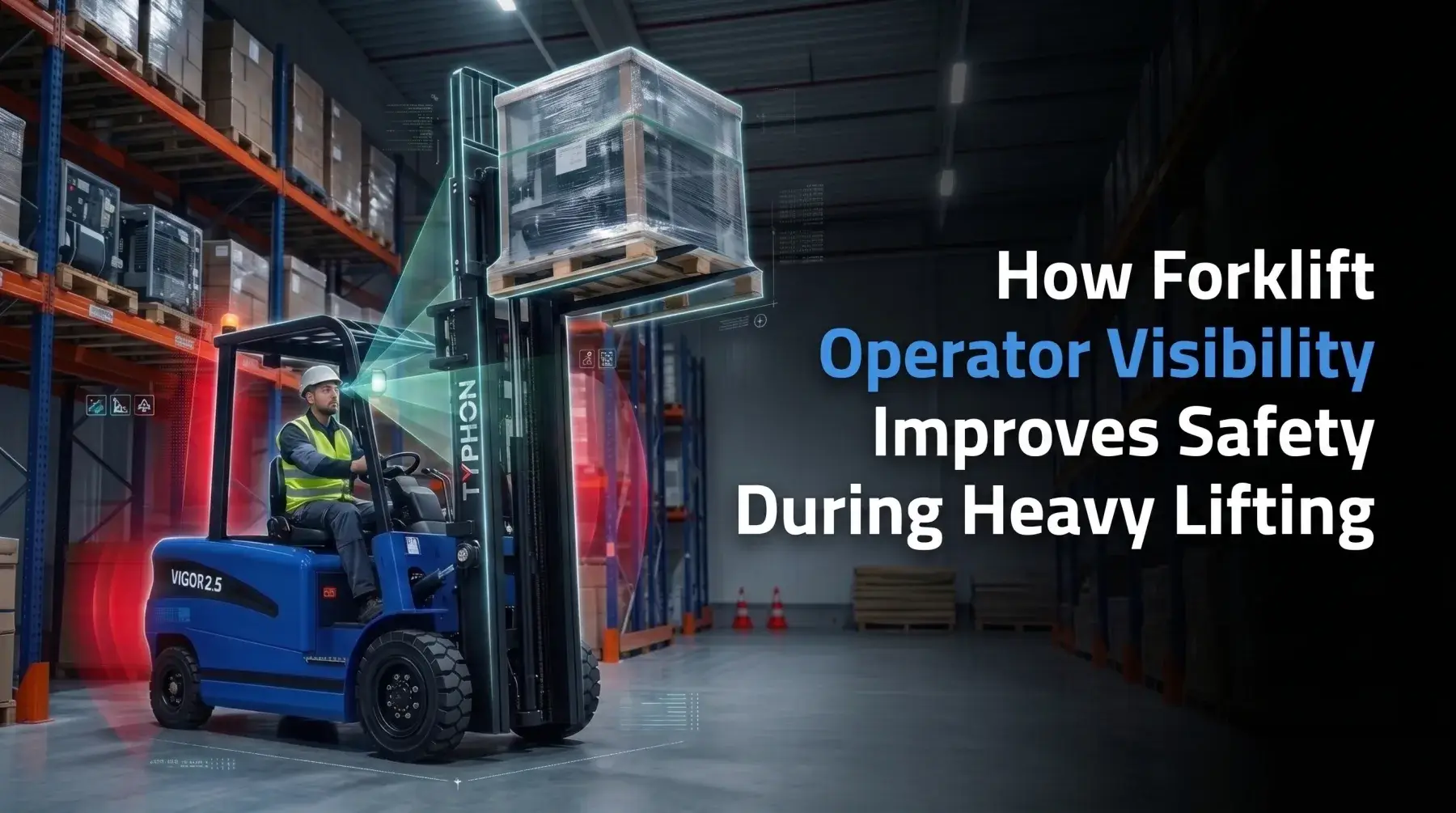
How Forklift Operator Visibility Improves Safety During Heavy Lifting
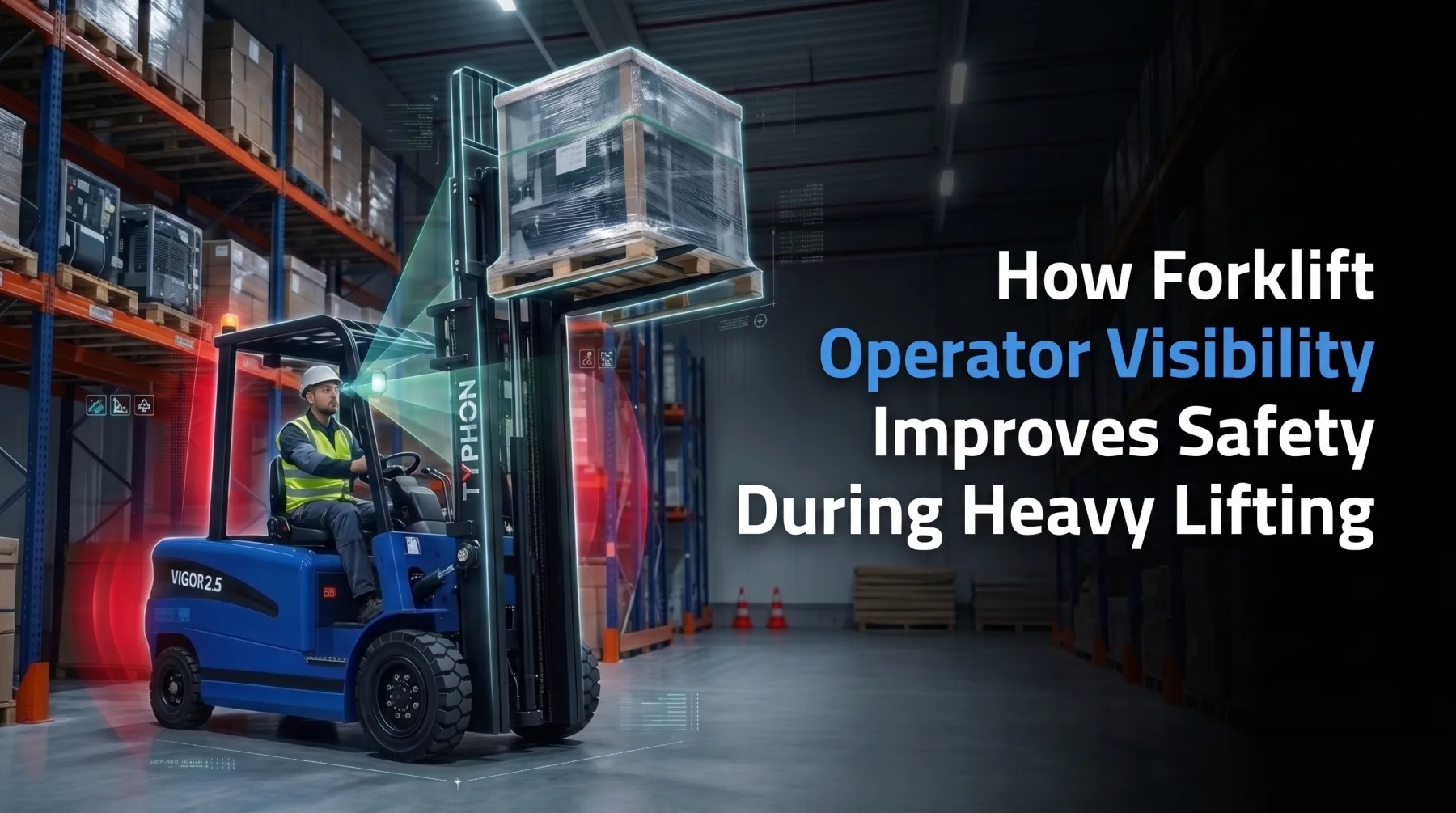
You lift a heavy pallet toward a high storage rack, and as the forks rise, the mast, carriage, and load begin to block your view of the exact placement point. Instead of seeing the rack beam clearly, you’re forced to lean, adjust your position, or move forward slowly to judge the distance. In busy warehouses where people, equipment, and storage aisles are all close together, losing that line of sight increases the risk of striking racking, damaging products, or making an unsafe placement.
Operator visibility is one of the most important factors affecting forklift control during lifting and travel. According to forklift safety guidance, maintaining a clear line of sight is essential for safe load handling and accident prevention. When operators can clearly see the load, travel path, and surrounding work area, they can position loads more accurately, react to hazards sooner, and reduce the risk of collisions with racking, equipment, or pedestrians. Understanding what affects visibility also helps businesses choose forklifts and safety features that improve both efficiency and workplace safety.
What Operator Visibility Means on a Forklift
Before you can improve safety, you need a clear picture of what “visibility” actually covers on a forklift. It’s more than looking through the windshield. It’s the full field of view an operator has of the load, the path, and everything around the machine while working.
Defining the Operator’s Field of View
Operator visibility is the range of what a driver can see from the seat: forward through the mast, up toward an elevated load, down to the forks and floor, and around to the sides and rear. Each of those zones matters differently depending on the task. During travel, the forward and pedestrian zones dominate; during a lift, the upward and load-side views take priority.
A forklift is designed to give the operator as much of that view as possible, but the machine’s own structure inevitably interrupts it. The overhead guard, the mast channels, the hydraulic hoses, and the load backrest all sit directly in the primary line of sight. Good visibility means the design minimizes those interruptions and gives you clear sightlines where they count most.
Why Visibility Is Different During Heavy Lifting
Driving an empty forklift across an open floor is a relatively clear-sighted task. Heavy lifting changes everything. The larger and heavier the load, the more it blocks your forward view, and the higher you raise it, the more the mast assembly stacks up in front of your eyes. Visibility that felt fine at ground level shrinks fast as the forks climb.
This is why visibility deserves attention as its own safety factor, not an afterthought. A load you can’t see over or around is a load you’re placing partly by feel, and heavy loads leave little room for error. Understanding where your sightlines break down is the first step toward controlling the risk they create.
Takeaway: Operator visibility is the full field of view around the machine, and it becomes far more critical during heavy lifting, when large loads and a raised mast steadily erode the sightlines you rely on.
How Mast and Load Obstruction Affects Sightlines
Now that you know what visibility covers, let’s look at the two biggest things that block it: the mast assembly and the load itself. Together they sit right in the operator’s primary line of sight, and understanding how they interfere is key to working around them safely.
The Mast as a Visual Barrier
The mast is the vertical assembly that raises and lowers the forks, and its channels, chains, hydraulic cylinders, and hoses all cross the operator’s forward view. Even a well-designed mast creates vertical bands of obstruction, and as the mast extends during a lift, those components shift and stack, changing what operators can and cannot see from moment to moment.
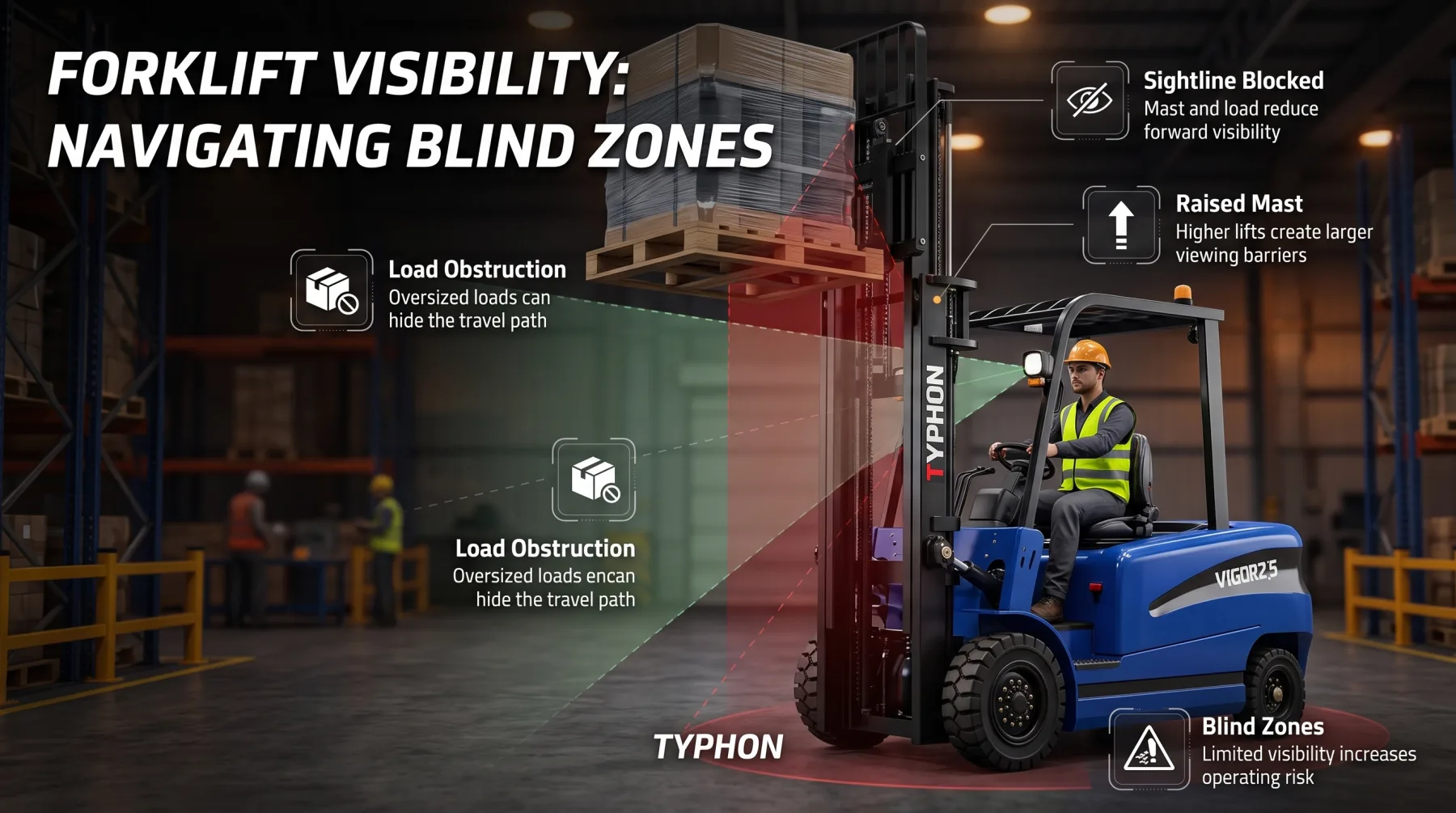
For anyone starting with electric forklift operations, understanding how the mast affects visibility is an important step in the beginner learning journey toward safe and confident machine control. Clear-view mast designs can improve the operator’s sightline by reducing obstructions, but the mast, carriage, and load can still create blind areas during lifting and travel. Recognizing these limitations helps new operators adjust their positioning, improve awareness, and handle loads more safely.
When the Load Itself Blocks the View
A large or tall load is often the bigger problem. A full pallet, a bulky crate, or stacked material can completely block the forward view, forcing the operator to rely on side sightlines or travel in reverse. The taller and wider the load, the more of the path ahead simply disappears behind it.
This obstruction shapes safe practice directly. When a load blocks the forward view, standard guidance is to travel in reverse so the operator faces the direction of travel with a clear view, using extra caution and a spotter when needed. Recognizing when a load has crossed that threshold, from “I can see around it” to “I can’t,” is a judgment every operator must make before moving.
Takeaway: The mast creates fixed bands of blocked sightline while a large load can erase the forward view entirely, so recognizing these obstructions and adjusting how you travel and position the machine is essential to safe lifting.
How Mirrors and Cameras Improve Visibility During Heavy Lifts
Since the mast and load will always block some part of the view, forklifts rely on aids that give the operator eyes where direct sight fails. Mirrors and camera systems are the workhorses here, and knowing what each does best helps you use them to lift more safely.
Mirrors and the Everyday View
Mirrors are the simplest and most common visibility aid, and they cover the zones an operator can’t easily turn to see. Rearview and side mirrors let you monitor the path behind and beside the machine without twisting in the seat, which matters constantly when a load blocks the forward view and you’re traveling in reverse.
Well-placed mirrors are inexpensive insurance. They shorten the blind zones around the machine, help you spot approaching pedestrians and equipment, and let you keep the rear path in view during reverse travel. Their limitation is that they show a fixed angle and can’t reveal what a raised load hides directly ahead or above, which is where camera systems step in.
Camera Systems for Elevated and Blind-Zone Views
Camera systems put a live view on a cab-mounted monitor, and they excel exactly where mirrors and direct sight fall short. A rear-facing camera clears the reverse blind zone, while a fork- or mast-mounted camera can show the operator the forks and load at height, so you can align with a rack beam you’d otherwise be placing blind.
This is a genuine advantage during heavy, high lifts. Instead of guessing at the last few inches or relying entirely on a spotter, the operator watches the load meet its target on screen. Cameras also help in low light and around tight corners, extending the operator’s awareness beyond what any mirror can offer. Paired with mirrors, they build a far more complete picture of the work area.
Takeaway: Mirrors cover everyday rear and side blind zones affordably, while camera systems reveal elevated loads and hidden areas during heavy lifts, so using both together gives the operator the fullest possible view.
How Visibility Relates to Safety Standards and Incident Prevention
Visibility isn’t just a comfort feature; it sits at the center of how forklift safety is regulated and how incidents are prevented. Connecting good sightlines to established practice shows why treating visibility seriously protects both people and the operation.
Visibility in Recognized Safe Practices
Recognized forklift safety practices place clear responsibility on maintaining a view of the travel path. Widely followed guidance directs operators to keep a clear view of the direction of travel, to travel in reverse when a load obstructs the forward view, and to use a spotter when visibility is limited. These aren’t arbitrary rules; they exist because obstructed sightlines are a well-known cause of collisions and struck-by incidents.
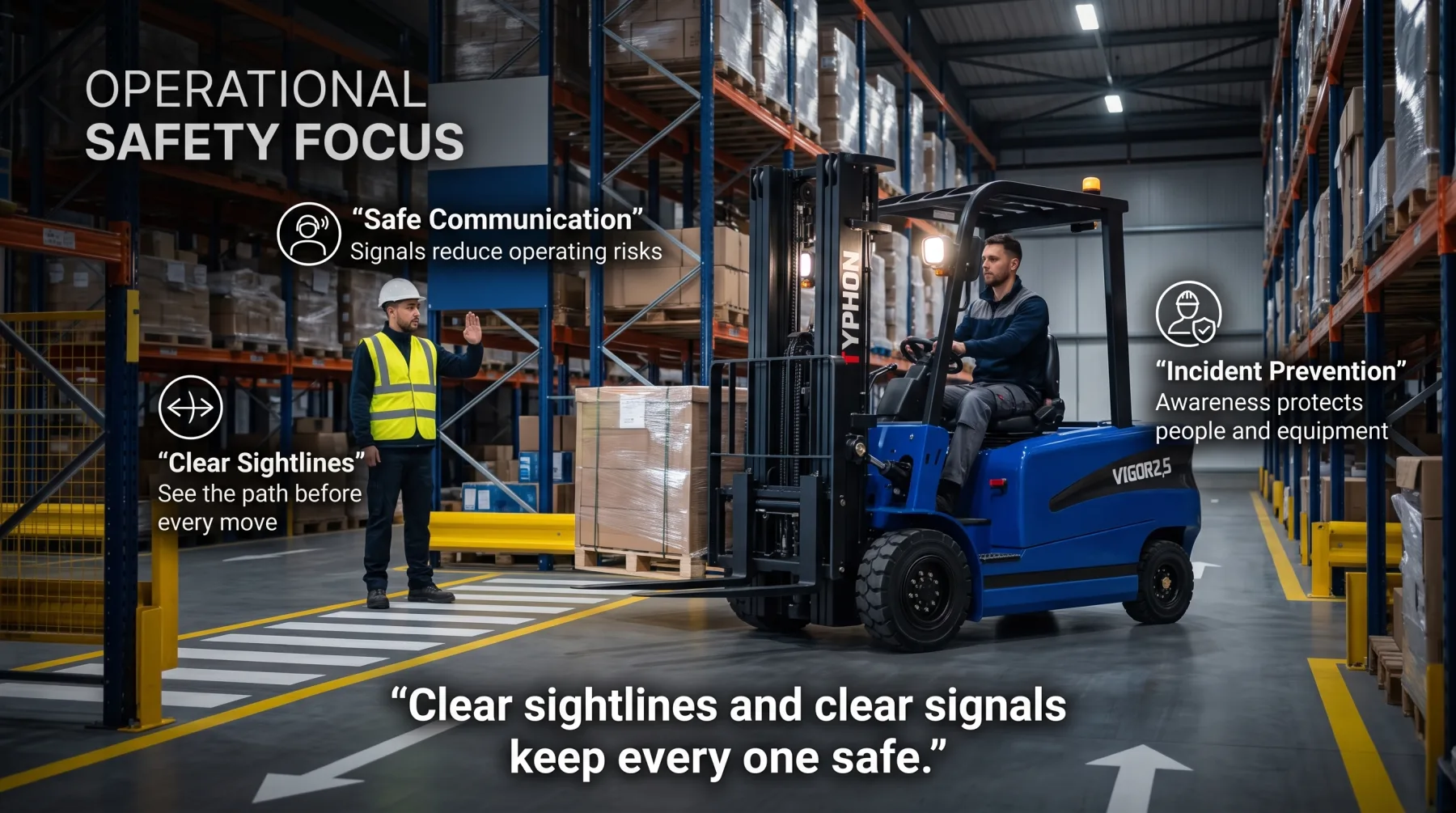
Training and site rules reinforce the same principle. Operators are taught to slow down, sound the horn at intersections and blind corners, and confirm the path is clear before moving a load they can’t see over. Visibility underpins all of it, because every one of those practices is really a way of compensating for or protecting the operator’s view.
Preventing Incidents Through Better Sightlines
Most forklift incidents involving pedestrians or fixed objects trace back, at least in part, to what the operator couldn’t see. A blocked forward view, an unchecked blind zone, or a load placed by guesswork sets the stage for a collision, a dropped load, or damaged racking. Improving visibility attacks that root cause directly.
The payoff is both safety and productivity. When an operator can clearly see the load, the path, and the people around the machine, placements go faster and cleaner, near misses drop, and the whole operation runs with more confidence. Investing in visibility, through machine design, mirrors, cameras, and disciplined practice, is one of the most direct ways to prevent the incidents that heavy lifting can otherwise invite.
Takeaway: Recognized safety practices are built around protecting the operator’s view, so improving visibility with good design, aids, and disciplined habits attacks the root cause of many forklift incidents and makes heavy lifting both safer and more efficient.
Frequently Asked Questions
What are the most common visibility blind spots on a forklift?
The most common blind spots are directly ahead when a large load blocks the forward view, directly behind during reverse travel, and up and around the mast during a lift. These are the zones where operators most often lose sight of pedestrians, rack beams, or obstacles. Knowing where they fall lets you compensate with mirrors, cameras, and spotters before a problem develops.
Should I travel in reverse when a load blocks my forward view?
Yes. Travel in reverse so you face the direction of travel with a clear line of sight. Keep the load low, sound the horn at intersections, and use a spotter when needed. If neither direction gives you an adequate view, stop and get help.
What should I look for in a forklift when visibility is a priority?
Prioritize a clear-view mast, a well-designed overhead guard, good all-around sightlines from the seat, and factory-fitted mirrors. Camera system availability is a strong plus for high-rack and heavy-lift work.
Conclusion
Operator visibility plays a critical role in forklift safety because clear sightlines directly affect how accurately loads are positioned and how confidently the machine can move. Visibility changes throughout the lifting process, especially when the mast, carriage, or oversized loads block the operator’s view of the forks and placement area. When these blind spots are not managed properly, operators may rely on estimation, increasing the risk of misalignment, contact with racks, or unstable load handling.
Improving visibility starts with understanding where obstructions occur during real lifting tasks and selecting solutions that support better awareness. Proper load positioning, visibility features, good operating habits, and a forklift configuration suited to the application all help maintain control during demanding lifts. By reducing blind spots and improving the operator’s view, businesses can protect loads, equipment, and people while keeping handling operations more efficient.