
Road Roller
The definitive guide to premium compaction machinery. Our road rollers represent the pinnacle of engineering, designed to deliver high-impact soil stabilization and smooth asphalt finishing. Whether you are searching for a road roller for sale or technical specifications on vibratory road rollers, we provide the industrial-grade performance required for modern infrastructure development.
The Science of Surface Compaction
A road roller, often referred to as a roller compactor, is an essential heavy-duty machine used to compact soil, gravel, concrete, or asphalt in the construction of roads and foundations. The primary objective is to reduce the volume of air within the material, increasing its load-bearing capacity and durability. Without proper compaction, infrastructure is susceptible to premature failure, erosion, and structural shifting.
In the world of road construction equipment, the road roller is unparalleled in its ability to create a level, dense surface. Using a combination of static weight and vibratory force, these machines ensure that every layer of a project—from the subgrade soil to the final asphalt wear course—is perfectly consolidated. This process is critical for preventing the "rutting" and "pitting" commonly seen on poorly constructed surfaces.
Modern compaction equipment has evolved far beyond simple heavy cylinders. Today's vibratory road rollers utilize advanced hydraulic systems to create high-frequency oscillations that rearrange material particles into a tighter matrix. This results in a much higher density than static rolling alone could achieve. For contractors, this means fewer passes are required to reach the target density, directly translating to increased job site productivity and reduced fuel consumption.
Whether you are preparing a small parking lot or a multi-lane federal highway, choosing the right roller machine is the difference between a project that lasts decades and one that requires constant maintenance. At the core of every successful build is a solid foundation, and that foundation is built by high-quality road rollers.
Road Roller Applications
From massive infrastructure projects to specialized commercial developments, the versatility of heavy-duty rollers makes them indispensable across the industrial spectrum.
Highway Construction
The backbone of national transport requires deep soil compaction and multi-layer asphalt rolling. Our rollers provide the centrifugal force needed for thick lifts and high-speed paving operations.
Asphalt Paving
Achieving a smooth, void-free finish is critical for asphalt longevity. Asphalt rollers use precision water spray systems to prevent hot mix from sticking to the drums during finishing passes.
Soil Stabilization
Before any structure is built, the earth must be prepared. Soil compactors break up clods and force out air pockets, creating a stable base for foundations and embankments.
Airport Runway Construction
Runways face extreme pressure from landing aircraft. These projects demand the highest level of compaction consistency, often requiring large single drum rollers with high-amplitude vibration.
Industrial Site Prep
Warehouses and factories require perfectly level floors. Road rollers ensure the sub-base is uniform, preventing future cracks in concrete slabs due to settling soil.
Parking Lot Compaction
For commercial lots, maneuverability is key. Compact rollers and tandem rollers provide the agility to work around curbs and drains while maintaining high density.
Trench Compaction
Utility work requires narrow rollers to compact fill around pipes and cables. Specialized trench rollers prevent future road collapse over buried infrastructure.
Commercial Infrastructure
From shopping centers to sports complexes, our compaction machinery provides the reliable performance needed to keep project timelines on track.
The Benefits of Advanced Compaction
Vibration Technology: Unlike static rollers that rely solely on gravity, vibratory systems use rotating eccentric weights to create impact force. This allows the machine to compact deeper into the ground, reaching the required "Modified Proctor" density in fewer passes.
Reduced Air Voids: In road construction, air is the enemy. Water seeps into air voids, freezes, and expands, leading to potholes. High-performance construction rollers eliminate these voids, creating a waterproof seal that protects the road's lifespan.
Operator Visibility: Safety is paramount. Premium rollers feature 360-degree visibility from the cab and intuitive control layouts, allowing operators to work close to edges and obstacles without risk.
Surface Finish Quality: For the final layer of a road, aesthetics and smoothness matter. Tandem rollers provide a polished finish, ensuring a quiet and safe ride for vehicles by removing any transverse marks or ridges.
Jobsite Productivity: Time is money in construction. By utilizing machines with wider drum widths and intelligent compaction sensors, contractors can cover more square footage per hour, significantly reducing labor costs.
Heavy-Duty Performance: Built with high-grade steel and reinforced frames, our industrial compactors are designed to withstand the harsh environments of 24/7 construction schedules.
Types of Road Rollers
Selecting the correct roller machine depends entirely on the material being compacted and the specific goals of the project. Below is an overview of the primary categories available in the market.
Single Drum Rollers
Typically featuring a heavy steel drum at the front and pneumatic tires at the rear, the single drum roller is the go-to choice for soil compaction. They excel at subgrade preparation, embankment work, and large-scale earthmoving projects where deep penetration is required.
Double Drum Rollers
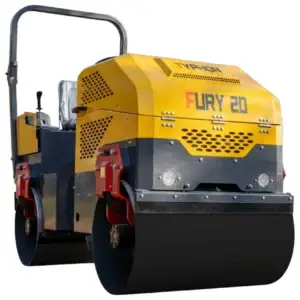
Also known as tandem rollers, these machines feature two steel drums (front and back). They are primarily used for asphalt roller applications. Since they lack tires, they don't leave tracks on hot asphalt, making them perfect for creating smooth, flat surfaces on highways and streets.
Vibratory Rollers
A vibratory road roller can be either single or double drum. The key feature is the internal vibrating mechanism. These are essential for granular soils (like sand or gravel) and asphalt, where the vibration helps particles settle into a more compact state.
Compact & Mini Rollers
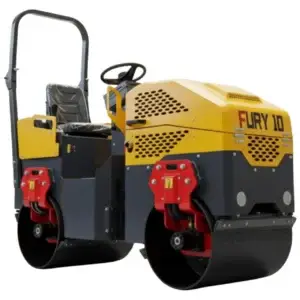
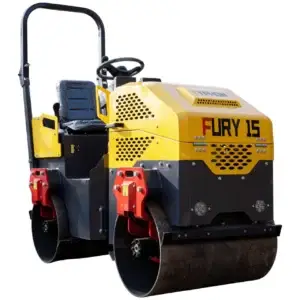
For small-scale residential work, landscaping, or patching, compact rollers offer the same technology as their larger counterparts but in a smaller frame. They are easy to transport and can navigate tight spaces where a full-sized road compaction machine would be impractical.
Pneumatic Tyred Rollers
Instead of steel drums, these use rows of rubber tires. They provide a "kneading" action that is excellent for sealing the surface of bituminous mixes and working on cold-mix materials. They help in achieving a uniform density across the entire width of the machine.
Padfoot (Sheepfoot) Rollers
These drums have "lugs" or "feet" protruding from the surface. They are specifically designed for compacting cohesive soils like clay. The feet penetrate deep into the soil to provide compaction from the bottom up.
Construction Efficiency & Performance
In the modern era of "green" construction, fuel efficiency and emissions are more important than ever. High-end road rollers now feature eco-modes that adjust engine RPM to the load, significantly reducing fuel consumption without sacrificing compaction power.
Furthermore, Intelligent Compaction (IC) technology is revolutionizing the industry. By using GPS and integrated sensors, operators can see a "compaction map" in real-time. This prevents "over-compaction," which can actually damage the material, and ensures that no spots are missed. This level of precision is why our equipment is preferred for federal and state-funded infrastructure projects.
Maintenance is the other side of the efficiency coin. Our compaction machinery is engineered with ground-level access to all daily service points. From hydraulic fluid checks to drum scraper adjustments, we ensure that your machine spends more time on the job and less time in the shop. A well-maintained heavy-duty roller is a reliable asset that holds its value for years on the secondary market.
Who Relies on Our Road Rollers?
Road Contractors
Specialists in municipal and highway paving who need consistent, high-output performance to meet strict government specifications.
Infrastructure Developers
Firms managing the growth of new cities, from sewage and water lines to the roads that connect them.
Municipalities
Local public works departments dedicated to maintaining city streets, bike paths, and public parking facilities.
Industrial Contractors
Teams building the massive logistical hubs, ports, and warehouses that power the global economy.
Road Roller FAQ
A road roller is used to compact soil, gravel, concrete, or asphalt in construction projects. Its main goal is to create a dense, stable foundation by removing air pockets from the material, which prevents future settling and structural failure.
Single drum rollers have one steel drum at the front and tires at the back, making them ideal for heavy soil compaction and sub-base preparation. Double drum (tandem) rollers have two steel drums and are primarily used for smoothing and finishing asphalt surfaces.
Vibratory rollers contain an internal eccentric weight that rotates at high speeds. This creates a rapid series of vertical impacts on the ground, which, combined with the machine's static weight, allows for deeper and more efficient compaction than weight alone.
Almost every construction project requires compaction. This includes highway building, residential street paving, airport runway construction, dam building, and preparing the ground for commercial building foundations.
Soil compaction increases the load-bearing capacity of the ground. It prevents water seepage, reduces soil shrinkage, and ensures that the structure built on top (like a road or building) remains stable over time.
By eliminating air voids in the hot asphalt mix, road rollers prevent water from entering the pavement. This makes the asphalt more resistant to temperature changes and heavy traffic, significantly extending the life of the road.
The choice depends on the project scale. Large highways require heavy 10-20 ton rollers for deep compaction. Smaller projects, like driveways or pathways, are best served by 1-3 ton compact rollers that are easier to maneuver.
Yes, compact rollers are specifically designed for small-scale projects, tight urban job sites, and landscaping. They offer the same vibratory technology as large rollers but can fit through narrower gates and are easier to transport on a standard trailer.
Regular maintenance of the hydraulic system, cleaning the water spray nozzles (on asphalt rollers), inspecting the drum scrapers, and ensuring the vibration system is properly greased are the most critical tasks for longevity.
Operator training is vital for both safety and quality. An unskilled operator may over-compact an area, causing material crushing, or miss spots entirely. Knowing how to adjust frequency and amplitude is key to professional results.
Performance is affected by the material's moisture content, the layer thickness (lift), the machine's travel speed, and the number of passes made. Environmental factors like temperature also play a role in asphalt compaction.
Advanced road rollers reduce the number of passes needed to reach target density. With features like GPS mapping and automatic vibration control, they minimize fuel waste and labor time, keeping the project on budget.